

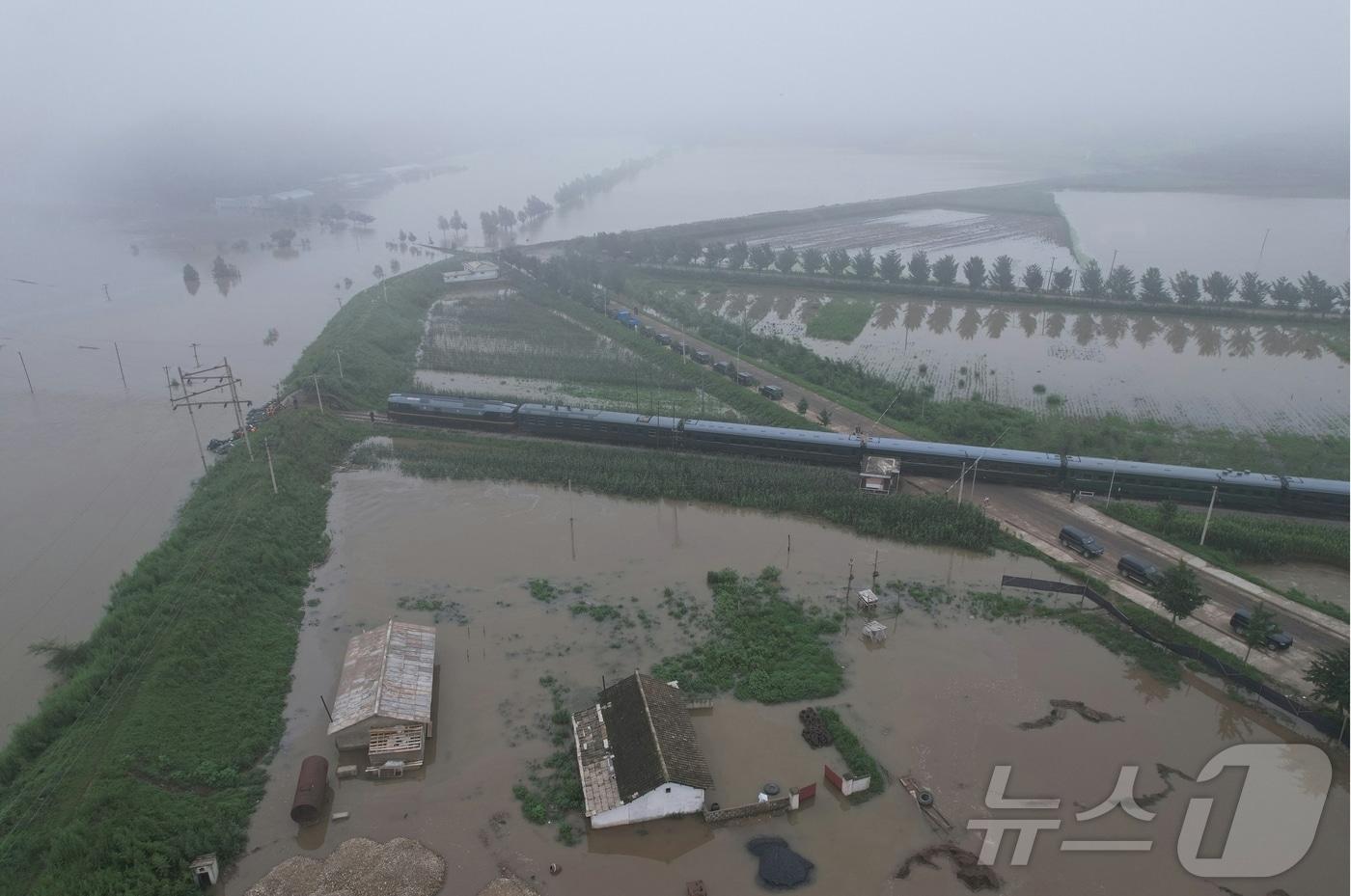
The United Nations predicts that North Korea’s harvest will decrease due to the heavy rainfall in July.
Radio Free Asia (RFA) reported, citing a recent report on North Korea by the Global Information and Early Warning System (GIEWS) of the United Nations Food and Agriculture Organization (FAO). The report stated, “The heavy rainfall in July caused damage to North Korea’s major food crops, including flooding,” and “the risk of a reduced harvest this year is increasing.”
According to the report, average rainfall remained steady during May and June, benefiting crop initial growth. However, rainfall in July for North Korea’s agricultural regions, including Hwanghae and Pyongan provinces, surged by up to 80% compared to average levels.
The report noted, “While a detailed assessment of crop damage has not yet been conducted, it is highly likely that low-lying rice paddies suffered significant losses.” It also warned that above-average rainfall is forecasted for August to October, which could exacerbate flooding and lead to severe agricultural damage and population displacement.
The report noted that during the same period, above-average temperatures are expected, which could increase the occurrence of pests and diseases and potentially raise the risk of a reduced harvest.
At the end of July, North Korea suffered extensive flood damage in the Yalu River basin, including Sinuiju and Uiju in North Pyongan Province, as well as in Yanggang Province and Jagang Province. North Korea claims that this flooding affected 4,100 households and submerged 3,000 hectares of land, although it asserts that there were no casualties.