

Leading scientists in the field of gerontology have recently reached a consensus that aging can be reversed. Global research teams from prestigious institutions such as Harvard, UC Berkeley, and MIT are accelerating the development of such technologies aimed at turning Aging Reversal into reality.
David Sinclair, a professor at Harvard University, and Irina Conboy, a professor at UC Berkeley, are demonstrating the potential of technologies to reverse biological age. Sinclair focuses on gene reprogramming to rejuvenate cells, while Conboy works on eliminating harmful signals in the blood for an anti-aging mechanism.
Sinclair’s Genetic Reset Experiment
Professor Sinclair reckons aging is a phenomenon where cells lose their epigenetic information.
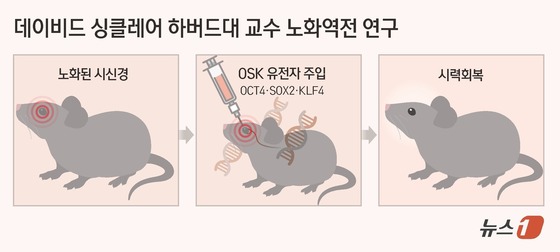
In a groundbreaking 2020 study published in Nature, Sinclair successfully restored vision in aging mice by injecting three Yamanaka factors (OSK: Oct4, Sox2, Klf4) into their eyes.
The OSK genes reset the epigenetic information while preserving the DNA sequence, allowing cells to resume gene expression as if they were young again. Essentially, the OSK factors erase the cells’ Aging Memory and revive a Transcriptional Program that enables them to function as they did in their youth. This process has led to the regeneration of retinal nerve cells damaged by conditions like glaucoma, making vision restoration possible.
In 2023, Sinclair revealed that aging results not from DNA damage itself, but from cells beginning to misinterpret DNA. He explained that our bodies lose the ability to remember how to operate over time, rather than the DNA being damaged, comparing it to a computer forgetting its operating system.
Sinclair established a company called Life Biosciences to expand his research from eye tissue recovery to other organs, including the heart, kidneys, liver, and brain. He noted that they chose the eyes as their first clinical target because they are safer. He added that laboratory data indicate potential regenerations in muscles, the brain, kidneys, and neurological diseases such as multiple sclerosis.
Professor Sinclair emphasized that safety is the biggest hurdle to clinically introducing aging reversal technologies. He cautioned that methods altering genes or cells could trigger unexpected systemic reactions, stressing the need for thorough clinical validation and caution.
Aging Reversal Through Plasma Dilution

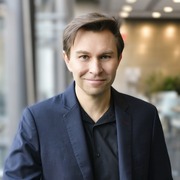
Professor Conboy was the first to prove in 2005 that when aged mice share blood flow with younger mice through a process called heterochronic parabiosis, physiological rejuvenation occurs.
However, Conboy later reached the paradoxical conclusion that the key to aging reversal lies not in injecting young plasma, but in removing harmful components from the aged blood. During the interview with News1, she noted that aging is characterized by an increase in blood proteins and greater variability(noise) in their levels, emphasizing that diluting plasma can help balance the unnecessarily fluctuating protein environment.
Professor Conboy introduced the Plasma Dilution technique and demonstrated through animal experiments that rejuvenation effects can occur without injecting young blood. This research was published last year in Geroscience and is currently being tested in human clinical trials.
To expand this research clinically, Conboy co-founded a biotech startup called Generation Lab, which is commercializing a technology called SystemAge. This technology analyzes the noise in DNA methylation to measure the biological age of 19 bodily functions.
DNA methylation involves adding marks to genes and determining whether that gene will be active or not. These marks tend to become disorganized as we age. The SystemAge technology measures biological age by analyzing this disorganization, acting like a speedometer to indicate how our organs are functioning at different ages.
Regarding safety, Conboy acknowledged that the plasma dilution process may carry risks such as citrate toxicity, hives, and potential antibody formation against anticoagulants. However, she assured that most issues can be adequately managed by skilled clinicians.
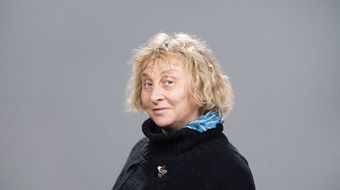
Li-Huei Tsai from MIT, George Church, and Leonid Peshkin from Harvard are also focusing on the concept of reversibility.
Aging reversal technologies extend beyond blood and genetics. Li-Huei Tsai, a professor at MIT, is developing a technique to restore synaptic connectivity in aging mice brains through light and sound stimulation, which may also have implications for Alzheimer’s treatment.
George Church, a Harvard professor, is creating technologies to suppress aging through gene editing and has demonstrated lifespan extension effects in experimental animals. Leonid Peshkin, another Harvard professor, is leading research to develop a model for calculating biological age and using machine learning to identify Benchmarks for Reversing Aging.
World’s First Human Clinical Trials For Aging Reversal—Korea Could Be an Early Beneficiary
Professor Sinclair stated that aging reversal technology is moving out of science fiction and is expected to enter human clinical trials next year. He added that, with its rapid clinical adoption and biotechnological innovation capacity, Korea could become an early beneficiary of this technology.
Professor Conboy remarked that Korea is a country with world-class medical technology and research foundations. She encouraged more scientists and citizens to engage in the field, expressing her belief that if they raise their voices together, aging reversal technology could be incorporated into everyday life more quickly.