

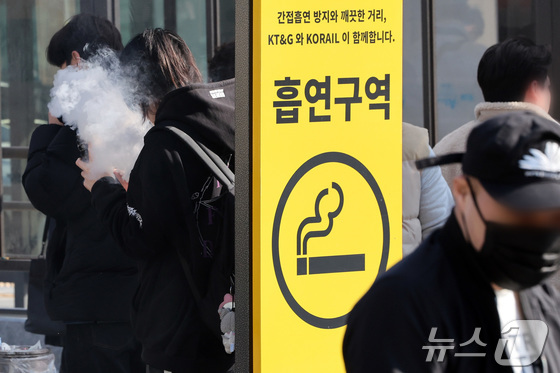
A recent study has revealed that smoking a pack of cigarettes daily for over 20 years can increase the risk of small-cell lung cancer by more than 54 times.
The South Korean National Health Insurance Service’s Health Insurance Research Institute announced on Sunday that even among individuals with the same genetic risk score for lung cancer, those who have smoked for over 20 years face a staggering 54.49 times higher risk of developing small-cell lung cancer compared to non-smokers.
This groundbreaking research, conducted in collaboration with Yonsei University’s Graduate School of Public Health, tracked 136,965 individuals who underwent health screenings at 18 private examination centers across South Korea from 2004 to 2013. The study linked health examination data, polygenic risk scores (PRS), central cancer registry data, and health insurance qualification data, following participants until 2020. Notably, this marks the first time in South Korea that genetic information has been utilized to analyze the detrimental effects of smoking.
The analysis of lung and laryngeal cancer risk revealed that small-cell lung cancer, squamous cell lung cancer, and squamous cell laryngeal cancer – all subjects of ongoing litigation – showed significantly higher risks compared to other cancer types. The risk was particularly elevated among current smokers and increased with the duration and intensity of smoking history.
Even if general characteristics of the study participants, including gender, age, type of medical coverage, income level, and alcohol consumption, and the genetic risk scores of lung and laryngeal cancer were the same, individuals who smoked for over 30 years and 20 years faced a 54.49 times higher risk of small-cell lung cancer, a 21.37 times higher risk of squamous cell lung cancer, and an 8.30 times higher risk of squamous cell laryngeal cancer compared to non-smokers.
In assessing the contribution of smoking to lung and laryngeal cancer incidence, the study found that for heavy smokers who smoked for over 30 years and 20 years, respectively, smoking accounted for 98.2% of the risk for small-cell lung cancer.
Furthermore, smoking contributed to 88.0% of squamous cell laryngeal cancer cases and 86.2% of squamous cell lung cancer cases.
In contrast, genetic factors played a minimal role, contributing to only 0.7% of all lung cancer cases and 0.4% of squamous cell lung cancer cases.
Dr. Sangwon Eom, a pulmonologist at Samsung Seoul Hospital, emphasized that lung cancer primarily results from somatic mutations caused by environmental factors like smoking, rather than congenital factors. He noted that this study provides the first scientific confirmation in South Korea of the minimal impact of congenital genetic factors on lung cancer incidence.
Dr. Sunmi Lee, head of the Health Insurance Policy Research Office at the Health Insurance Research Institute, stated that this research reaffirms that while genetic factors have little to no correlation with lung and laryngeal cancer incidence, smoking remains a potent risk factor for cancer development. Dr. Lee underscored that the institute plans to continue conducting various empirical analyses using health insurance big data further to substantiate the harmful effects and causality of smoking, aiming to provide crucial evidence for ongoing tobacco litigation.