

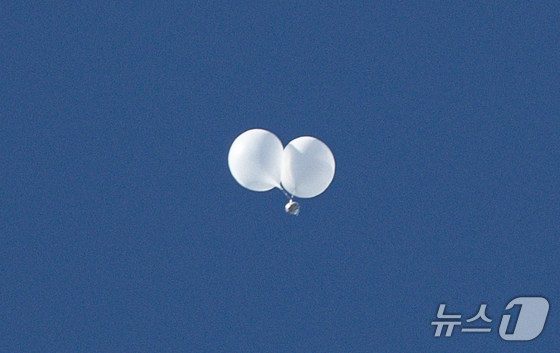
“Suspected trash balloons from North Korea are once again floating into South Korean territory. Please beware of falling objects. Do not approach if found, and report immediately to the military (1338) or police.”
This is the emergency alert message that many citizens received around this time last year. North Korea first launched trash-filled balloons on May 28, 2024, in response to leaflet campaigns by North Korean defector groups in South Korea. At that time, Pyongyang began new provocations, including the deployment of trash balloons and GPS jamming.
Fast forward one year, and North Korea has shifted its focus away from provocations against South Korea. This change doesn’t stem from improved relations, but rather from North Korea’s decision to distance itself by referring to South Korea simply as “Korea” and treating it as a foreign entity. In the 70-year history of division, inter-Korean relations have often swung between extremes, but North Korea’s current strategy of indifference towards the South is unprecedented.
On the surface, this significant shift in inter-Korean dynamics can be traced back to late 2023, when the North Korean leader Kim Jong Un declared North and South Korea as hostile nations. He began treating South Korea, once considered a special partner in the pursuit of unification, as a foreign country.
However, even after the two-state declaration, North Korea continued its provocations against the South. It was only after the declaration of martial law on December 3 last year that Pyongyang became unusually silent.
Just six days before the martial law, on November 28, North Korea had launched trash balloons. But following the emergency martial law, these balloon launches ceased entirely. State media-driven propaganda and criticism against South Korea also vanished two days after martial law was imposed on December 5. This development defied predictions that North Korea would exploit South Korea’s internal chaos for propaganda purposes.
While various analyses have been proposed, the prevailing theory suggests that North Korea no longer views South Korea as a worthy adversary. Some analysts believe that the current situation in South Korea aligns with Pyongyang’s objectives, negating the need for aggressive actions.
Even with the early presidential election just a week away, North Korea remains silent. This stands in stark contrast to its behavior during former President Park Geun-hye’s impeachment, when Pyongyang openly declared that the puppet conservative faction’s return to power must never be allowed.
Interestingly, this indifference towards inter-Korean relations isn’t limited to North Korea. Despite the hastily organized election, unification and North Korea policies have mainly been sidelined or entirely omitted from the platforms of most candidates.
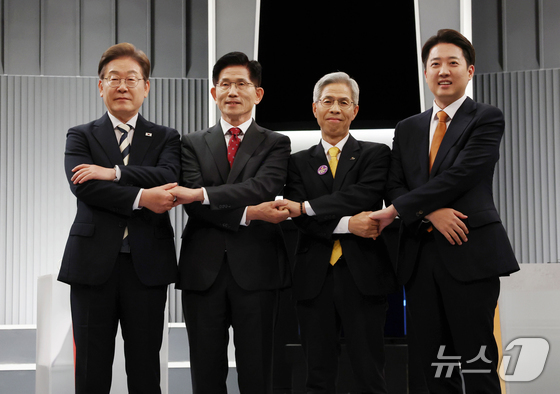
Even Lee Jae Myung, the Democratic Party’s presidential candidate who champions the restoration of inter-Korean relations, expressed skepticism about the possibility of a summit. He stated, “While it’s something we should naturally pursue, under the current circumstances, it’s very difficult.”
Kim Moon Soo, the People Power Party candidate, advocates for a hardline approach, proposing nuclear sharing with the U.S. and discussions on redeploying U.S. tactical nuclear weapons. However, he has not put forward any pledges related to unification. Lee Jun-seok of the Reform Party has suggested abolishing the Ministry of Unification, acknowledging the challenges in restoring relations with North Korea.
The crux of the matter is that inter-Korean relations may not be solely an issue between the two Koreas, but could be influenced by broader international developments. Experts worry that if President Donald Trump’s willingness for dialogue with North Korea materializes, it could lead to a Korea passing phenomenon, where South Korea is sidelined in negotiations.
A former senior official who requested anonymity said, “As tensions drag on, and even if U.S.-North Korea bilateral talks take place, it’s crucial to have strategic policies in place that neither the U.S. nor North Korea can afford to ignore.”