

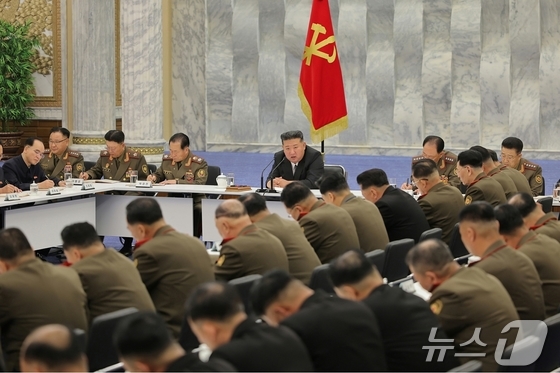
With the presidential election just one day away, North Korea has maintained complete silence on the matter. This appears to be a deliberate strategy of disengagement from South Korea’s internal affairs, following the North’s declaration of a “two-state policy” for inter-Korean relations, which seems aimed at lowering expectations for the incoming administration.
As of Monday, North Korea’s state media, including Rodong Sinmun and the Korean Central News Agency, have remained silent on South Korea’s presidential election. This marks a stark contrast to their previous approach, which provided detailed coverage of South Korea’s street protests and the impeachment process of former President Yoon Suk Yeol following the December 3 declaration of martial law.
Historically, North Korea has been vocal about its stance and messaging during crucial periods in South Korea.
In March 2017, as South Korea prepared for a May election following the impeachment of former President Park Geun Hye, North Korea ramped up its anti-South propaganda. State media at the time declared, “We must absolutely prevent the conservative puppet regime from regaining power.”
Before the 20th presidential election in March 2022, North Korea also harshly criticized statements related to South Korea’s policy towards North Korea. The propaganda outlet Ryomyong described South Korean politicians as “trying to scrape together votes by slandering their people,” while Echo of Unification characterized the competition as a “bitter rivalry among presidential candidates vying for power in South Korea.”
However, regarding tomorrow’s election, neither North Korean state media nor propaganda outlets have shown any reaction whatsoever.
This shift is likely a result of the North Korean leader Kim Jong Un’s redefinition of inter-Korean relations as “two hostile states.” At the party plenary meeting in late 2023, Kim stated, “The North-South relationship is no longer one of kinship or shared identity, but has become firmly established as a relationship between two hostile states, two belligerent nations at war.”
Subsequently, in January of the following year, North Korea abolished seven inter-Korean organizations, including the Committee for the Peaceful Reunification of the Fatherland and the Mount Kumgang International Tourism Bureau. In March, it announced the dissolution of the Democratic Front for the Reunification of the Fatherland.
Furthermore, in October, North Korea demolished roads and railways along the Gyeongui and Donghae lines and erected barriers and fences in some areas of the Military Demarcation Line (MDL). This “deliberate strategy of disengagement” appears to be an extension of North Korea’s ongoing measures to sever ties with the South.
This approach also seems to signal that completing their own economic and defense plans takes priority. This year marks the final year of the “Five-Year Economic Development Plan” and the “Five-Year Defense Development Plan” proposed by General Secretary Kim in 2021. North Korea may be focusing more intently on managing domestic livelihood issues and prioritizing internal matters during the remaining period.
Notably, the recent capsizing of a destroyer, presumed to have occurred during an accelerated push to strengthen military capabilities, is being seen as a critical test of the Supreme Leader’s political authority. This has led to speculation that North Korea will focus on tightening internal discipline in the near term.