

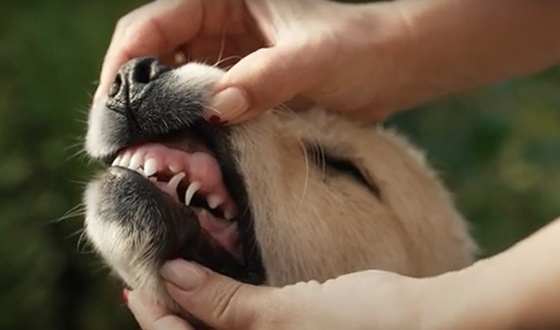
It’s not just about bad breath or tartar. A dog’s oral health is closely linked to the overall condition of its respiratory system, eyes, jawbone, heart, and more. Pet owners must remain vigilant for oral health issues that may be concealed behind seemingly simple symptoms.
Veterinarian Shim Yong Hee recently appeared on the YouTube channel “Perfect Pet Parenting” operated by Mars Korea, offering an easy-to-understand explanation on managing a dog’s oral health.
According to Dr. Shim, cavities are scarce in dogs. Human teeth are rectangular and tightly spaced, which allows plaque to accumulate and produce acid that dissolves enamel and causes tooth decay. In contrast, dogs have triangular teeth with wider gaps, making it difficult for acid to collect and create cavities.
But that doesn’t mean dog owners can rest easy. In dogs, microbial biofilm in the mouth can turn into hardened tartar in just three days. Tartar builds up much faster in dogs than in humans, making regular brushing and dental care essential. Without proper management, the condition can worsen, potentially leading to tooth loss or even jawbone fractures.
Bacteria in the mouth can also spread through the bloodstream to the kidneys, joints, heart, and other organs. In senior dogs, existing health conditions may amplify pain and symptoms.
One real-life case was introduced. A Yorkshire Terrier that had long been treated for respiratory issues due to persistent nasal discharge experienced significant improvement in symptoms following dental scaling and periodontal treatment, as recommended by Dr. Shim.
Because a dog’s facial features—eyes, nose, and mouth—are small and closely positioned, it’s common for periodontal inflammation to spread to the nasal cavity. Dr. Shim explained that symptoms such as a runny nose or frequent scratching around the mouth may not indicate respiratory or skin issues, but could be signs of dental problems. In severe cases, dental inflammation can even spread to the eyes.
Dr. Shim also addressed common questions, such as whether it’s safe to kiss your dog, and shared easy ways to remember the number of teeth before and after teething, offering practical oral care tips throughout the video.