

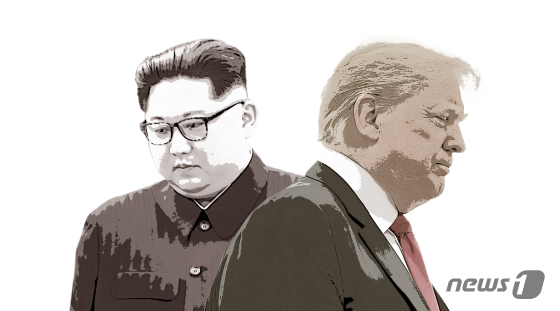
The U.S. officially implemented mutual tariffs with various countries on August 1, potentially signaling an end to the trade war. This development suggests that President Donald Trump, who values diplomatic achievements, may now turn his attention to peace negotiations for the Ukraine conflict and renewed dialogue with North Korea.
For South Korea, the progression of U.S.-North Korea talks remains the primary concern. During his campaign, President Trump showcased his bromance with Kim Jong Un, the General Secretary of North Korea’s Workers’ Party, indicating his willingness to actively engage with North Korea after taking office.
While certain Middle East issues, such as the Iran-Israel conflict and efforts to end the Ukraine war, have seen some progress or are ongoing with U.S. involvement, U.S.-North Korea dialogue remains notably stagnant. Analysts suggest that President Trump is likely to prioritize this issue.
North Korea’s stance remains tepid. The regime has either rejected President Trump’s letter conveyed through the New York Channel — the communication line between United Nations (UN) missions — or maintained a hardline position by presenting high demands through Kim Yo Jong, Deputy Director of the Workers’ Party.
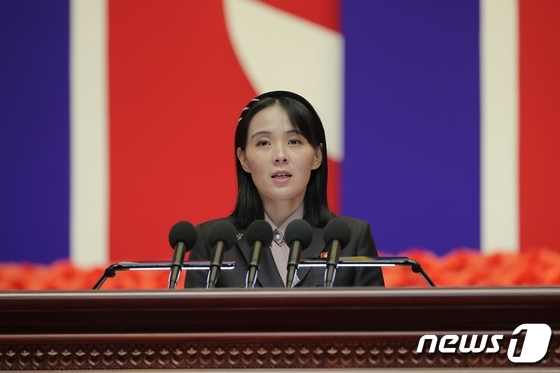
In a statement released on July 29 through the Korean Central News Agency, Kim Yo Jong assertedthat they are an irreversible nuclear power, and the U.S. must acknowledge this reality. While she acknowledged that the personal relationship between President Trump and Kim is not bad, she emphasized that this is separate from discussions about nuclear issues.
This can be interpreted as an attempt to leverage Trump’s tendency to make seemingly impulsive decisions in order to secure the concessions they desire.
Although President Trump has previously referred to North Korea as a de facto nuclear power, North Korea appears to be urging the U.S. to guarantee diplomatic conditions that would recognize it as a nuclear power on par with the United States.
If North Korea is recognized as a nuclear power prior to negotiations, the focus of those talks may shift from complete denuclearization to nuclear disarmament or phased denuclearization. This shift could increase the concessions North Korea might gain through multiple rounds of negotiations.
North Korea plans to hold its 9th Party Congress by the end of this year or early next year to establish new national policies. Following this congress, which occurs every five years, the regime is expected to adjust its foreign policy and intensify diplomacy with the U.S. This suggests that U.S.-North Korea talks are unlikely to occur this year.
The critical question is whether South Korea can participate in U.S.-North Korea dialogue at any point. In a statement released a day before addressing the U.S., Kim Yo Jong claimed that if South Korea does not recognize their two Koreas policy and attempts to replicate past inter-Korean relations, there will be no opportunity for discussion. This indicates that the regime expects South Korea to abandon its unique North Korea policy based on national concepts and to treat them as a diplomatic counterpart, setting a significantly higher threshold than that imposed on the U.S.
Bolstered by strong Russian support, North Korea’s current stance is unlikely to change dramatically even after the 9th Party Congress. This situation could lead to a scenario in which South Korea finds it difficult to engage deeply in U.S.-North Korea dialogue. If the U.S. begins to tolerate North Korea’s substantial stockpile of nuclear weapons and strategic nuclear capabilities, South Korea’s security burden will increase.
The anticipated security negotiations with the U.S. will further intensify this burden if they coincide with U.S.-North Korea talks. President Trump has demanded defense spending increases from various allies and is specifically pressuring South Korea to redefine the role of U.S. troops there — shifting from deterrence against North Korea to countering China. If the U.S. acknowledges North Korea’s nuclear weapons while lowering the level of deterrence provided to South Korea, this could create a situation where security gaps become a dual burden.
Professor Park Won-gon from Ewha Womans University’s Department of North Korean Studies warned that if President Trump strongly demands defense spending increases or renegotiates the cost-sharing for U.S. troops in South Korea, while using joint exercises and the deployment of strategic assets as bargaining chips to induce U.S.-North Korea negotiations, its security posture could be severely weakened.