

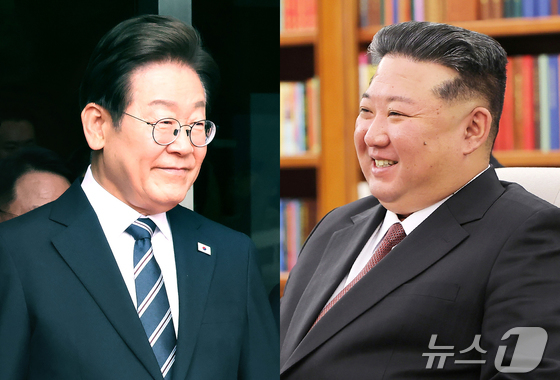
North Korea is intensifying its efforts to produce tangible results in accomplishing the tasks set out at the 8th Party Congress as it approaches the 80th anniversary of the founding of the Workers’ Party and the 9th Party Congress. The regime believes it can rejuvenate its economy through expanded cooperation with China and Russia, while maintaining a cautious stance regarding advances in U.S.–North Korea relations and inter-Korean relations in the short term.
On Monday, Choi Eun-joo, a research fellow at the Sejong Institute, published a report titled, Evaluation of North Korea’s Domestic and Foreign Policy Trends in the First Half of 2025 and Implications. She assessed that although North Korea is actively and strategically steering its policies amid a complex external environment, its continued hostile approach toward the Lee Jae-myung administration makes it unlikely to achieve a breakthrough in inter-Korean relations in the near future.
Choi analyzed that North Korea is maximizing its external benefits by cultivating complementary relationships with Russia and China. With Russia, it is institutionalizing military deployments, infrastructure construction, and cooperation in economic, health, and educational sectors. With China, it is seeking to expand trade and resume people-to-people exchanges.
Describing this as North Korea’s northern diplomacy, Choi stressed the need for trust-building between North and South Korea to ease tensions and resume dialogue. She advised that the Lee administration should continue to send cooperative signals even as North Korea concentrates on its internal matters.
Choi identified several constraints on the Lee administration’s North Korea policy, including Pyongyang’s deep-seated hostility toward Seoul, breakdowns in communication channels, the strategic competition between the United States and China, and the complex global dynamics stemming from the Russia–Ukraine war and the North Korea–Russia alignment.
As potential opportunities, she highlighted President Donald Trump’s willingness to resume U.S.–North Korea summits, the possibility of aligning interests with neighboring countries such as China, Russia, and Japan, and areas of non-political cooperation including health, climate, and disaster response.
Choi advocated for a phased approach: building inter-Korean trust, de-escalating tensions, and then resuming dialogue. She emphasized the importance of restoring the inter-Korean hotline and of strategically addressing the issues that North Korea cites to justify its hardline stance as measures to improve U.S.–North Korea relations.
She underscored the need to transform the current adversarial relationship between North and South Korea into one characterized by stable, peaceful coexistence. Choi argued that reactivating the inter-Korean hotline is the minimum requirement for the stable management of relations and for reducing the risk of accidental military clashes. To this end, she called for establishing an institutional framework to mitigate North Korea’s skepticism regarding the stability and continuity of various measures directed at it.
Choi concluded that the Lee administration should create conditions conducive to stabilizing inter-Korean relations and to resuming dialogue through a peace-oriented and pragmatic approach. She recommended that restoring U.S.–North Korea trust be prioritized at the upcoming U.S.–South Korea summit, along with offering concrete contributions to position South Korea as a facilitator between Washington and Pyongyang.