

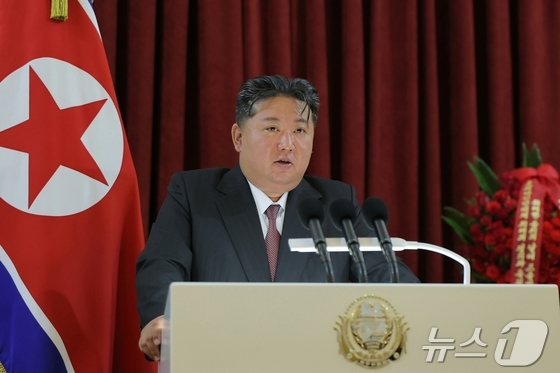
The South Korean government is exercising caution regarding the potential attendance of Kim Jong Un at the Asia-Pacific Economic Cooperation (APEC) summit scheduled for late October.
National Security Advisor Wi Sung-Iac, speaking on KBS Radio’s Jung Kwan-yong’s Current Affairs Headquarters on August 31, indicated that while President Donald Trump’s attendance at APEC is likely, he advised against raising undue expectations about Kim’s participation.
On the same day, Foreign Minister Cho Hyun, appearing on KBS1’s Sunday Diagnosis Live, assessed that the probability of Kim attending APEC remains very low at present.
During his first summit with President Trump on August 25, President Lee Jae-myung stated that if you act as a peacemaker, he will serve as a facilitator.’
Diplomatic observers interpret this as President Lee’s attempt to position Trump, who boasts a personal relationship with Kim, as a key figure in reviving inter-Korean and U.S.-North Korea dialogues, leveraging Trump’s characteristic spontaneity to break the current impasse.
The government’s recent cautious stance reflects a strategic decision to maintain the possibility of dialogue while distancing itself from overly optimistic projections, based on the peacemaker-facilitator framework.
Consequently, the government is expected to further emphasize Trump’s active role in resolving the inter-Korean deadlock at an opportune moment.
Notably, Advisor Wi suggested that North Korea is less confrontational toward the U.S. than South Korea regarding denuclearization talks, implying it might be prudent to defer to the U.S. on this matter.
Foreign Minister Cho also emphasized that if President Trump can achieve a breakthrough with his leadership, President Lee intends to act as a facilitator.
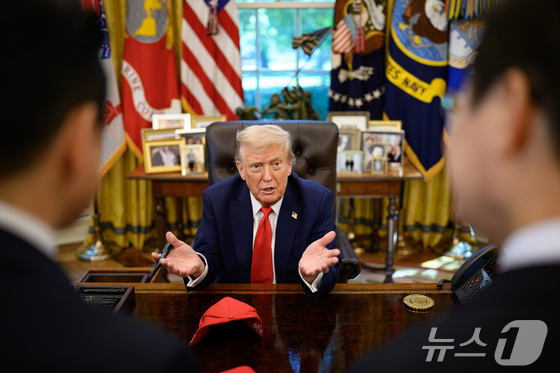
Experts: Kim Needs Significant Concessions to Join Negotiations; Trump’s Decision is Crucial
Analysts view the government’s dual approach of caution and highlighting Trump’s potential role as pragmatic. They stress that the critical factor is the extent to which President Trump can accommodate North Korea’s demands, including recognition as a nuclear power.
Professor Kim Yong-hyun from the University of North Korean Studies explained that bringing Kim to the negotiating table requires substantial concessions, from halting joint military exercises to discussing nuclear disarmament – essentially acknowledging North Korea’s nuclear status. Further noting that this poses a significant challenge for the U.S. He added that the success of U.S.-North Korea talks hinges on behind-the-scenes negotiations and President Trump’s resolve.
Professor Park Won-gon of Ewha Womans University noted that given North Korea’s clear preconditions for talks with the U.S., expecting a spontaneous meeting like the one at Panmunjom in 2018–2019 may be premature. He added that while President Trump might still pursue a summit with Kim at an appropriate time, regardless of APEC, the outcome ultimately depends on how much the U.S. is willing to accommodate North Korea’s demands.
In light of these developments, some diplomatic experts argue that while resuming dialogue is important, it is crucial for South Korea and the U.S. to maintain close communication. This is to prevent any ill-considered concessions to North Korea and to create an environment conducive to implementing the government’s proposed three-step denuclearization plan: freeze, reduction, and complete denuclearization.