

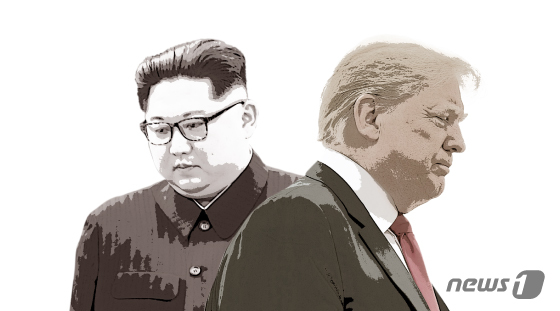
Kim Jong Un, the General Secretary of North Korea’s Workers’ Party, delivered an extensive speech ahead of the 80th United Nations (UN) General Assembly and next month’s Asia-Pacific Economic Cooperation (APEC) summit in Gyeongju. His address was intended to send a strategic message to the United States and South Korea.
Earlier this month, Kim made an unprecedented move by attending China’s 80th victory anniversary celebration. This demonstrates North Korea’s most authoritative multilateral diplomacy, seemingly designed to unsettle the U.S.-South Korea alliance and create a diplomatic environment favorable to Pyongyang.
Kim has stepped up his foreign messaging efforts, hinting at a dialogue excluding South Korea to Donald Trump. On Monday, Rodong Sinmun published the full text of Kim’s speech delivered at the 13th meeting of the 14th Supreme People’s Assembly, held at Mansudae Assembly Hall on September 20 and 21.
Kim stated that if the U.S. abandons its unrealistic fixation on denuclearization and accepts reality, there’s no reason it can’t engage in dialogue. This conditionally opens the door for talks with the U.S. Notably, he mentioned that he still holds fond memories of President Trump, marking the first reference to potential dialogue since Trump’s second term began.
During his speech, Kim sharply criticized the denuclearization policy pursued by South Korea and the U.S. towards North Korea. He emphasized that the concept of denuclearization has lost its meaning, expressing clear distrust toward the U.S. by stating that the world already knows what the U.S. does after a country gives up its nuclear weapons and disarms.
However, the fact that the Supreme Leader himself addressed President Trump, particularly mentioning fond memories, clearly indicates Kim’s ongoing interest in a U.S.-North Korea summit.
Kim’s speech and message to the U.S. came just before President Trump’s address at the UN General Assembly in New York on Tuesday. Analysts suggest this could be a calculated move to encourage Trump to deliver a favorable message about North Korea or Kim himself during his speech.
Furthermore, at the APEC summit in Gyeongju on October 31, North Korea appears intent on highlighting issues related to itself—with backing from China—in order to engage in a proxy diplomatic battle against the U.S. and South Korea. Both President Trump and Chinese President Xi Jinping are set to attend the APEC summit.
However, Kim reiterated his lack of intention to unify with South Korea, describing it as the most hostile country for decades. This effectively closes off any possibilities for inter-Korean dialogue, reaffirming his stance of not considering South Korea as a diplomatic counterpart.
The Lee Jae Myung administration has proposed positioning the U.S. as a peacemaker and South Korea as a pacemaker regarding the North Korean issue, a strategy that received a positive response from President Trump. This approach suggests that while the U.S. exerts real negotiating power to influence North Korea, South Korea will play a supportive role by coordinating the pace of negotiations and creating a conducive environment.
However, North Korea seems to reject South Korea’s proposal, opting instead to focus on establishing a bilateral relationship with the U.S. Kim’s mention of fond memories of President Trump in his speech signals a strategy to convey interest in such a bilateral relationship, potentially encouraging Trump to sideline South Korea.
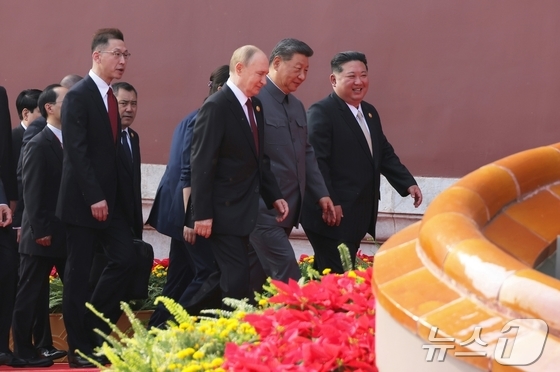
North Korea Attempts to Solidify its Status as a Nuclear Power During the UN General Assembly and APEC
Experts assess that Kim’s speech is a calculated move laden with strategic considerations. Having secured backing from China and Russia, North Korea is preparing for direct negotiations with the U.S. while simultaneously seeking to exclude South Korea from the diplomatic stage, thereby weakening U.S.-South Korea cooperation.
Professor Park Won-gon from Ewha Womans University stated that Kim’s suggestion of potential negotiations with the U.S. following his attendance at China’s victory celebrations indicates an intention for talks based on the premise of nuclear possession, rather than mere relationship improvement. This suggests he has gained confidence based on support from China and Russia.
Professor Park further noted that North Korea’s ideal scenario is to elicit a positive statement from Trump at the UN General Assembly and pursue multipolar diplomacy backed by China at APEC. However, whether this plan materializes remains to be seen.
Professor Kim Jae-cheon from Sogang University’s Graduate School of International Studies remarked that Kim has shown an intention to negotiate based on being recognized as a nuclear power by the U.S. North Korea has already become a significant nuclear weapons state, and the U.S. is likely aware that denuclearization is off the table.
Professor Kim Jong from the University of North Korean Studies analyzed that Kim’s mention of dialogue without denuclearization conditions for the first time since Trump’s second term signals an internal readiness for talks with the U.S. He emphasized that by clearly drawing the line against engaging with South Korea, Kim has conveyed a message of focusing exclusively on diplomacy and negotiations with the U.S.
He added, “If Trump’s remarks at the U.N. are positive and Xi Jinping supports this at APEC, North Korea’s diplomacy will gain significant momentum.”