

On Tuesday, as the high-level session of the United Nations (UN) General Assembly convenes in New York City, all eyes are on Kim Jong Un, the General Secretary of North Korea’s Workers’ Party. Kim’s potential openness to a U.S.-North Korea dialogue could inject new momentum into President Lee Jae Myung’s peacemaker initiatives.
While Kim has stipulated that dialogue must occur on a without denuclearization basis, the South Korean government has also expressed willingness to entertain U.S.-North Korea talks starting with a freeze on North Korea’s nuclear program. This raises questions as to whether the upcoming UN General Assembly and next month’s Asia-Pacific Economic Cooperation (APEC) summit in Gyeongju will help forge a consensus between South Korea and the U.S. on the issue of North Korea’s nuclear program.
Following Hints from Kim Yo-jong, Kim Jong Un has Directly Addressed the Issue—Delivering his Most Forward-Looking Message Yet
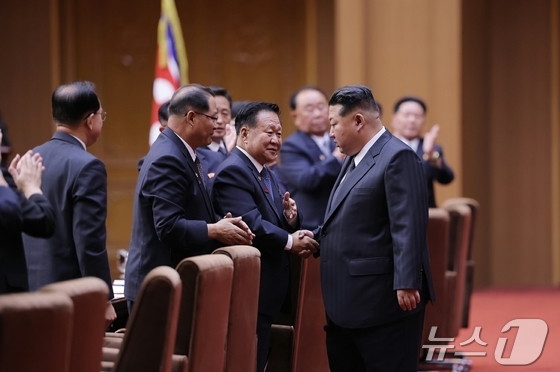
According to North Korea’s state-run newspaper Rodong Sinmun, Kim delivered a significant speech at the 13th meeting of the 14th Supreme People’s Assembly of the Democratic People’s Republic of Korea on Monday. He stated that if the U.S. abandons its fixation on unrealistic denuclearization and acknowledges reality by seeking genuine peaceful coexistence with us, it will have no reason to turn its backs on the U.S.
Kim also remarked that he still personally have fond memories of the current U.S. President Donald Trump. This marks the first time Kim has spoken positively of President Trump and mentioned the possibility of a U.S.-North Korea summit since Trump’s second term began.
Regarding South Korea, Kim asserted that they will neither sit down with them nor engage in any discussions, thus clearly conveying a policy of engaging with the U.S. while excluding South Korea. Despite this, experts view North Korea’s openness to a U.S.-North Korea dialogue as quite encouraging.
In July, Kim Yo-jong, deputy director of the Workers’ Party, acknowledged that she cannot deny that the personal relationship between their leader and the current U.S. President is not bad, urging the U.S. to propose a new solution. Kim’s recent comments appear to formalize and expand on this position.
Park Won-gon, a professor of political science and diplomacy at Ewha Womans University, analyzed Kim’s speech as the most proactive message yet regarding U.S.-North Korea dialogue. He suggested that, with major events like the UN General Assembly and a U.S.-China summit on the horizon, North Korea likely felt compelled to clarify its position.
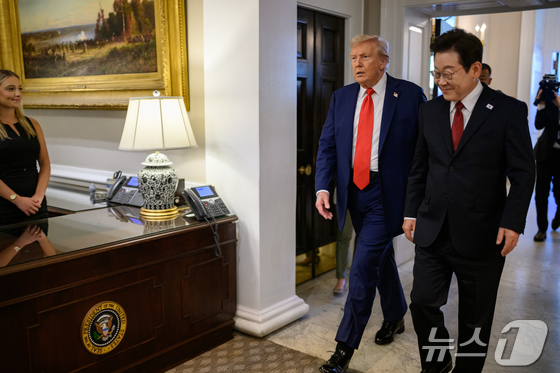
Attention Turns to the Addresses by President Lee and President Trump at the UN General Assembly, With the Potential for Specific Proposals
As President Lee departs for the UN General Assembly, North Korea’s proactive message emerges, raising expectations that Lee’s keynote address will include an advanced statement concerning the Korean Peninsula.
Reports indicate that President Lee plans to reiterate his current stance on phased denuclearization and resolve peace on the Korean Peninsula through U.S.-North Korea dialogue. Given North Korea’s apparent willingness to engage in talks, the possibility of concrete proposals is also anticipated.
The presidential office stated that it will continue its efforts to support a U.S.-North Korea dialogue and work toward a nuclear-free Korean Peninsula and lasting peace in response to Kim’s speech.
Since North Korea has proposed a U.S.-North Korea dialogue based on nuclear possession, securing U.S. support for the South Korean government’s phased denuclearization plan of freeze → reduction → elimination is expected to be crucial for fostering future U.S.-North Korea dialogue.
Notably, President Trump is also scheduled to speak during this high-level session, which increases the importance of coordinating messages between South Korea and the U.S. The peacemaker-peacekeeper concept proposed by President Lee during the South Korea-U.S. summit could gain traction as a result of the UN General Assembly.
President Lee Realistic Alternative to Nuclear Freeze as Interim Measure…Hopes to Serve as Foundation for U.S.-North Korea Dialogue
In a recent interview with the BBC, President Lee said that North Korea could accept an agreement between Trump and Kim to freeze production instead of completely eliminating nuclear weapons, adding that a nuclear freeze is a realistic alternative as an urgent interim measure.
Min Jeong-hoon, a professor at the Korea National Diplomatic Academy, suggested that the U.S. has yet to establish a denuclearization roadmap. He noted that in past instances, South Korea has often provided the roadmap, which the U.S. has adopted when it suited its interests—indicating that the South Korean government will play a role in laying the groundwork for U.S.-North Korea dialogue.
He further stated that given the U.S. experience of failure in North Korean nuclear negotiations during Trump’s first term, it is highly likely they will align with them, adding, the question is whether the end state of denuclearization is promised at the outset of dialogue or is derived as a result of negotiations.
Professor Park also remarked that denuclearization negotiations occur between the U.S. and North Korea. From South Korea’s perspective, it is crucial to secure thorough cooperation with the U.S. in aligning the stages and goals of denuclearization, stressing the importance of the South Korea-U.S. relationship. He stated that if the U.S. negotiates with North Korea, it is essential for both countries to actively discuss what form of denuclearization to pursue.