

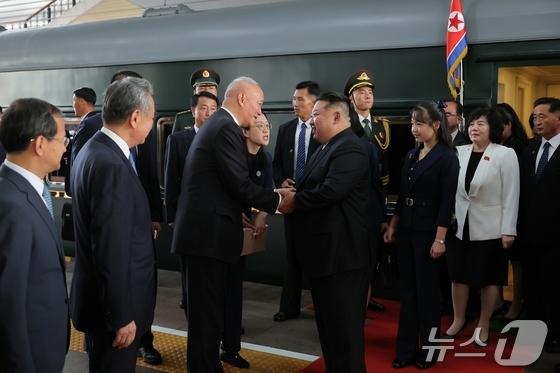
Thae Yong-ho, a former North Korean diplomat and ex-member of the South Korean National Assembly with insider knowledge of North Korean affairs, has stated his belief that Kim Ju Ae appears to be the eldest child of Kim Jong Un, the General Secretary of the North Korean Workers’ Party.
Thae, who previously served as a minister-counselor at the North Korean embassy in London, addressed the speculation about Kim Jong Un’s son during Channel A’s radio program Political Signal on Wednesday. He noted that Park Ji-won, a member of the Democratic Party and former head of the National Intelligence Service, has repeatedly asserted that the successor is not Kim Ju Ae, but rather a son studying abroad. Thae mentioned that he had attempted to verify this information through his contacts, but no evidence has emerged to substantiate the claim.
Thae argued that if Kim Jong Un’s son were indeed studying abroad at an international school, he would necessitate extensive security measures befitting a prince. Consequently, it would be extremely challenging to maintain secrecy without detection by both local and South Korean intelligence agencies.
He also stated that South Korea’s National Intelligence Service has not yet detected any evidence supporting this claim, further diminishing the credibility of the speculation regarding Kim Jong Un’s eldest son studying overseas.
Thae revealed that, according to his sources, rumors are circulating in North Korea suggesting that there is a son younger than Kim Ju Ae. If true, this would indicate that Kim Ju Ae has a younger brother rather than an older one.
In a separate matter, Thae commented on Unification Minister Jeong Dong-young’s proposal to replace the term defector with North Korean residents. He noted that many prefer to retain the term defector, given its established usage. However, some argue that the Korean character for escape carries negative connotations, akin to labels such as prison escapee.
In response, Thae suggested that if the Minister is seeking a term that more accurately reflects the identity of North Korean defectors, more positive alternatives should be considered. He proposed freedom seekers, as they came in search of liberty, or unification residents, reflecting their hope of returning to their hometowns once reunification occurs.