

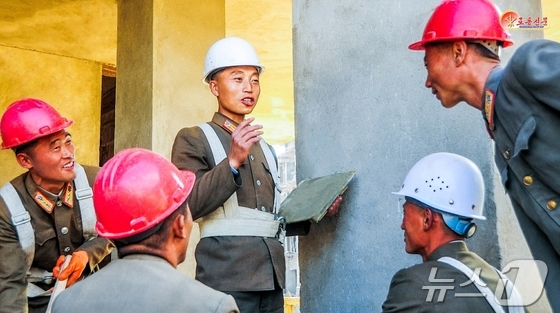
North Korea sent thousands of workers to various construction sites across Russia last year. As young people were mobilized for the Ukraine war, the construction workforce gaps were filled by North Korean soldiers.
According to Russia’s Federal State Statistics Service, 13,221 North Korean citizens entered Russia last year, a dramatic twelvefold increase from 2023. Of these, 7,887 stated their entry purpose as education, forming the largest group. As sanctions against North Korea tightened, evasion tactics evolved. Now, many North Korean workers are disguised as students by the authorities to avoid international scrutiny.
On September 24, an interview was held with Lee Eun-pyung, a 34-year-old former soldier and dispatched worker who witnessed the clever changes in entry and exit methods for North Korean workers. He was initially sent to Russia in 2017, then briefly returned to North Korea due to sanctions, before being redeployed to Russia on a student visa.
Learning Russian, Mastering Daily Rules, and Understanding Russian Law… North Korean Soldiers’ Efforts to be Deployed
Lee enlisted at 19. He joined Unit 131, an organization involved in nuclear test design and construction, also known as the 131 Nuclear Guidance Bureau. Reportedly, it was the only unit directly subordinate to the Party at that time.
The military announced plans to recruit workers for Russia in 2014. From then on, Lee and his fellow Unit 131 soldiers began studying Russian and learning the laws and daily regulations they would need there. Although the study was tough, they felt a mix of excitement and trepidation at the prospect of temporarily escaping their predetermined lives to earn money. For long-serving North Korean soldiers, it was a once-in-a-lifetime opportunity.
To qualify, they needed to pass a Russian language certification exam, similar to the Test of English as a Foreign Language (TOEFL) for English. Following military orders, they memorized about 600 words daily in preparation. Proficiency sufficient for everyday conversation was required.
However, background was the most crucial factor. Authorities conducted thorough checks on family members, including direct relatives and cousins, to ensure there were no missing persons, Party members, or anyone linked to South Korea. They also investigated the reputations of elementary school teachers and others connected to their past to verify their identities.
Lee stated that he was selected thanks to the trust of 24 people, and they had to recommend and vouch for him to qualify. It depended on community members, teachers, and friends. Had one of his parents been missing, that would have disqualified him. Further noting that they probably believed it might indicate psychological instability or weak mental fortitude.
This trust ultimately became a significant burden when considering defection. The fear and guilt of potentially harming those who had vouched for him weighed heavily.
The verification process also included a rigorous physical examination. Healthy young men underwent a preparatory and verification process lasting over a year. At that time, only about 34 were selected. Each company had around 150 members, but only 2 to 3 passed, making it an extremely selective process.
He noted that looking back, it’s embarrassing, but we all felt incredibly proud, as if they were being chosen to become American diplomats or engineers. Further, the vetting was even stricter for active-duty soldiers like him. They underwent intense ideological screening—Kim Jong Un would have had them executed on the spot if he deemed it necessary.
The Stark Reality Hits Upon Takeoff… A Life of Mandatory Quotas
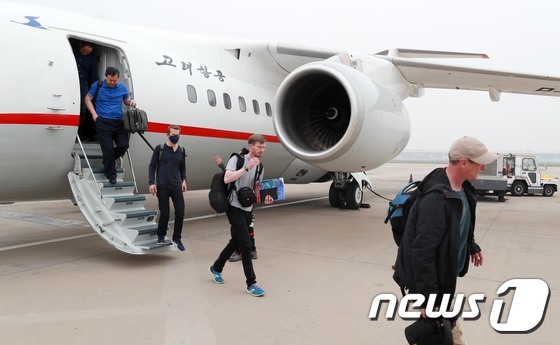
In 2017, Lee boarded a flight to Russia with high hopes. It was the moment when all his hard work to be selected paid off. As a source of family pride and village honor, he was filled with curiosity about a world he had never seen, right up until boarding the plane.
The excitement was short-lived. After a turbulent takeoff into the night sky, reality became apparent a few hours later. The skies over Pyongyang were pitch black, but as they neared Shanghai for a layover, the landscape below was ablaze with lights. It was then that he began to sense something fundamentally different.
The connecting flight was a stark contrast to the dated aircraft he had boarded in Pyongyang. The modern Boeing jet flew much more smoothly and steadily. Even the in-flight meals were delicious. The experience in the air was such a shock that Lee felt it would have been worth the trip even if he had to return to North Korea immediately after landing.
However, life in Russia quickly proved to be a grueling routine of endless tasks and strict discipline, far from his expectations. He was put to work the day after arrival, following a punishing schedule: up at 7:00 a.m., working until 7:00 p.m., then after a brief dinner, back to the construction site from 8:00 p.m. until 11:00 p.m. or midnight.
He stated that there was no official regulation requiring us to work until midnight. However, to meet the quotas, they often had no choice. If conditions were particularly poor or they weren’t in top physical shape, they sometimes worked until 2:00 or 3:00 a.m. Failing to complete the tasks meant no access to our accommodations and no sleep. These demands could only be met by human weapons trained and indoctrinated in North Korea. Their mission as North Korean soldiers was to never violate the principle of unconditionality.
The rules strictly prohibited interactions with other foreign workers from countries like Uzbekistan and Tajikistan, as well as using cell phones or going out. The construction site lacked basic amenities, with only cold water available even in winter. Washing with frigid water after grueling labor often resulted in nosebleeds, forcing him to forgo bathing during the coldest months.
The sole consolation was the wages. At that time, Lee earned about 2 to 3 times the average monthly salary of local Russian workers. While Russian laborers on site earned 60,000 to 90,000 RUB (about 720 to 1,080 USD), Lee received around 165,000 RUB (about 1,980 USD). However, after deducting living expenses and mandatory loyalty funds for the Party, little remained in his pocket.
Connections with Foreign Workers Led to Acquiring a Cell Phone… Prejudices Against South Korea Gradually Erode
As the monotonous daily grind continued, opportunities to connect with foreign workers on site arose during gaps in surveillance. He couldn’t help but notice their cell phones. By sacrificing break times and offering extra help, he managed to acquire a second-hand phone with their assistance.
He said growing up, they were taught that South Korea was under American colonial rule. Before going abroad, he was indoctrinated to believe that if caught by the National Intelligence Service, they would drain our blood for propaganda. But with the cell phone, he could access the internet and watch Korean dramas and movies, and he began to realize that the South Korea he had imagined was nothing like reality.
As his prejudices against capitalism began to fade and his curiosity grew, the United Nations (UN) adopted new sanctions against North Korea in 2017, making it impossible for all North Korean workers abroad to remain after December 2019. UN Security Council Resolution 2375 prohibited issuing work permits for North Korean laborers, putting them at risk of becoming illegal residents when their visas expired.
Upon returning to North Korea, the first thing Lee encountered was a demand for 5 USD from his unit. In North Korean culture, paying respects by laying flowers at the statues of Kim Il Sung and Kim Jong Il in the Mansudae Assembly Hall is considered the beginning of all things. The 5 USD was for flowers that returning soldiers were required to present.
He noted that no matter how much he lived like a slave in Russia, it felt like freedom compared to daily life in North Korea. What had once been normal suddenly felt alien. Even though the food in Russia was decent, returning to the damp, moldy rice here was unbearable. That’s when he began to compare my experiences and, while he wasn’t planning to defect yet, he first felt that he couldn’t continue living in such a place.
North Korean authorities wasted no time in redeploying soldiers to earn foreign currency. After a brief 20-day stay in North Korea, Lee and other soldiers received ‘student visas’ from the embassy in December 2017 and were sent back to Russia.
Lee explained that although he was supposedly a student at a foreign university, he had no idea where this university was or if he had ever set foot there. After this charade, they not only had to pay the usual funds to North Korean authorities but also cover supposed tuition fees.
Life became even more challenging than before. Without provided clothing or meals, he was forced to scavenge for clothes from residential area dumpsters and eat discarded produce from supermarkets.
His only solace during this time was the foreign movies and dramas he could download on his phone. He even managed to watch Crash Landing on You in real time in 2019. A generational divide emerged among the workers, with younger ones often helping their older counterparts navigate technology, sharing downloaded content, and even teaching each other how to access streaming services like Netflix to cope with their harsh daily lives.
COVID-19 Pandemic Exposes Life-Threatening Conditions… Solidifying Resolve to Escape
The decision to escape ultimately stemmed from mounting frustration with life-threatening working conditions. While performing dangerous tasks like brick cutting, severe injuries were common—often exposing bone and causing profuse bleeding. Yet it was standard practice to return to work before fully healed after minimal medical attention. Taking time off wasn’t an option, as it would only increase the burden on fellow workers.
The situation deteriorated further with the onset of the global COVID-19 pandemic in 2020. As some factories shut down, a colleague collapsed from a severe stomach ulcer. Despite the critical need for immediate medical attention, supervisors refused to call an ambulance. They feared that if the worker contracted COVID-19 at the hospital, it could halt operations for all workers.
Lee couldn’t tolerate the blatant disregard for human life, treating them as mere cogs in a money-making machine. It became crystal clear that staying meant certain death for both his sick friend and himself. That’s when he became absolutely convinced that survival meant escaping this hell, and it drove him to contact the UN office in Russia.
After reaching out to the UN, Lee spent about four months in hiding at a refugee camp far from Moscow, awaiting refugee status. However, the process took an unexpected turn when Russian police conducted the refugee status examination. During a hearing to verify his North Korean origin, he had the misfortune of encountering a North Korean official, forcing him to flee once again.
Lee credits his survival to the help of a fellow detainee who had already secured refugee status, enabling him to evade the Russian police and their mafia connections. While on the run, he constantly carried a knife, prepared to take his own life if captured rather than face repatriation. After five harrowing months in hiding, aided by missionaries, he finally reached South Korean soil in March 2021, having passed through several countries, including Turkey.
As he concluded his story, Lee addressed the plight of young soldiers captured in Ukraine. Speaking as a former North Korean soldier who had undergone similar ordeals, he expressed deep empathy for their situation.
Lee firmly believe that North Korea is the place with the least freedom on Earth. While some might point to poverty in places like Africa, even there people have some degree of choice—to refuse food they don’t want or decline tasks they’d rather not do. But for North Koreans, neither their bodies nor their thoughts truly belong to them. He implores you: please help them find the freedom they so desperately deserve.