

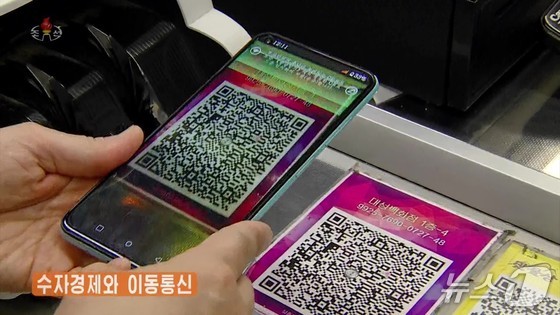
Reports from Monday indicate a growing trend of smartphone adoption and electronic payments in North Korea. The emergence of automated teller machines (ATMs) that enable cash withdrawals via smartphones—without the need for cards or bank accounts—suggests a burgeoning fintech landscape in the country.
According to a recent report by 38 North, a media outlet specializing in North Korean affairs, the widespread use of smartphones and evolving market practices are paving the way for new cashless transaction methods. These systems mirror the quick-response (QR) code-based electronic payment methods prevalent in China and Southeast Asia.
Twelve North Korean smartphone apps utilizing QR code-based electronic payments have been identified, including Apnal Wallet, Samhung Electronics Wallet, Manmul Sang Electronic Payment Program, Gangseong, and Narae, among others.
38 North highlights an intriguing aspect of North Korea’s fintech landscape: prominent information technology (IT) companies such as Samhung, Apnal, and Yeonpung not only develop banking apps but also directly operate the underlying systems.
The Samhung app offers a wide array of services, including payments for public transportation (taxis, buses, and subways), the purchase of grain coupons and sports lottery tickets, utility bill payments, and reservations for restaurant seats and tours. Its main competitor, the Manmul Sang app, appears to offer comparable services.
Since late 2020, Korean Central Television has frequently showcased scenes of QR code payments in action. Beyond smartphone payment apps, the installation of new ATMs throughout Pyongyang marks another significant development in North Korea’s financial technology sector.
NK Tech Lab, a division of 38 North specializing in North Korean technology analysis, reports that the Hwawon Electronic Bank ATM enables users to perform cash deposits, withdrawals, transfers, and exchanges using a smartphone app.
Notably, the Hwawon Electronic Bank ATM supports foreign currency transactions. Users can partially exchange foreign currency, such as U.S. dollars, for North Korean won and receive change in the original foreign currency. These ATMs have been installed in at least 15 locations across Pyongyang, including department stores, hotels, and markets.
The expansion of electronic payments in North Korea appears to be driven not only by increased smartphone adoption but also by the government’s efforts to tighten control over the economy. While cash transactions are difficult to monitor, electronic payments provide a more traceable alternative. This has led to speculation that North Korean authorities are promoting electronic payments as a means of surveilling citizens’ financial activities.
38 North explains that the rise of informal markets in recent years has somewhat eroded state control in certain economic sectors, allowing individuals to accumulate wealth outside the official economy. The push for electronic payments is seen as a strategy to channel these funds back into the regulated economy, enabling the state to better control cash flow, particularly foreign currency.