

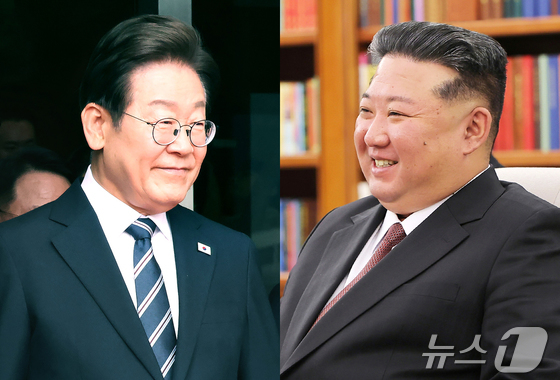
Despite the Lee Jae Myung administration’s conciliatory policies toward North Korea, experts suggest that the government needs to shift its focus from pursuing unification and peace to managing a feasible coexistence due to increased practical constraints arising from North Korea’s abrupt policy changes.
Former Secretary-General Lee Seung-hwan of the Democratic Peace Unification Advisory Council made this statement in a presentation released on Tuesday. The presentation precedes an academic conference co-hosted by the National Security Strategy Institute and the Korea Peninsula Peace Forum, themed North Korea at 80: The Founding of the Party and Inter-Korean Relations.
Lee pointed out that Kim Jong Un, General Secretary of North Korea’s Workers’ Party, maintains a stance of hostility between the two states and refuses to denuclearize. He assessed that the shifting inter-Korean relations and the current domestic and international circumstances are widening the gap between North Korea’s policy goals and reality, thereby necessitating a redefinition of the vision and objectives for inter-Korean relations.
Lee further argued for the need to reconstruct a realistic and persuasive vision for inter-Korean relations. He emphasized that it is appropriate to transform the hostile relationship into peaceful coexistence, aiming for the institutionalization of unification-oriented coexistence, specifically a Korean confederation. This approach is based on acknowledging the reality of two distinct states under international law.
Lee cited a shift in public perception as a key justification for this approach. A unification opinion survey conducted by the Democratic Peace Unification Advisory Council two years ago found that 52.0% of respondents identified a future on the Korean Peninsula with two states allowing free movement as desirable, while only 28.5% favored a single state.
He explained that this indicates that the majority of the public views North Korea as a separate state. Given that over 73.7% of respondents in the same survey expressed the need for unification, it is reasonable to infer that most support a coexistence-oriented unification in the form of a confederation of two states.
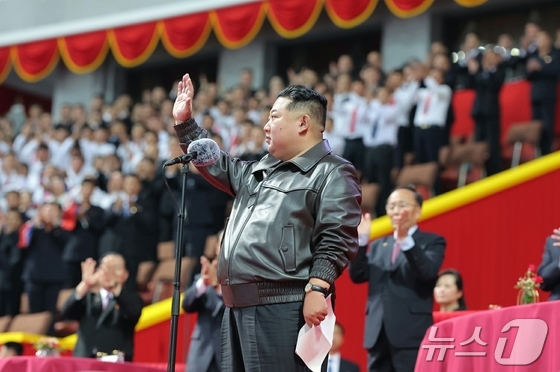
To achieve the vision of unification-oriented coexistence, he suggested that the most critical step is to establish a practical peace regime through the reduction of hostilities.
Lee stated that at this point, the peace regime on the Korean Peninsula that can be quickly achieved should aim for denuclearization as the ultimate goal, but should also actively pursue the establishment of a practical peace regime even during the process of freezing nuclear activities. He proposed that the current core elements for building a peace regime on the Korean Peninsula should include a nuclear and missile freeze (cessation) + the restoration and modernization of the September 19 military agreement + a four-party declaration by South Korea, North Korea, the U.S., and China to end the war + the establishment of a military control system to replace the armistice regime.
He particularly stressed that, to promote a new vision for inter-Korean relations, South Korea needs to amend the territorial clause in its constitution, which defines its territory as the Korean Peninsula and its adjacent islands (Article 3).
Lee suggested revising the territorial clause to state that the territory of the Republic of Korea consists of the Korean Peninsula and its adjacent islands, and its scope of application is the areas effectively under the jurisdiction of the Republic of Korea, or more proactively, to change it to The territory of the Republic of Korea consists of the areas effectively under the jurisdiction of the Korean Peninsula and its adjacent islands.