

A report released on November 2 suggests that during the intense week-long Asia-Pacific Economic Cooperation (APEC) meeting in Gyeongju, North Korea, despite not being an APEC member, garnered the most attention alongside the U.S., China, and host country South Korea.
North Korea’s Calculated Indifference to APEC
North Korea’s prominence stemmed from the potential for a surprise meeting between President Donald Trump and Kim Jong Un, the General Secretary of the Workers’ Party. Before the APEC summit began, President Trump expressed his desire to meet Kim on October 24, sparking speculation that their encounter could become the highlight of the APEC event.
While North Korea didn’t officially respond to President Trump’s proposal, it subtly acknowledged it through diplomatic gestures. On October 22, Pyongyang launched a short-range ballistic missile (SRBM) matching the distance to Gyeongju (about 450 km, approximately 280 miles). On October 28, the day before President Trump’s visit to South Korea, it fired a hard-to-detect cruise missile.
On October 26, Choe Son-hui, North Korea’s foreign minister responsible for U.S. diplomacy, traveled to Russia and Belarus, returning only after APEC concluded on October 31. This move signaled North Korea’s cold stance, refusing any contact with the U.S.
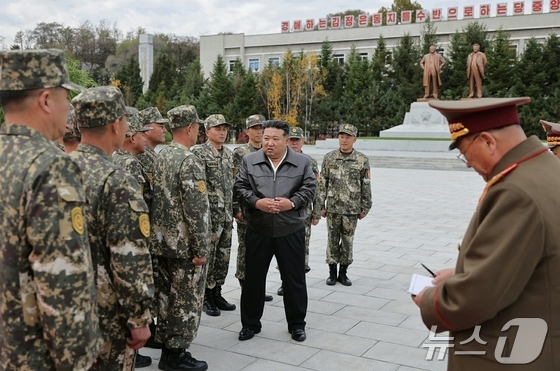
Notably, Kim was absent from these activities. He skipped observing the two missile launches, instead inspecting a hospital construction site near Pyongyang on October 30 and visiting the 11th Army Corps (Storm Corps) on November 1 – activities unrelated to APEC or President Trump.
This behavior, rather than mere indifference, appears strategically calculated. North Korea has consistently maintained that the personal relationship between Kim and President Trump remains intact, regardless of political tensions. Even after the failed 2019 Hanoi summit, where President Trump’s deviation from the pre-arranged agenda embarrassed Kim, North Korea’s actions reflect the importance it places on U.S. diplomacy.
Kim’s silence on President Trump’s proposal, while avoiding direct diplomatic engagement, suggests a strategy to reject the U.S. offer without damaging President Trump’s image.
North Korea’s Diplomatic Gains: Confirming U.S. Interest and Chinese Support
Despite distancing itself from President Trump, North Korea’s diplomatic achievements are significant.
President Trump referred to North Korea as a nuclear power, seemingly endorsing its claim to nuclear state status. While this differs from the Nuclear Non-Proliferation Treaty (NPT) definition of a nuclear weapon state, experts believe North Korea values U.S. recognition of its nuclear status more than NPT acknowledgment.
Moreover, President Trump indicated willingness to discuss easing or lifting sanctions in potential talks with North Korea. This positions North Korea to initiate negotiations with the U.S. on sanction relief as a de facto nuclear power.
At a summit with China, President Lee Jae Myung’s proposal to elevate Korean Peninsula issues to a strategic communication agenda received a positive response. China pledged to contribute positively to regional peace and development, benefiting North Korea by signaling a supportive diplomatic approach without pressure.
With China assuming the APEC chairmanship next year and President Trump planning a U.S.-China summit visit in April, a new phase in North Korea diplomacy is anticipated. This schedule inevitably increases China’s influence over Korean Peninsula matters.
In essence, North Korea maintained a presence as an invisible participant at APEC without significant effort. Looking ahead, North Korea is likely to strategize its full-scale U.S. diplomacy, leveraging President Trump’s eagerness for dialogue and President Xi Jinping’s diplomatic support. This strategy may unfold during the upcoming Workers’ Party plenary meeting in mid-December and the anticipated 9th Congress of the Workers’ Party in January.