

Kim Jong Un, North Korea’s ruling Workers’ Party General Secretary, has signaled a major political shakeup ahead of the year-end plenary meeting. He indicated that a clear system of rewards and punishments for officials would be implemented, suggesting significant personnel changes at the party’s plenary meeting scheduled for mid-December.
While he focused on foreign relations with socialist allies during China’s 80th Victory Day celebrations in early September and the 80th anniversary of the Workers’ Party founding last month, Kim is expected to shift his attention to domestic issues for the remainder of the year. His aim is to address lingering economic and livelihood challenges and boost performance.
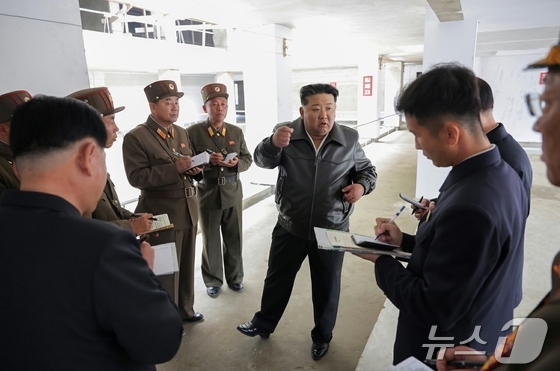
On Wednesday, the party’s official newspaper Rodong Sinmun reported that Kim visited construction sites for a school supplies factory and an educational materials factory on Tuesday. He noted that progress was slower than anticipated and ordered both facilities to be completed by year’s end.
Kim specifically pointed to officials’ attitude problem as the root cause of construction delays. He criticized the lack of progress, stating that despite treating the strengthening of the education sector’s material and technical foundation as a critical issue at every plenary meeting for the past few years, construction has not advanced by mid-year, five years on. He added that this reflects a problematic perspective and attitude among cabinet members and education sector leaders towards party policies and the nation’s future. Kim was highlighting the failure to properly implement the education infrastructure project decided at the 8th Party Congress in 2021.
He continued by stating that resolutions to establish this factory have been passed eight times during plenary meetings, yet they remain unexecuted, and those responsible have failed to propose any effective solutions. Kim emphasized that it must rigorously investigate why these crucial policy initiatives, of utmost national importance, have been neglected for years.
Earlier, on October 8, during a visit to the Party’s founding historical museum, Kim had already warned that lax discipline, bureaucracy, and corruption were rampant within the party. He declared that all elements and actions undermining the party’s authority would be swiftly identified and eliminated.
Kim’s Revolution of Officials: Immediate Punishment for High-Ranking Officials Who Err
Since 2021, Kim has been advocating for a revolution of officials, demanding that they fulfill their social roles and responsibilities with increased rigor.
Last summer, when severe flooding occurred along the Yalu River, he blamed officials for inadequate preventive measures. Earlier this year, he publicly criticized local officials for engaging in drunken hospitality, ordering strict measures against such behavior.
Given Kim’s recent repeated warnings about official conduct, some anticipate significant personnel changes at the December plenary meeting. North Korea’s decision to publicize the Supreme Leader’s reprimands through widely accessible media suggests that corresponding measures will follow, while also sending a message to maintain vigilance across all sectors.
This approach is a typical Workers’ Party method of governing officials, frequently employed by previous North Korean leaders. Kim often temporarily dismisses or demotes even high-ranking officials, only to reinstate them after a period, maintaining tension within the ranks.
For instance, after the 2022 year-end plenary meeting, he suddenly dismissed Pak Jong-chon, the second-ranking military official, to assert control over the military, only to reinstate him a year later. Earlier this year, during the local officials’ drunken hospitality incident, he placed Cho Yong-won, the party’s organizational secretary, on probation, temporarily reducing his activities. This sends a clear message that anyone producing results contrary to party decisions will face punishment without exception.
Some analysts speculate that Kim’s recent comments may not lead to widespread disciplinary actions but rather serve as a warning to create a climate of discipline. They argue that achieving economic results is currently more urgent, suggesting that this approach may not severely intimidate officials.
Professor Lim Eul-chul from Kyungnam University’s Institute of Far Eastern Studies noted that as large-scale projects like local industrial factories and the Pyongyang General Hospital increase, Kim’s rhetoric tightening control over officials has also intensified. However, this doesn’t necessarily translate into actual punitive measures.