

Critics argue that the government’s confirmed 2035 Nationally Determined Contribution (NDC) for reducing greenhouse gas emissions by 53-61% fails to reflect South Korea’s manufacturing-centric industrial structure.
While South Korea’s reduction targets are comparable to those of major developed nations like the U.S. and European countries, the challenge lies in its late start. Unlike these early industrializers who began emissions reductions earlier, South Korea is still at the starting line for a fundamental shift in its industrial structure to meet carbon reduction goals.
Setting ambitious targets without viable alternatives for a swift industrial transition could place a significant burden on the industry. The controversy is unlikely to subside soon, with the industrial sector projecting that businesses could face carbon costs of up to 4 trillion KRW (approximately 2.7 billion USD) by 2030.
◇ A 13-21% Burden Increase Over Five Years… Despite Claims of Stakeholder Compromise, Coordination Within Ministries and with Industry has Effectively Failed
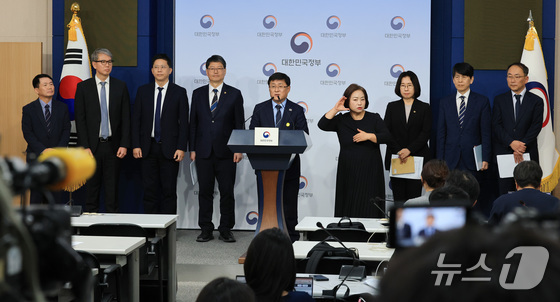
On Tuesday, the Presidential Commission on Carbon Neutrality and Green Growth (CCG) held a plenary meeting and finalized the plan to reduce greenhouse gas emissions by 53-61% from 2018 levels by 2035. This plan will undergo Cabinet deliberation and approval before submission to the United Nations Framework Convention on Climate Change (UNFCCC).
This NDC builds upon the 40% reduction target set by the Moon Jae-in administration in 2021, marking a 13-21% increase over five years. Climate, Energy, and Environment Minister Kim Sung-hwan described it as a realistic alternative balancing societal capacity and aspirational goals, resulting from negotiations among various stakeholders.
However, contrary to the government’s announcement, the finalized plan lacks sufficient measures and support for reducing emissions in the industrial sector.
The government initially promised to disclose reduction measures and costs to foster social consensus, but financial estimates remain unpublished. Minister Kim cited discrepancies between ministry estimates as the reason for withholding figures. He expressed regret for not disclosing industrial sector projections and reduction measures in advance, leaving the government open to criticism for prioritizing pre-COP30 proposals over concrete plans.
The industrial sector’s backlash is clear and specific. According to the newly finalized fourth greenhouse gas emissions trading scheme (ETS), the total emissions cap will be 2.5373 billion tons by 2030, a 16.8% reduction from the previous 3.04825 billion tons. Notably, the power sector’s allocation ratio will increase from 10% to 50% by 2030, potentially resulting in carbon costs of up to 4 trillion KRW (approximately 2.7 billion USD) for companies.
Lee Si-hyung, a carbon neutrality expert at the Korea Chamber of Commerce and Industry, warned that linking the 53% reduction minimum to the emissions trading scheme would increase industrial electricity costs. He suggested implementing a buffer measure, similar to Europe’s practice of reinvesting allocation proceeds into electricity subsidies.
While the Climate Ministry pledged to use all increased allocation revenues for decarbonization support, it’s uncertain if this will alleviate industry burdens. Reports indicate that the Trade and small and medium-sized enterprise (SME) Ministries expressed concerns about achieving even a 55% reduction. Minister Kim acknowledged that determining appropriate industrial sector reductions was the most challenging issue, noting forecast discrepancies among ministries.
◇ Shifting from Renewable Energy to Decarbonization… Surpassing Average International Reduction Targets
Experts describe the 2035 NDC as an inevitable second-best option, while expressing doubts about its feasibility. Professor Lee Jun of Pusan National University’s Climate Science Research Institute stated that the 2035 NDC is a critical juncture towards 2050 carbon neutrality. While it may seem like a slight retreat in national commitment, he believes there’s potential for upward adjustments post-finalization.
Researcher Kim Seon-kyo of the Korea Institute of Science and Technology Evaluation and Planning noted that past administrations often set ambitious goals without follow-through. The Lee Jae Myung administration seems to have opted for a feasible 50% target rather than an overly ambitious one. He sees this as a commitment to exceed the minimum threshold, though achieving even this realistic goal may prove challenging.
The government’s energy strategy has also shifted. While the previous administration prioritized renewable energy, the current one has adopted a low-carbon mixed energy strategy including nuclear power, considering intermittency and variability issues. The Climate Ministry plans to increase nuclear power generation to over 30% by 2035 and raise carbon-free electricity to around 70%.
This adjustment aims to ensure both energy security and supply stability, aligning with policy shifts in major countries following recent supply chain disruptions. Nations like France, the UK, and Japan are reassessing nuclear power as a climate-responsive baseload power. South Korea is also incorporating various reduction technologies such as hydrogen and Carbon Capture, Utilization, and Storage (CCUS). However, Professor Lee warns that failing to design a clear complementary structure between nuclear and renewable energy expansion could lead to transition risks.
In international comparisons, this NDC is evaluated as being at an intermediate level.
South Korea has raised its target by 13-21% from 2030 to 2035. During the same period, the European Union (EU) increased its target from 55% to 66.25-72.5% (compared to 1990), the U.S. from 50-52% to 61-66% (from 2005), Japan from 46% to 60% (from 2013), and Canada from 45-50% to 62-70% (from 2005). While most countries adjusted upward by about 10-20%, South Korea’s increase exceeds the average.
However, considering the different baseline years, South Korea’s actual burden is relatively greater.
The EU and U.S. peaked emissions in the early 1990s to early 2000s, while South Korea’s peak occurred in 2018. This compressed timeline means South Korea must transform its industrial and energy structures much faster. Consequently, South Korea faces a heavier burden in transitioning to renewable and nuclear energy, expanding its power grid, and restructuring its manufacturing sector.
Experts argue that while South Korea’s decision to secure a grace period through scope setting was unavoidable, failing to follow up with an implementation roadmap could result in another empty declaration. Researcher Kim emphasized that the era of simply raising targets is over. It needs concurrent transitions in technology, finance, and governance for practical implementation.
While the Moon Jae-in administration’s 2030 NDC effectively remained a declaration, the Lee administration’s 2035 NDC aims to ensure effectiveness. However, having secured a grace period through scope setting, there are calls for developing refined support systems, specific funding strategies, and realistic policies to alleviate industry burdens during the industrial transition over the next five years.