

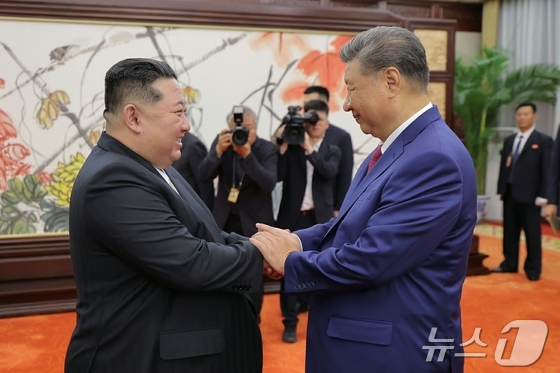
China’s recent military white paper, released after a 19-year hiatus, has omitted the phrase denuclearization of the Korean Peninsula, signaling a significant shift in regional dynamics surrounding North Korea’s nuclear ambitions. This change could embolden Pyongyang’s efforts to normalize its nuclear status, while potentially complicating Seoul’s reliance on Beijing’s constructive role in peninsula affairs.
The State Council of China unveiled its New Era of China’s Arms Control, Disarmament, and Non-Proliferation white paper on November 27, updating the 2005 version. Unlike its predecessor, which explicitly supported a nuclear-free Korean Peninsula, the latest document eschews such language, instead opting for vague references to political resolution and peace, stability, and prosperity in the region.
This linguistic shift suggests Beijing may be pivoting away from using denuclearization as leverage against Pyongyang. Instead, China appears to be recalibrating its stance, viewing North Korea’s nuclear capabilities as a manageable reality within the broader context of U.S.-China strategic competition. Hong Kong’s South China Morning Post (SCMP) has even speculated that this could signal China’s tacit acknowledgment of North Korea’s nuclear arsenal.
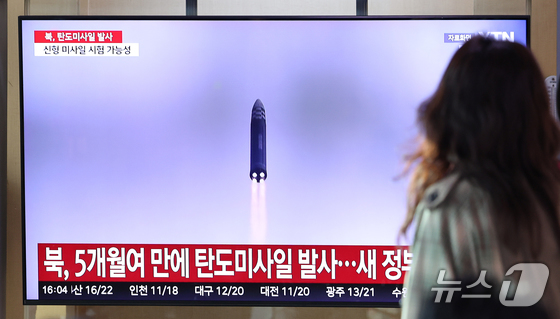
North Korea Gains Confidence in Nuclear Status as China’s Support Remains Steady
For Pyongyang, this development is more than mere semantics; it’s a potential green light from a major power validating its long-pursued nuclear ambitions.
North Korea has steadily entrenched its nuclear posture, from codifying its nuclear force in 2022 to enshrining its irreversible nuclear status in its constitution during the 2023 Supreme People’s Assembly. Kim Yo-jong, a key figure in the regime, has repeatedly asserted that external pressures will not sway their nuclear stance.
China’s omission of denuclearization language may provide North Korea with a psychological buffer, suggesting it can maintain strategic ties with Beijing without compromising its nuclear arsenal. This, coupled with strengthened Russia-North Korea relations, has bolstered Pyongyang’s strategic position.
Professor Lim Eom-chul from Kyungnam University’s Institute of East Asian Studies notes that while China can’t officially endorse North Korea’s nuclear program, there’s a growing implicit acceptance. Beijing recognizes that actively pushing for denuclearization is increasingly challenging in the current geopolitical climate.
Analysts predict North Korea may double down on portraying itself as a responsible nuclear power in its external messaging. Pyongyang has already framed denuclearization demands as attacks on its sovereignty. China’s rhetorical retreat may embolden North Korea to more aggressively push for a nuclear-armed peace regime as the only viable solution.
China’s Strategic Ambiguity: Experts Weigh in on Beijing’s Shifting Stance
Observers view China’s recent move as part of a gradual softening on the North Korean nuclear issue.
Professor Yang Moo-jin of the University of North Korean Studies outlines a three-stage evolution in China’s position: First, as U.S.-led alliances solidified against the North Korea-China-Russia bloc, Beijing and Moscow disengaged from United Nations (UN) sanctions, questioning their effectiveness.
Yang explains that the second stage saw denuclearization language fading from official documents, replaced by vaguer terms like resolution of Korean Peninsula issues. Yang added that this latest white paper, completely omitting denuclearization, represents the third stage, showcasing China’s strategic linguistic maneuvering.
In essence, while maintaining a facade of neutrality, China appears to be distancing itself from the thorny issue of North Korean denuclearization, potentially complicating future engagement efforts.
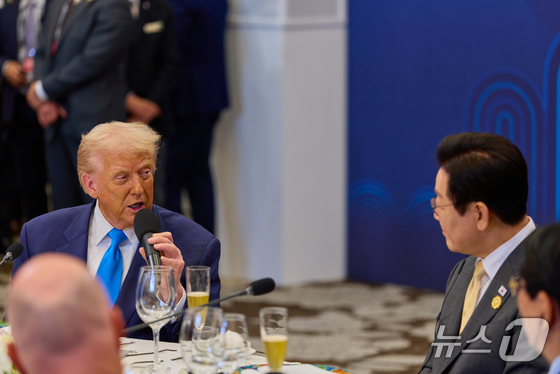
U.S.-South Korea CVID Stance at Risk of Isolation as Global Rhetoric Shifts
This trend threatens to isolate the long-standing U.S.-South Korea position of complete, verifiable, and irreversible denuclearization (CVID).
As North Korea insists on nuclear power recognition as a precondition for talks, and China refrains from denuclearization rhetoric, Washington and Seoul find their negotiating leverage significantly diminished.
Even discussions of scaled-back agreements like partial freezes or test moratoriums could leave the U.S. and South Korea’s CVID stance increasingly isolated. Meanwhile, North Korea may leverage its ties with China to push for more favorable terms.
The newly released U.S. National Security Strategy (NSS) also omits explicit references to North Korean denuclearization, a stark departure from previous iterations. This shift suggests even Washington may be recalibrating its approach, potentially viewing the North Korean nuclear issue as a long-term management challenge rather than an immediate resolution priority.