

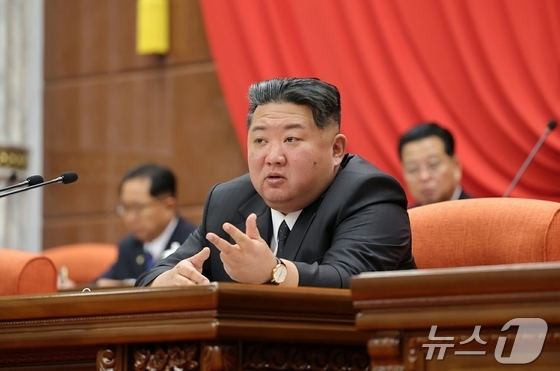
Experts predict that North Korea may implement a major reshuffle of high-ranking officials at the upcoming 9th Workers’ Party Congress, set to take place early next year.
In a report titled, Prospects for North Korea’s Domestic Situation in 2026, released on December 13, Peter Ward, a research fellow at the Sejong Institute, suggests that Kim Jong Un’s approach to managing officials has become firmly established. This method involves swift and decisive rewards or punishments based on individual performance.
A prime example of this occurred in May when the newly built 5,000-ton destroyer Ganggeonho ran aground during its launch. This incident led to the arrest of Ri Hyung-son, then deputy director of the Central Committee’s Department of Munitions Industry. Additionally, General Jeong Kyung-taek was demoted from general to colonel, and several other high-ranking military officials, including corps commanders and directors of artillery and security, were replaced.
The report also anticipates an increase in replacements within North Korea’s elite class due to health issues or retirements as this group ages.
Ward noted that during the 8th Party Congress in 2021, 66% of the 250 key personnel in major power institutions, including the Central Committee, Political Bureau, Secretariat, and military, were replaced. He predicts a similar level of turnover at the upcoming Party Congress.
However, Ward observes that certain individuals who have remained close to Kim without significant changes over the past five years are likely to retain their positions. These include Party Secretaries Pak Jong-chon and Jo Chun-ryong, Cho Yong-won, Prime Minister Pak Tae-sung, and Defense Minister No Kwang-chol.
Ward also highlighted Kim Jong Un’s recent trend of appointing military officials to more prominent roles in cabinet economic operations. He cited the example of Kim Jong-gwan, who served as Minister of Defense (2019-2021) and First Vice Minister of Defense (2021-2024), before being appointed Deputy Prime Minister this year.
Ward suggests that Kim’s strategy involves deploying the military as a primary workforce for his key project, the 20X10 Local Development Policy. To more effectively allocate military resources and personnel to the civilian economy, some military factories may undergo civilian conversion.
He also noted that the Party Congress traditionally involves restructuring the Party’s charter and the Party-state system. Given North Korea’s recent intensified propaganda efforts highlighting Kim’s revolutionary thought, Ward believes there is a possibility that the charter will be modified to further elevate Kim’s ideology.