

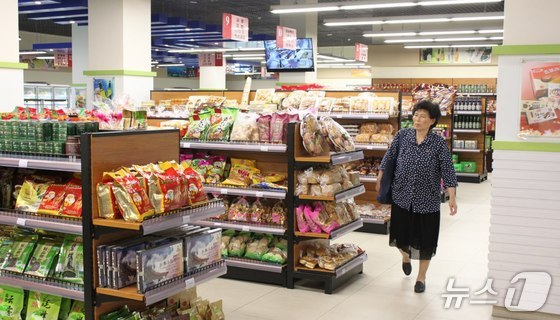
North Korea convened an expanded meeting of the 13th Plenary Session of the 8th Central Committee of the Workers’ Party from December 9 to 11. During this meeting, they evaluated this year’s party and state activities and determined the direction for preparations for next year’s 9th Party Congress.
At this meeting, Kim Jong Un, the party’s General Secretary, emphasized that while he did not provide specific figures, the five-year national economic development plan established at the 8th Party Congress in 2021 has been successfully completed. He noted that the agricultural sector achieved a higher grain harvest compared to the previous year. Kim highlighted the restructuring of the agricultural and rural sectors as the top national priority for the coming year, advocating for a significant expansion in wheat cultivation areas and an increase in wheat processing capacity.
Since the 8th Party Congress, North Korea has been expanding wheat and barley cultivation areas, replacing corn and potatoes. In a speech during the 5th session of the 14th Supreme People’s Assembly in September 2021, Kim set a specific goal to double the nationwide wheat and barley sowing area. This plan aims to shift the people’s dietary culture towards a focus on white rice and wheat-based foods. According to North Korean statistics, the area for wheat and barley cultivation increased by over 35,600 hectares from 2022 to 2024, with wheat yields also rising significantly.
North Korea’s interest in alternative crops to replace corn began in the early era of Kim Jong Il. In October 1998, while inspecting Daehongdan County in Yanggang Province, Chairman Kim Jong Il emphasized the need for a revolution in potato farming, stating that potatoes are like white rice. During a visit to Russia in 2001, he remarked that Russia has maintained a good tradition of using potatoes as a staple. He wants to establish potatoes as a staple in Korea, but it hasn’t been successfully implemented yet, expressing plans to triple potato production.
This initiative aimed to address food shortages by making rice, corn, and potatoes the three main staples. This led to a massive potato production movement, expanding the cultivation area from 40,000 hectares in 1998 to over 200,000 hectares by 2000. By 2003, North Korea’s Agricultural Science Institute set an ambitious goal to increase potato production to 8 million tons (about 16 billion lbs) to solve food shortages.
North Korea’s sudden promotion of potatoes as a staple instead of corn stemmed not only from the assessment that corn production had reached its limits but also from considering the residents’ aversion to corn-based meals. Chairman Kim Jong Il admitted in 2001 that the people have mainly eaten corn for the past 45 to 50 years, many are already tired of it.
North Korea, which promoted a potato revolution to replace corn with potatoes, organized potato cooking contests and showcased various dishes, including potato noodles. In 2016, Chairman Kim constructed a potato flour production facility in Samjiyon near Mount Baekdu and visited multiple times to encourage production and development. However, potatoes still account for only about 10% of total grain production.
Most importantly, residents do not accept potatoes, which they view as a supplementary crop, as a staple food. A study by the Bank of Korea comparing North Korean defectors from different periods found that the staple foods of North Koreans in the late 1990s were rice, corn, and potatoes in a ratio of 19:44:33, but by the mid-2000s, it shifted to 45:34:17.
Contrary to the North Korean authorities’ intentions, rice consumption has increased significantly, leading to a decrease in potato and corn consumption. The government’s attempt to raise the proportion of potatoes as a staple instead of corn has failed. Since 2002, the legalization of district markets across North Korea has increased market activities, allowing residents who earn money to purchase rice instead of corn or potatoes.
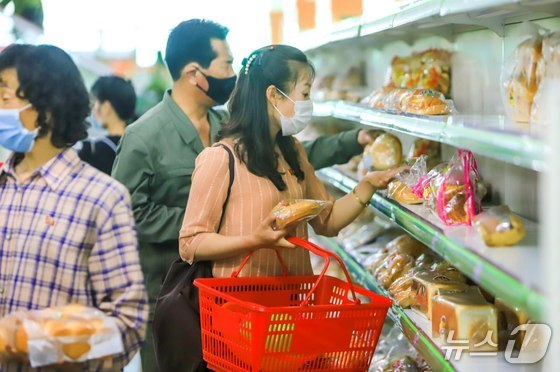
Additionally, the consumption of wheat flour products like bread has increased in daily life. During the severe food shortages in the 1990s, humanitarian organizations from South Korea and international agencies undertook large-scale bread factory constructions and flour support projects. Naturally, bread consumption, particularly among children, rose. Following the expansion of exchanges with China, the consumption of wheat flour products continued to grow. In local markets, wheat-based products imported from China, such as instant noodles and snacks, have begun circulating widely.
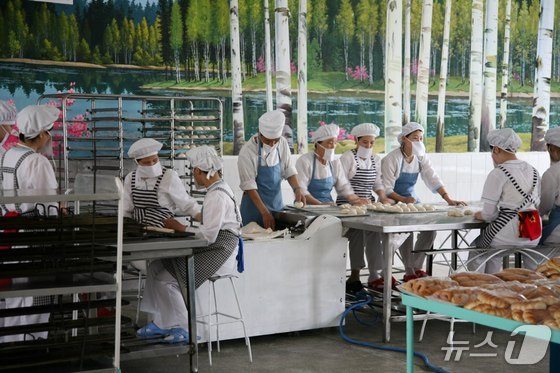
North Korean food factories also increased the production of wheat flour products. In May 2008, during a visit to a food factory in Pyongyang, stacks of flour imported from China were observed on one side of the factory, which produced various breads for schools and stores. At major supermarkets like the Pyongyang Gwangbok District Commercial Center, which opened in 2012, and the first-floor supermarket of Daesung Department Store, products made from wheat flour produced by Pyongyang Flour Processing Plant, Geumsung Food Factory, and Geumcup Sports Comprehensive Food Factory are sold.
Kim’s plan to solve the food problem that previous leaders could not resolve with corn and potatoes by increasing wheat production is a wise policy shift in terms of climate change response and technology. Corn requires a large amount of fertilizer and is vulnerable to natural disasters, resulting in severe soil acidification due to excessive chemical fertilizer use.
Additionally, potatoes are susceptible to diseases and are not favored by residents. North Korea assessed that in 2024, it achieved a major transformation by restructuring its food production to focus on rice, wheat, and barley, and announced that the nationwide wheat cultivation area increased by 123% compared to 2024. According to the Rural Development Administration’s estimates for North Korea’s food crop production in 2024, the wheat and barley output last year was 280,000 tons, up by 60,000 tons (27.3%) from the previous year. Over the past four years, North Korea constructed new flour processing plants in cities and counties across the country, roughly doubling its wheat processing capacity.
However, North Korea’s corn production still exceeds 1.5 million tons (about 3 billion lbs), which is three times that of wheat and barley combined. Although the authorities are focusing on planting wheat and barley in areas with low corn yields or new cultivation sites, and even converting rice paddies into wheat fields, actual farms continue to rely on familiar corn cultivation to meet grain production targets.
North Korea itself acknowledged that among its agricultural lands, the area for corn cultivation is extensive, and it has long experience in corn farming, but have not conducted large-scale wheat farming, so it lacks seeds and cultivation techniques (Workers’ Paper, November 2024).
North Korea is importing wheat seeds from Russia and widely disseminating wheat cultivation techniques, but transforming corn farms into wheat farms will inevitably take a long time. While increasing wheat imports during this transitional period may be possible, the North Korean authorities seem reluctant to lower their self-sufficiency rate for staple grains due to financial constraints and concerns over food security.
In this context, North Korea appears to be seeking alternatives through recent agricultural cooperation with Russia. The most notable cooperation plan involves jointly cultivating wheat in Russia’s Far East region (Primorsky Krai).
North Korea’s overseas farming initiative is not entirely new. During a visit to Russia in 2001, Chairman Kim Jong Il proposed to President Putin that if Russia leased agricultural land in the Far East, North Korea would send about 250,000 workers to cultivate beans and rye, sharing the harvest. Since the Roh Tae Woo administration, the South Korean government has also sought ways for joint agricultural cooperation among South Korea, North Korea, and Russia in the Far East.
North Korea’s overseas farming initiative has been delayed due to fluctuations in North Korea-Russia relations and economic sanctions against North Korea, but it has gained momentum again following Chairman Kim’s visit to Russia’s Far East in 2023. There are also speculations that North Korean workers could be dispatched to the Ukrainian regions annexed by Russia after the end of the Russia-Ukraine war to cultivate wheat.
In a country where mountainous areas constitute a significant portion of the territory, it is impossible for North Korea to achieve food self-sufficiency solely through rice farming. Reports indicate that more families, particularly in major cities, are opting for bread for breakfast, and there is an increasing consumption of fast foods such as hamburgers and instant noodles among the youth. It will not be easy for North Korea to change its food production structure in the short term. However, in the long run, North Korea’s policy of expanding wheat cultivation areas to replace corn while seeking overseas farming is likely to remain a key focus of the Kim era and will be pursued vigorously in the future.