

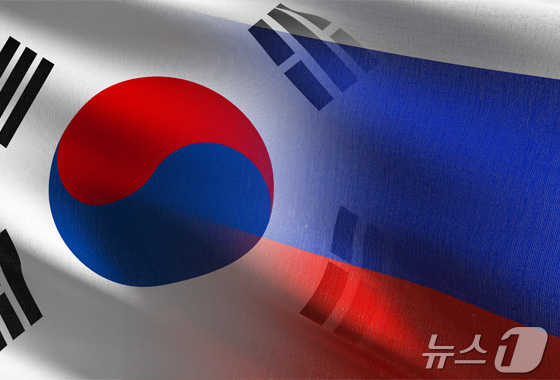
Russia has conducted an informal meeting with South Korea to discuss North Korean issues, including the nuclear situation. After the news became public, Russia denied the reports, saying that Russian academics initiated contact with South Korea. Analysts said on Monday that the denial appears to be a diplomatic gesture aimed at easing potential backlash from North Korea.
Sources indicate that a South Korean official involved in nuclear negotiations recently met informally with Oleg Burmistrov, Russia’s special envoy for North Korean nuclear issues, in Moscow.
Experts consider it highly unusual for Russia to engage in discussions with South Korea about North Korea. This is primarily because, following Russia’s invasion of Ukraine, the Russian government has supported Ukraine. At the same time, North Korea has assisted Russia by sending troops, effectively severing diplomatic exchanges between Russia and South Korea.
Reports suggest that most North Korean troops sent to support Russia have returned home, indicating that the phase of North Korea’s military deployment, seen as a symbol of close ties between the two countries, has largely concluded. Analysts believe that as the United States works to mediate the conflict in Ukraine, Russia is preparing to restore relations with South Korea in anticipation of diplomatic normalization.
However, on Sunday, Maria Zakharova, a spokesperson for the Russian Foreign Ministry, issued a statement claiming that the related reports are unfounded.
Zakharova said there is no North Korean nuclear issue for Russia, explaining that the South Korean delegation visited at the invitation of Russian scholars, particularly from the Energy and Security Center. Her remarks appeared intended to emphasize that the contact was not an official meeting and that no confidential discussions on North Korea took place between Russia and South Korea.
In contrast, the South Korean Foreign Ministry has adopted a no comment stance, adhering to a policy of neither confirming nor denying (NCND) the information. The ministry typically takes this position when it’s difficult to provide an official confirmation on specific issues.
Overall, this contact between South Korea and Russia appears to have taken place in a 1.5 track format, involving both official and unofficial participants. This approach is a common practice where diplomatic authorities engage closely with private individuals to hold informal yet substantive discussions.
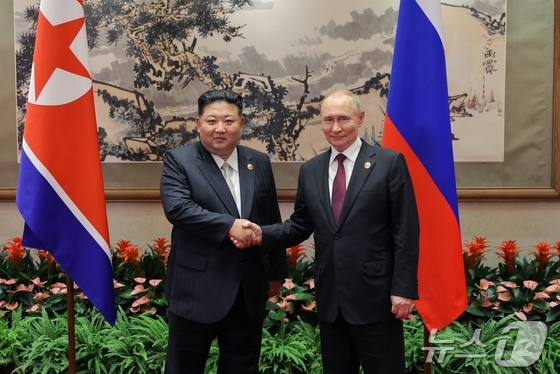
Russia’s denial is widely interpreted as reflecting sensitivity to North Korea. Although military exchanges, one of the closest areas of cooperation between North Korea and Russia, have slowed, analysts said both sides remain in a position where they still need each other, prompting Moscow to avoid triggering distrust in Pyongyang.
Zakharova’s strong criticism of the initial reports regarding the South Korea-Russia contact, calling them clumsy attempts and manipulations, suggests that Russia is aware of the implications for its partnership with North Korea and is proceeding cautiously.
Doo Jin Ho, director of the Eurasia Research Center at the Korea National Strategy Institute, stated Russia’s denial reflects its awareness of North Korea’s concerns. He added that the issuance of a Foreign Ministry statement in response to media reports carries an implicit message about South Korea-Russia relations, noting that while conditions remain difficult, there appears to be an underlying expectation of future improvement.
Currently, negotiations for an end to hostilities between Ukraine, Russia, and the United States are facing significant obstacles. Consequently, it appears unlikely that there will be rapid advancements in South Korea-Russia relations or that North Korea-Russia ties will deteriorate in the near term. However, signs indicating a potential shift in Russia’s posture have emerged, suggesting that the dynamics in the Korean Peninsula region may change rapidly following the resolution of the Ukraine conflict.
Doo added that Zakharova’s statements often contain paradoxes, noting that stronger denials tend to be closer to the truth. He said that if the meeting were purely an academic discussion, it would be unusual for a South Korean government official to attend, given Russia’s tendency to be strict about the level of such meetings.