

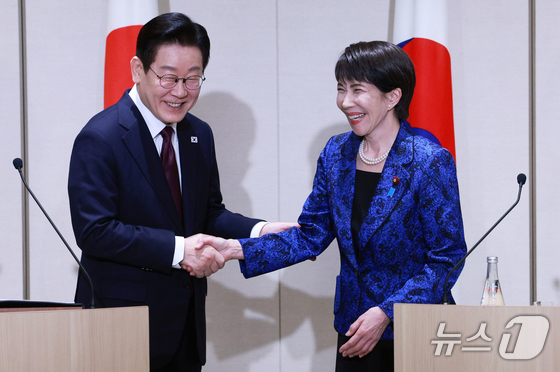
South Korean President Lee Jae Myung and Japanese Prime Minister Sanae Takaichi reconvened three months after their previous meeting at the Asia-Pacific Economic Cooperation (APEC) summit in Gyeongju. As part of shuttle diplomacy, President Lee visited Nara, Takaichi’s hometown and constituency, where they agreed to expand cooperation and engage in comprehensive discussions on bilateral issues.
Following an 88-minute small-group and expanded meeting, the leaders issued a joint press statement outlining plans for bilateral exchanges and cooperation. They made progress on historical issues, including DNA identification of victims from the Josei Coal Mine disaster, and reaffirmed their commitment to existing cooperation on North Korea and trilateral coordination with the U.S.
Against the backdrop of China-Japan tensions, Takaichi notably mentioned the abduction issue without referencing China. President Lee, fresh from a summit with Chinese President Xi Jinping, stressed the importance of communication and cooperation among South Korea, China, and Japan, subtly suggesting a potential mediating role in future Sino-Japanese relations.
DNA Analysis of Josei Coal Mine Remains: Progress on Sensitive Historical Issues
In a joint press release following their summit in Nara, President Lee and Prime Minister Takaichi announced plans to identify the remains of Korean victims from the Josei Coal Mine tragedy.
The Josei Coal Mine incident occurred on February 3, 1942, in an underwater tunnel off Ube City, Yamaguchi Prefecture. The disaster claimed the lives of 136 forcibly mobilized Koreans and several Japanese workers. At the time, the Japanese government and media downplayed the incident, falsely claiming that most victims had been rescued.
Takaichi welcomed the progress in bilateral coordination for DNA analysis of the remains found at the Josei Coal Mine. President Lee responded that he found the small but significant progress on historical issues during this meeting meaningful.
Analysts view the advancement on the Josei Coal Mine issue as a positive step for both leaders, as it is less politically contentious than other sensitive historical matters like the comfort women issue.
South Korea-Japan and Trilateral U.S. Cooperation, Korean Peninsula Denuclearization Efforts: Differing Approaches to China
The leaders agreed to strengthen and develop the framework for trilateral cooperation on Korean Peninsula denuclearization between South Korea, Japan, and the U.S.
While Takaichi directly addressed the abduction issue and nuclear missile threats, President Lee emphasized the need for communication and cooperation among South Korea, China, and Japan, revealing subtle differences in their approaches.
Takaichi stated that it had in-depth discussions on regional issues, affirming a close alliance between the countries in the current strategic environment. It reaffirmed the commitment to closely cooperate on North Korea’s nuclear and missile issues to achieve complete denuclearization.
President Lee added that they recognized the importance of South Korea-Japan and trilateral U.S. cooperation for regional peace and stability amid rapidly changing global dynamics. He reiterated their commitment to achieving complete denuclearization of the Korean Peninsula and establishing lasting peace, agreeing to maintain close coordination on North Korea policies.
While Takaichi emphasized South Korea-Japan bilateral and trilateral cooperation, she notably refrained from commenting on China, with which Japan is currently at odds.
President Lee, however, stressed the need for South Korea, China, and Japan to find common ground and foster communication and cooperation, subtly urging improved Sino-Japanese relations.
Takaichi also expressed gratitude for President Lee’s strong support in resolving the abduction issue, a topic of high public interest in Japan.
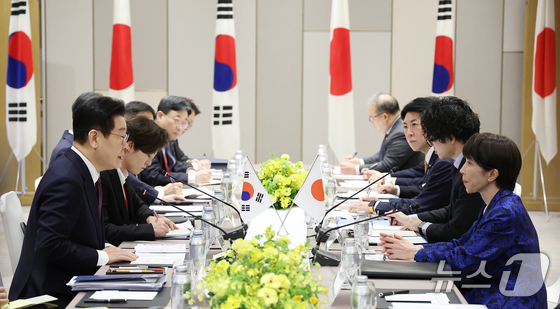
Accelerating Cooperation on Common Issues: Economy, Public Welfare; Lee Heralds New Era in Relations
Both leaders expressed strong willingness to improve relations on economic, public welfare, and regional issues.
They officially launched discussions among relevant authorities to explore comprehensive cooperation on economic security and scientific technology, while agreeing to deepen collaboration in areas such as artificial intelligence and intellectual property protection.
The Korea-Japan Common Social Issues Consultative Body, established last year, will expand to address shared challenges, including regional growth. Notably, Japan will join an international cooperation consultative body led by the South Korean National Police Agency to combat transnational crimes, including scams.
President Lee proposed streamlining entry and exit processes and expanding mutual recognition of technical qualifications to enhance bilateral exchanges, reportedly receiving a positive response from Japan.
President Lee stated that the year 2026 will mark a new beginning, reflecting on 60 years of Korea-Japan relations and preparing for the next 60 years. He sincerely hopes this year will usher in a new era of closer ties through more meaningful exchanges and cooperation, as it moves forward together towards the future.