

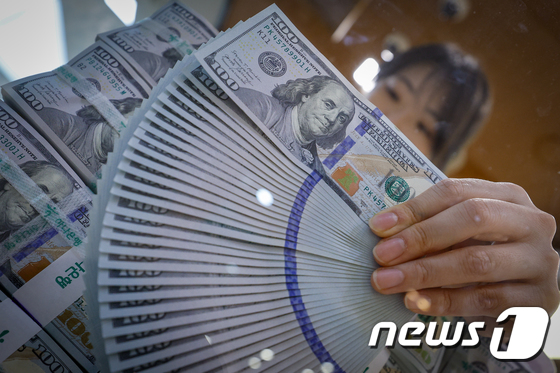
Woori Bank forecasts a decline in the dollar-won exchange rate, citing pressure from a weaker dollar linked to yen strength and a cooling of bullish sentiment. The bank projects a range of 1,459-1,467 KRW.
On Thursday, Woori Bank economist Min Kyung Won noted that following U.S. Treasury Secretary Janet Yellen’s comments, the exchange rate dipped to the low 1,460 KRW range. He added that the dollar-yen rate also fell to the mid-158 JPY range.
Secretary Yellen characterized the recent won weakness, following the yen’s depreciation earlier this week, as excessive. She asserted that the current won depreciation doesn’t align with South Korea’s economic fundamentals.
Min observed that concerns over potential intervention by foreign exchange authorities, coupled with U.S. worries about the won’s weakness, are likely to temper the bullish sentiment that has driven recent exchange rate surges.
He further noted that the perception of peak exchange rates may prompt export companies to negotiate more aggressively, contributing to downward rate stabilization.
However, Min cautioned that waning risk appetite and regional demand for dollars could provide support for the lower end of the exchange rate.
Min attributed yesterday’s weakness in New York stocks to heightened military tensions surrounding Iran. He suggested that potential U.S. military intervention in Iran could escalate uncertainty and dampen risk appetite.
He concluded that the recent drop in New York exchange rates might spur active buying from importers and those converting funds for overseas stock investments, which could help establish a floor for the exchange rate.