

The South Korean government has assessed that the economic recovery trend is continuing, buoyed by improvements in domestic demand and robust semiconductor exports. However, it also noted that the sluggish recovery in construction investments and persistent external uncertainties, such as U.S. tariff policies, remain as risk factors.
In its Recent Economic Trends (Green Book) report released on Friday, the Ministry of Finance and Economy stated that the economy is currently experiencing a recovery trend driven by improvements in domestic consumption and strong semiconductor exports. Nevertheless, challenges persist, particularly in employment within vulnerable sectors, the pace of construction investment recovery, and uncertainties stemming from U.S. tariffs.”
The ministry emphasized that the recovery trend has continued for three consecutive months, propelled by strong semiconductor performance and improvements in domestic demand.
Overall industrial production increased by 0.9% compared to the previous month, with growth observed across manufacturing, services, and construction sectors. Facility investment rose by 1.5% from the previous month.
In December of last year, the number of employed individuals grew by 168,000 compared to the same month the previous year, though this increase was lower than the 225,000 jobs added in the previous month.
Retail sales declined by 3.3% from the previous month. Consumer prices in December rose by 2.3% year-on-year, as price increases for agricultural products and petroleum slowed. Core inflation, which excludes food and energy, remained modest at 2.0%. The Consumer Sentiment Index (CSI) stood at 109.9 in December, down 2.5 points from the previous month but still above the baseline of 100.
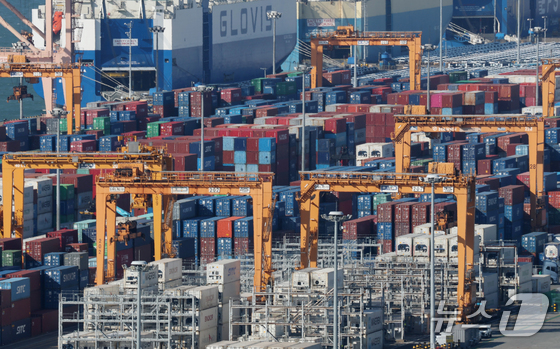
While exports continue to show significant growth, bolstered by strong semiconductor sales, the construction sector appears to be struggling.
In December, exports surged by 13.4% compared to the previous year, with daily average exports rising by 8.7%.
Although construction investment increased compared to November, it fell by 17.0% compared to the same month last year, indicating ongoing challenges in the sector.
The government identified worsening trade conditions due to tariffs imposed by major countries and geopolitical uncertainties as external risks that could impact international financial market volatility and trade growth.
The Ministry of Finance and Economy stated that to broaden the momentum of economic recovery, it will continue to implement proactive macroeconomic policies and efforts to stimulate consumption, investment, and exports. It will also accelerate the 2026 economic growth strategy aimed at boosting potential growth rates, achieving balanced growth for all citizens, and overcoming economic polarization.