

The dollar-to-won exchange rate, which had been steadily climbing and threatening the 1480 KRW mark, suddenly dropped to the 1460 KRW level after a single comment from the U.S. Treasury Secretary. It’s highly unusual for the United States’ economic chief, a key player in global currency markets, to specifically target another country’s currency, declaring it excessively weak and signaling a defensive stance.
Market analysts suggest that this surprising U.S. intervention is rooted in a confluence of interests: South Korea’s $350 billion investment pledge to the U.S. and America’s desire to protect its trade benefits. However, some experts caution that the U.S. statement could be a veiled warning against potential currency manipulation by South Korea.
While the rapid rise in the dollar-to-won exchange rate has cooled, experts remain uncertain whether this will translate into a sustained downward trend.
On Thursday, the Seoul foreign exchange market opened with the dollar-to-won rate at 1465 KRW, down 12.5 KRW from the previous day, signaling a return to stability. The rate continued to hover around 1467 KRW during the morning session.
The market sentiment, which had been pushing towards the 1480 KRW mark after five consecutive days of increases, shifted dramatically following remarks by U.S. Treasury Secretary Scott Bessent. During a meeting with South Korean Deputy Prime Minister and Finance Minister Ku Yun Cheol on Monday, Bessent stated that the won’s depreciation doesn’t align with Korea’s robust economic fundamentals, adding that excessive volatility in the forex market is undesirable. This amounted to a de facto verbal intervention.
Min Kyung Won, an economist at Woori Bank, noted in a report that news of U.S. concerns over the weak won would likely temper the bullish dollar-buying sentiment that had been driving the recent surge in exchange rates.
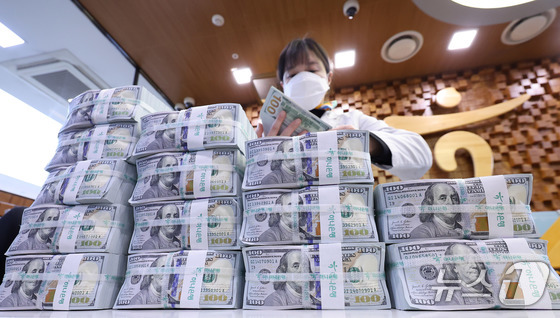
Market analysts view this statement as a result of aligned strategic interests between the U.S. and South Korea.
For South Korea, the pressing issue was its substantial investment commitment to the U.S. The country has pledged $350 billion in U.S. investments. However, if the exchange rate continues to hover near 1500 KRW, the currency conversion costs for companies would skyrocket, inevitably leading to delayed or reduced investments.
The Deputy Prime Minister likely explained these practical challenges of investing in the U.S. amid high exchange rates, prompting a response from the American side.
From the U.S. perspective, accommodating South Korea’s request aligns with its own interests. An excessively weak won boosts the price competitiveness of Korean products, potentially undermining the effectiveness of U.S. tariff policies.
Bessent’s emphasis on deepening the economic partnership between the two countries and revitalizing U.S. industries can be understood in this context.
Jung Yong Taek, chief economist at IBK Investment & Securities, explained that while the U.S. raises tariffs to enhance its companies’ export competitiveness, a rapid rise in exchange rates would dilute these effects. He noted that the U.S. is acting in its own interest, as it doesn’t want to see sudden increases in the exchange rates of countries like South Korea or Japan.
Park Sang Hyun, a specialist at iM Securities, suggested that excessive won weakness would also be problematic for the U.S. in ensuring the full realization of annual investments resulting from U.S.-Korea tariff negotiations. This implies potential cooperation with South Korean forex authorities.
Park Ji Won, a deputy research fellow at the Korea Institute for International Economic Policy, added that given the significant trade volume between the U.S. and South Korea, an excessively high dollar-to-won rate would negatively impact the U.S. trade balance. He emphasized that the U.S. can’t simply welcome a high exchange rate, indicating a convergence of interests.
However, some experts caution against interpreting this statement solely as an acceptance of a Korean SOS call.
Kang In Soo, an economics professor at Sookmyung Women’s University, suggested that Bevin might have suspected artificial intervention, given the won’s depreciation despite Korea’s strong fundamentals driven by thriving semiconductor and auto exports. He warned that this could also be seen as a subtle hint that Korea might be designated as a currency watchlist country.
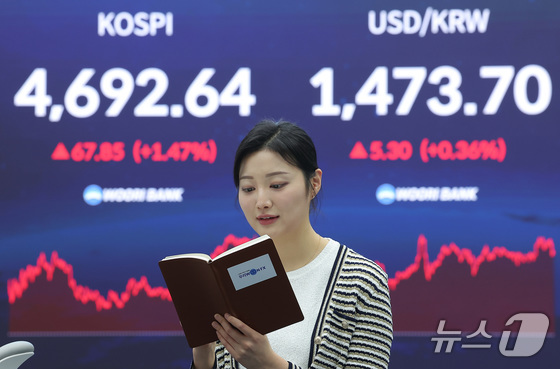
While the U.S. intervention has temporarily stabilized the exchange rate, analysts question whether this will lead to a sustained downward trend.
Economist Min Kyung Won predicted that while bullish dollar sentiment may cool, factors such as importer payments and inflows of overseas stock investment could support the lower end of the exchange rate. He forecasts fluctuations around the 1460 KRW level in the near term.
Deputy Research Fellow Park Ji Won noted that while temporary adjustments to the exchange rate are possible, expectations for further increases remain strong. He emphasized that it’s yet to be seen whether these expectations can be tempered.
Specialist Park Sang Hyun also mentioned that while the joint verbal intervention from the finance ministers of South Korea, the U.S., and Japan may show short-term effects, the duration of these effects remains uncertain. However, he predicted that President Trump’s interest rate suppression policies and mini-quantitative easing would exert downward pressure on the dollar, potentially leading to a gradual decline in the first half of the year.
Professor Kang In Soo stressed that the likelihood of the U.S. taking concrete measures, such as currency swaps, is low. He suggested that the market should view the 1400 KRW range as the new normal and focus on strengthening fundamentals rather than relying on short-term fixes.