

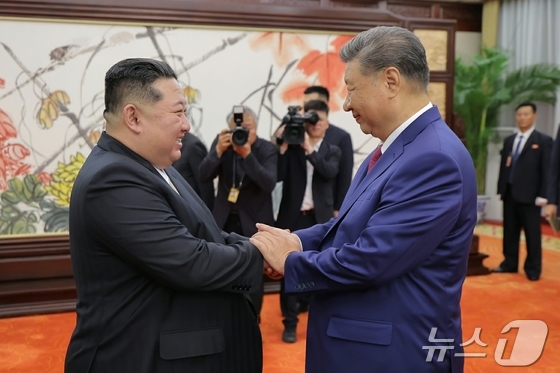
North Korea’s treatment of the New Year’s greeting card sent by Kim Jong Un to Chinese President Xi Jinping has been notably understated. This has led analysts to conclude that the bilateral relationship, which showed signs of improvement last year, may have cooled once again.
On January 18, the Workers’ Party’s official newspaper, Rodong Sinmun, reported that Kim had sent New Year’s letters to heads of state from various countries, including China, Vietnam, Singapore, Tajikistan, Turkmenistan, Azerbaijan, Indonesia, Belarus, and Algeria.
While China was mentioned first in the list, the newspaper refrained from directly naming President Xi and his wife. Instead, they were referred to only as the General Secretary of the Communist Party of China Central Committee, who is also the President of the People’s Republic of China, and his wife. Moreover, the specific contents of the New Year’s card were not disclosed.
This approach stands in stark contrast to previous years when relations between North Korea and China were warmer. During those times, Kim’s exchanges of New Year’s cards or congratulatory messages with Xi were given prominent coverage, distinctly separate from those sent to other countries. It’s worth noting that even when Xi and his wife sent a New Year’s card to Kim on January 1, the newspaper only briefly mentioned the fact without revealing any details.
In contrast, North Korea continues to highlight Kim’s exchanges with Russian President Vladimir Putin. Rodong Sinmun published the full text of both Putin’s New Year’s card to Kim, sent on December 18, and Kim’s reply on December 27.
While Kim’s visit to Beijing last September for the 80th anniversary of China’s victory in World War II and his summit with Xi had sparked speculation about improving bilateral ties, North Korea’s current approach to New Year’s reporting suggests that a complete restoration of relations has yet to be achieved.