

Last year was an incredibly challenging period where it was impossible to predict what would happen next.
In the year following Donald Trump’s inauguration as U.S. President, South Korean businesses experienced a veritable roller coaster ride. Due to trade-related policies, including tariffs, that seemed to change overnight, companies groaned under unprecedented levels of uncertainty.
To minimize damage from President Trump’s global tariff war, our businesses sometimes united, and at other times fought individually with all their might. During this period, many of South Korean companies saw their financial performance deteriorate due to the impact of high tariffs imposed by the U.S. While the government and businesses working as one team managed to put out the most urgent fires through active responses, the uncertainty remains ongoing in the new year, as President Trump has also signaled potential tariff impositions on items such as semiconductors.
Businesses on High Alert for Every Trump Word and Social Media Post
President Trump marks his first anniversary in office on Tuesday. Trump began his term as the 47th U.S. President on January 20, 2025, taking the oath of office. Campaigning under the slogan Make America Great Again (MAGA), President Trump signaled from his first day in office that he would review existing trade agreements to rectify trade practices. He first announced high tariffs on Mexico and Canada, initiating a restructuring of the global trade order based on an America First policy.
The blade of Trump’s tariffs, which had been aimed at China and the European Union (EU), did not spare South Korea, an ally of the U.S. and a free trade agreement (FTA) partner. The businesses remained on high alert, analyzing the meaning behind every word Trump uttered and every social media post, focusing on devising countermeasures. An economic insider recalled that they made sure to check foreign news articles and social media posts reporting Trump’s statements.
On January 27 last year, President Trump, while announcing potential tariffs on steel, aluminum, and copper, claimed that Korean companies were dumping products like washing machines, nearly causing U.S. businesses to shut down. Around the same time, Howard Lutnick, then-nominee for U.S. Secretary of Commerce, argued that countries like Japan with steel and Korea with home appliances had taken advantage of the U.S., suggesting that allied nations’ companies should increase production within the U.S.
As tariff pressures intensified, the businesses grew increasingly anxious. Although they had prepared various scenario-based response strategies, including utilizing global production bases even before Trump’s inauguration, uncertainty only grew as direct pressure began.
When President Trump, who had previously only verbally hinted at imposing tariffs, began taking concrete action through executive orders the month after his inauguration, our businesses also sprang into action. Major business leaders, including Chey Tae-won, Chairman of the Korea Chamber of Commerce and Industry, formed a private economic delegation to visit the U.S. They engaged in trade diplomacy with high-ranking White House officials and key members of Congress, proposing cooperation models between the two countries.
As individual companies struggled to respond to these issues, major economic organizations were flooded with inquiries from their members. They demanded that these organizations work with the government to develop countermeasures. Major economic organizations jointly urged the government to enter into tariff negotiations with the U.S.
Businesses Actively Seek to Circumvent Tariffs through Increased U.S. Investment and Production Base Utilization
Individual companies also announced large-scale U.S. investments in an attempt to bypass American tariffs. Hyundai Motor Group Chairman Chung Eui-sun announced a 21 billion USD U.S. investment plan at the White House, with President Trump in attendance. As of 2024, automobiles are the top export item to the U.S., with an export volume of 34.7 billion USD. In contrast, imports of U.S. automobiles amount to only 2.1 billion USD, making it a prime example of trade imbalance. This prompted the group’s chairman to take direct action to minimize tariff damage. Samsung Electronics also expanded its investment in Taylor, Texas, to 51 trillion KRW (about 34.5 billion USD) as part of its U.S. semiconductor hub strategy.
Despite these multifaceted efforts, the U.S. imposed a universal 10% tariff and item-specific tariffs using Section 232 of the Trade Expansion Act and the International Emergency Economic Powers Act. The administration also signed an executive order imposing reciprocal tariffs on 57 countries. Korean companies went into high alert, feeling that the long-dreaded moment had finally arrived.
The uncertainty for businesses intensified as Trump suddenly deferred the implementation of the reciprocal tariff policy shortly after announcing it, creating a rapidly changing situation. Some in the industry expressed that the flip-flopping policies were more challenging to deal with than high tariffs, hoping for a quick finalization of tariff rates.
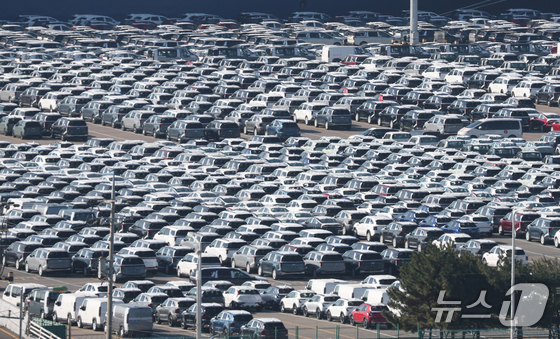
Korean Firms Support Government’s U.S. Tariff Negotiations with Large-Scale Investments
Expectations grew when bilateral tariff negotiations intensified after the inauguration of President Lee Jae Myung’s government in June last year. However, the impact of item-specific tariffs imposed by the U.S. on certain industries began to affect performance, with Samsung Electronics and LG Electronics seeing their second-quarter results deteriorate last year.
The business community, which had struggled with the waves of the tariff war, cheered when South Korea and the U.S. reached an agreement on mutual tariffs of 15% – a level comparable to other major trading competitors – just a day before the U.S.-set negotiation deadline (August 1) at the end of last July.
Korean companies also provided substantial support during the U.S. negotiation process. They presented President Trump with a gift basket of expanded U.S. investments. Samsung Electronics Chairman Lee Jae-yong, Hyundai Motor Group Chairman Chung, and Hanwha Group Vice Chairman Kim Dong-kwan flew directly to Washington D.C.
In particular, the bilateral shipbuilding cooperation project Make American Shipbuilding Great Again (MASGA) played a game-changing role in the Korea-U.S. negotiations. MASGA is a project highlighting Korea’s potential as a key partner in the U.S. Navy’s expansion and shipbuilding industry revival efforts.
Subsequently, negotiations resumed when the U.S. demanded that specific investment destinations for the 350 billion USD promised by South Korea be specified in the negotiation summary (fact sheet). South Korean businesses once again fell into a black hole of uncertainty. However, when both countries reached a detailed agreement on tariff negotiations at the end of October, the most pressing concerns were addressed.
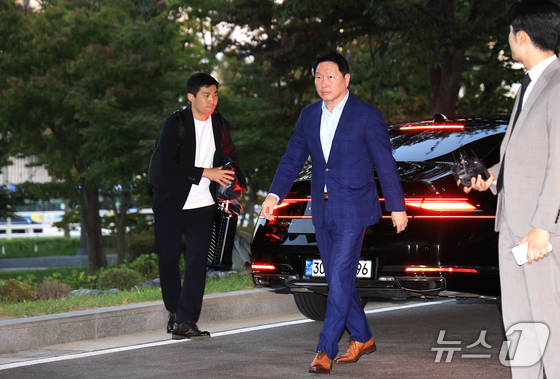
Tariff War Still Ongoing with Potential Semiconductor Tariffs Looming
However, the tariff war continues, and businesses still face significant hardships. President Trump has again hinted at the possibility of semiconductor tariffs, which were previously nonexistent. Although the U.S. has promised most-favored-nation treatment, the semiconductor industry remains vigilant as semiconductors led 30% of our country’s exports last year and have been tariff-free until now. Currently, a 50% item-specific tariff is still applied to steel and aluminum products. An economic insider stated that while the Korea-U.S. tariff negotiations have somewhat reduced uncertainty, the impact of tariffs persists.
In a 2026 Korean Major Companies Management Outlook Survey conducted by Mono Research on behalf of News1 from December 11-16 last year, targeting the top 1,000 non-financial companies, 13.4% of respondents identified U.S. tariffs as the biggest management risk for this year.