The U.S. Department of State has outlined a tough response strategy, including visa and financial sanctions, in an official document detailing its diplomatic strategy for the next five years. This comes in response to foreign governments and international organizations creating legal provisions that restrict fundamental rights such as freedom of expression.
This stance by the State Department is particularly noteworthy as it follows recent criticisms from the U.S. government and Congress, which have likened South Korea’s proposed amendments to the Information and Communications Network Act and the Online Platform Act to censorship and digital barriers.
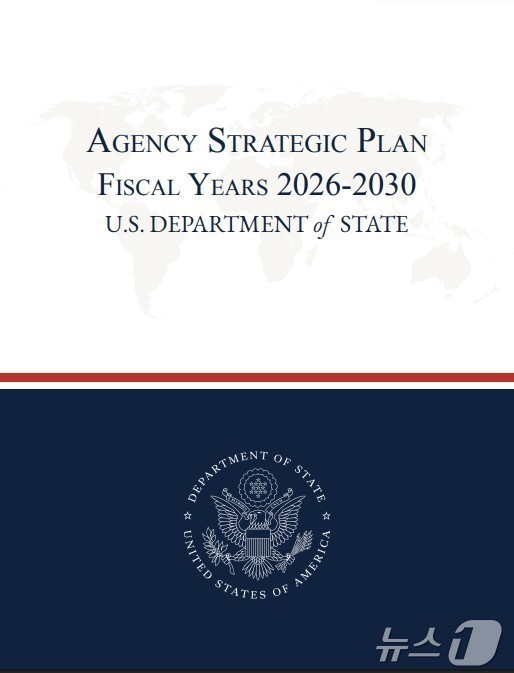
In its Agency Strategic Plan for Fiscal Years 2026-2030 released on January 15, the State Department emphasized that the U.S. government exists to protect Americans’ God-given natural rights, specifically the freedoms of expression, religion, and conscience, as well as the right to choose and influence their government.
The document argues that despite this, foreign governments and international organizations are creating laws and regulations that restrict these rights. It claims that these globally enacted laws not only affect U.S. companies but could also target Americans both abroad and domestically.
The State Department explicitly stated its opposition to attempts by foreign governments, international organizations, non-governmental organisations (NGOs), and activist groups to censor Americans. It pledged to respond through all appropriate means, including visa and financial sanctions.
While the document doesn’t specify particular countries or laws, the U.S. government and Congress have recently been viewing digital regulations in South Korea and the European Union (EU) through a similar lens of concern.
Criticisms have been raised in some quarters of the U.S. Congress regarding the Information and Communications Network Act amendment, led by the Democratic Party, and the Online Platform Act being pursued by the Fair Trade Commission. These laws have been characterized as granting de facto censorship powers to the government and discriminatory regulations targeting U.S. companies. During a House hearing on January 13, South Korea’s proposed amendment to the Information and Communications Network Act was even referred to as a censorship law.
This strategic plan is particularly noteworthy as it suggests that the U.S. will take concrete action, viewing freedom of expression issues not merely as human rights or value debates, but as matters directly linked to U.S. national sovereignty.
The State Department defined freedom of expression, religious and conscientious freedom, and the right to political participation as core rights, asserting that the U.S. government exists to protect the God-given natural rights of American citizens. The logic follows that if foreign regulations restrict these rights, diplomatic and economic responses become inevitable.
Consequently, the controversy surrounding South Korea’s proposed amendments to the Information and Communications Network Act and the Online Platform Act may be treated not just as legal or institutional issues, but as a measure of trust and cooperation between the U.S. and South Korea.
In a joint fact sheet released last November, the U.S. and South Korea agreed to ensure that U.S. companies are not discriminated against in laws and policies related to digital services. However, voices in the U.S. Congress are questioning whether South Korea is genuinely committed to implementing this agreement, given its recent legislative moves.
The Coupang issue further complicates matters.
During a Trade Subcommittee hearing on January 13, House Ways and Means Committee Chairman Adrian Smith (R-Nebraska) claimed that it appears that Korean regulators are already actively targeting U.S. tech companies. For example, there have been discriminatory regulatory measures against Coupang.
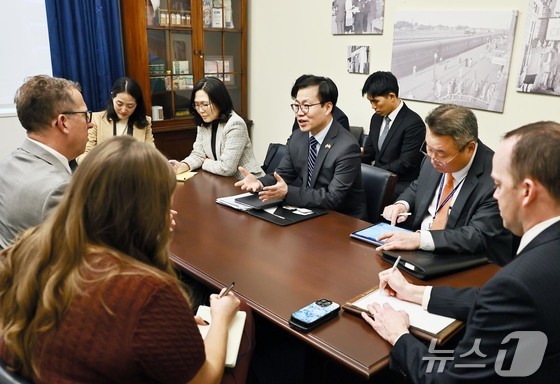
In response, Yeo Han-koo, South Korea’s Trade Minister, who recently visited the U.S., stated that he had explained to the U.S. side the policy intentions behind Korea’s digital legislation efforts and the essence of the Coupang situation.
Meeting with Korean journalists in Washington D.C. on January 14, Minister Yeo said that he directly explained Korea’s digital legislation to the U.S. Congress and industry. He believes it achieved some success in strengthening communication and fostering understanding on the U.S. side.
Regarding Coupang, he drew a clear line, stating that the essence of the issue is the violation of personal privacy due to massive data leaks, which should be investigated whether in the U.S. or Korea. He emphasized that he clearly explained that this issue should not escalate into a trade or diplomatic problem.
In an interview with Politico published on January 16, Minister Yeo reportedly sought to correct U.S. misunderstandings about Korea’s strengthened digital platform regulations, emphasizing that Korea’s approach differs from the EU’s Digital Markets Act.
Allies as Security Partners and Customers of U.S. Industry… Balancing Defense and Trade Pressure
This strategic plan outlines a vision for security and economic restructuring aimed at allies in general. The State Department stated it would demand increased defense spending and strengthened independent deterrence capabilities from Indo-Pacific and European allies, offering in return expanded access to a revitalized U.S. defense industrial base.
This is interpreted as clearly indicating that increased defense spending by allies should lead to purchases of U.S. weapons, components, and defense technology. The State Department emphasized that an integrated defense industrial base would provide strategic production capacity to both the U.S. and its allies in the event of conflict.
As the South Korean government has clearly indicated its intention to increase defense spending, negotiations over the expansion of U.S. weapons purchases and the scope of technology transfer are likely to emerge as major diplomatic and security issues between the U.S. and South Korea.
Pro-American Economic Bloc, China Containment, Don-roe Doctrine… Comprehensive Realignment of Diplomatic Strategy
The strategic plan also presents the construction of a U.S.-centered pro-American economic bloc as a core diplomatic goal.
The State Department stated that it will pursue commercial transactions in all bilateral relationships and negotiations to ensure that allies and partners prioritize U.S. companies and solutions. It added that this will form an economic bloc of countries purchasing U.S. technology stacks and defense systems. This plan aims to solidify U.S.-centric supply chains in strategic industries such as semiconductors, artificial intelligence (AI), energy, and defense.
The stance on containing China has become even more pronounced. The State Department pointed out China’s unprecedented military buildup and declared its intention to establish a favorable military balance in the Indo-Pacific region.
Regarding Europe, it stated that China’s economic influence weakens the reliability of U.S. alliances and specified plans to support the removal of Chinese hardware and software from critical infrastructure.
In its policy for the Western Hemisphere, which includes Latin America and the Americas west of the Atlantic, the plan officially adopted the Don-roe Doctrine, named after President Donald Trump. This expands on the traditional Monroe Doctrine, aiming to block not only military but also economic and technological influence from external powers such as China and Russia.