

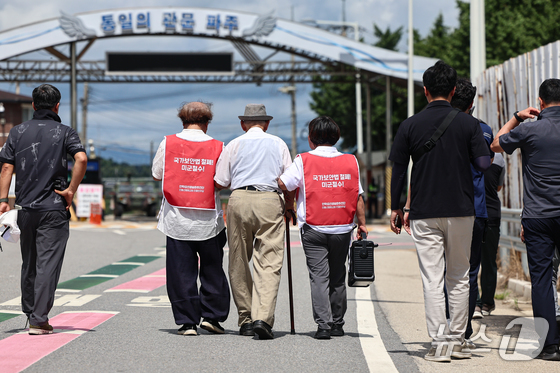
Since last year, Ahn Hak-seop, a long-term prisoner who has expressed his desire to return to North Korea, has made several attempts to contact the North under government approval. However, as of Thursday, North Korea has not responded for over a month.
According to News1 reports, the Ahn Hak-seop Repatriation Committee submitted a North Korean Contact Report to the Ministry of Unification in mid-December and has made various efforts to communicate Ahn’s intention to return to North Korea.
Notably, given the difficulty of establishing direct communication channels with North Korea, the committee reportedly attempted to make contact through officials at North Korean embassies in China and Russia. However, a month later, there has still been no response from North Korea.
Previously, on December 19, President Lee Jae Myung suggested during a briefing on the Ministry of Unification’s work that the government should open a private channel for Ahn’s repatriation, sparking interest in potential progress on related discussions. However, given North Korea’s rigid stance of viewing South Korea as a hostile state, this has proven to be a challenging situation.
At that time, President Lee stated that it would be ideal to negotiate with North Korea to transfer long-term prisoners through Panmunjom, but even if it wants to send them, there’s no response from North Korea. It can facilitate their return, but if North Korea refuses to accept them, there’s nothing it can do. However, if someone wants to return to their homeland, it shouldn’t obstruct that and should pave the way for them.
In the current climate of strained inter-Korean relations, discussions on repatriation between authorities are difficult. However, if the committee develops a plan to send Ahn to North Korea through a third country like China or Russia, the government is understood to be willing to not impede that effort.
Ahn fought for the North Korean army during the Korean War and was captured in April 1953. He served 42 years under the National Defense Act for aiding the enemy and was released in 1995 as part of a special pardon on Korea’s National Liberation Day.
During the Kim Dae-jung administration, when many long-term prisoners were repatriated following the June 15 Inter-Korean Summit, Ahn chose to remain, stating that it will continue to fight until U.S. forces leave. However, last year, at over ninety years old, he officially requested the government to send him to North Korea, saying that he wants to be buried in my homeland, even if it means dying there.
Since then, the South Korean government has consistently expressed its intention to support Ahn’s repatriation from a humanitarian perspective. However, given the severed communication between North and South Korea, a government-level repatriation has become virtually impossible.
In this situation, the repatriation committee is hopeful for a change in the Korean Peninsula dynamics coinciding with President Donald Trump’s visit to China in April.
If contacts or a summit between North Korea and the U.S. occur around President Trump’s visit to China, and inter-Korean relations improve during that process, there is potential for North Korea to engage in discussions regarding long-term prisoners.
The government acknowledges the current practical difficulties surrounding repatriation but reportedly intends to support the repatriation of long-term prisoners, keeping various future opportunities in mind.