

The Ministry of Unification has begun discussions on establishing regulations for importing North Korean food products, signaling the start of efforts to resume limited trade between the two Koreas. Despite ongoing tensions in inter-Korean relations, the government sees this as a crucial first step towards restarting small-scale trade between North and South Korea.
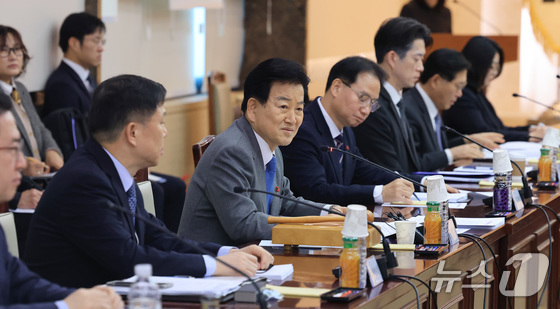
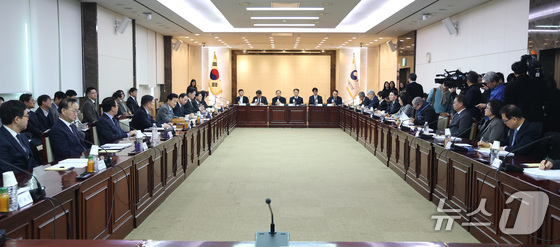
On Thursday, the Ministry convened the 340th Inter-Korean Exchange and Cooperation Promotion Council meeting. Officials from the Ministry of Unification and the Ministry of Food and Drug Safety discussed a draft regulation on inspection procedures for North Korean food imports. They also deliberated and approved allocating approximately 17.1 billion KRW (about 11.6 million USD) from the Inter-Korean Cooperation Fund for seven inter-Korean exchange and cooperation projects.
The proposed regulation clearly outlines inspection procedures for importing North Korean food products into South Korea. It aims to streamline registration requirements for overseas manufacturers and ensure food safety through on-site audits and rigorous inspections. This marks a significant step forward, as the previous lack of regulatory framework had made importing North Korean food products virtually impossible.
During the meeting, participants raised the need for involvement from other relevant ministries, including the Ministry of Small, Medium Enterprises (SMEs) and Startups, in the working-level discussions outlined in the draft regulation. The council agreed to incorporate this input into the final decisions at their next meeting. The Ministry of Unification anticipates that once implemented, this regulation will bolster the institutional foundation for resuming small-scale trade between North and South Korea, in conjunction with the pending amendment to the Inter-Korean Exchange and Cooperation Act Enforcement Decree.
The Council approved funding of about 17.1 billion KRW (about 11.6 million USD) for seven inter-Korean exchange and cooperation projects. This decision reflects the government’s commitment to maintaining the basic framework of inter-Korean relations, with a focus on socio-cultural exchanges and humanitarian cooperation.
Specifically, the Council allocated over 2.6 billion KRW (about 1.8 million USD) to the 2026 Joint Compilation Project of the Great Korean Language Dictionary, aimed at preserving shared linguistic heritage. Additionally, about 800 million KRW (about 545,000 USD) will be invested in the Joint Excavation Project of Gaeseong’s Manwoldae to maintain the groundwork for joint cultural heritage excavation efforts. Both initiatives are seen as symbolic cooperation projects aimed at restoring ethnic homogeneity, even as direct exchanges between the Koreas remain challenging.
To address the urgent issue of separated families, which is becoming more critical due to the aging population, the Council approved about 600 million KRW (about 409,000 USD) for the North-South Separated Family DNA Testing Project. This ongoing initiative, started in 2014, aims to confirm family relationships across the border. This year, the project will expand to include second and third generations of separated families, overseas separated families, and North Korean defectors.
The budget also includes provisions for the Gaeseong Industrial Complex Support Foundation, maintaining management and support systems in preparation for the complex’s potential reopening. Funding for Panmunjom tours aims to preserve the symbolic significance of inter-Korean contact points. The Korea Unification Future Center will continue its operations, focusing on education and experiential programs to foster public understanding of unification and inter-Korean relations.
This meeting, the first in-person Council session in four years, signifies the normalization of government and civilian consultation mechanisms related to inter-Korean exchanges and cooperation, according to the Ministry of Unification.
The meeting included prominent civilian members from various fields, including academia, civil society, and research institutions, all with expertise in inter-Korean relations and unification efforts.
Unification Minister Chung Dong-young emphasized the Council’s responsibility in managing over 1.4 trillion KRW (about 954,000 USD) in cooperation funds for inter-Korean relations. He expressed hope that the shared desire for peace on the Korean Peninsula would unite North and South in building a new chapter in their relationship.
The Ministry of Unification reaffirmed its commitment to fostering collaboration among government departments and between public and private sectors through the Council. Their goal is to restore and develop an ecosystem for inter-Korean exchanges and cooperation, driven by the private sector with government support.