

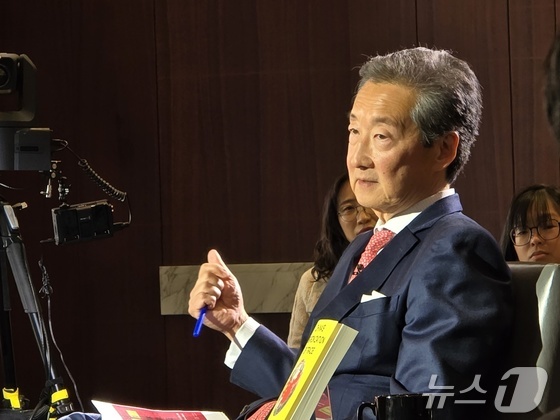
A groundbreaking book published in the United States compiles over 600 cases illustrating China’s weaponization of trade since 1997, revealing how Beijing has pressured nations, corporations, and individuals to align with its political agenda.
At a live event for the CSIS podcast State of Play in Washington, D.C. on Wednesday, Victor Cha, the Korea Chair at the Center for Strategic and International Studies (CSIS), emphasized that for decades, China has weaponized economic interdependence to coerce nations and businesses into compliance with its political objectives. This isn’t just a trade dispute; it’s a challenge to the entire liberal international order.
The event marked the launch of China’s Weaponization of Trade: Resistance Through Collective Resilience, co-authored by Cha, Ellen Kim from the Korea Economic Institute (KEI), and Andy Lim of CSIS.
While the Donald Trump administration’s sweeping tariff policies aimed at advancing U.S. interests have garnered attention, this book underscores that China’s economic coercion is not a fleeting phenomenon but a long-standing diplomatic strategy spanning over three decades.
Cha defined economic coercion as the deliberate use of non-market mechanisms to weaponize trade, aiming to sway the sovereign decisions of other nations.
He noted that even when economic coercion doesn’t prompt immediate policy changes, it creates an atmosphere of fear and self-censorship. Consequently, countries become increasingly wary of addressing sensitive issues like human rights, democracy, territorial disputes, and security matters.
The discussion highlighted real-world examples, including South Korea and Australia. Bethany Allen, head of China research at the Australian Strategic Policy Institute (ASPI), pointed to China’s unofficial sanctions on South Korea’s tourism, cultural exports, retail sector, and business operations following the Terminal High Altitude Area Defense (THAAD) missile defense system deployment as a prime example of economic coercion.
Allen remarked that while THAAD was a sovereign security decision by South Korea, China used it as a pretext to impose widespread costs on South Korean society and businesses. This has led to a more cautious South Korean approach on subsequent security issues.
Australia faced similar pressures. When Canberra called for an international inquiry into COVID-19’s origins in 2020, Beijing retaliated by slapping high tariffs on Australian barley and wine and deliberately slowing customs procedures.
What sets this book apart is its data-driven analysis, going beyond mere case studies.
Cha and his co-authors meticulously compiled a database of over 600 publicly verifiable instances of China’s economic coercion since 1997.
The study covers 18 countries and 470 companies, tracing how these tactics evolved from initially targeting cultural areas, like blocking Tibet-related Hollywood films, to rapidly expanding across various economic sectors under Xi Jinping’s leadership.
The book not only dissects China’s coercive economic methods but also exposes Beijing’s own trade vulnerabilities.
The research team identified specific sectors where China heavily relies on imports from particular countries.
For instance, China’s dependence on countries like Japan, the U.S., and Taiwan for silver powder, crucial in solar panel production, highlights potential leverage points. The authors argue that coordinated action by multiple countries could significantly impact China’s economic strategies.
The discussion also highlighted the contrasting approaches of the U.S. and China. Melanie Hart, head of the Global China Hub at the Atlantic Council and former senior advisor on China at the U.S. State Department, explained that while U.S. tariff policies are transparently announced, China deliberately obscures its actions, making legal challenges and international cooperation more difficult.
She added that China maintains plausible deniability by employing tactics like customs delays or administrative hurdles rather than officially imposing tariffs.
To counter China’s economic coercion, Cha proposed a collective economic deterrence strategy, drawing parallels to the North Atlantic Treaty Organization’s (NATO) Article 5. This approach envisions multiple countries jointly responding when one nation becomes a target of economic pressure.
Cha suggested that a coalition of G7 countries, along with South Korea and Australia, could serve as the foundation for this initiative. However, he acknowledged the significant political and institutional hurdles, including divergent national interests, corporate engagement challenges, and the need for domestic legal reforms.
The book’s timely publication was also discussed during the event. Cha, who also serves as a political science professor at Georgetown University, shared that his submission on this topic to a prestigious foreign affairs and security journal received unusually swift acceptance, standing out among numerous China-related papers.
He attributed this keen interest from both academic and policy circles to the book’s systematic, data-driven approach to China’s economic coercion and its novel framework for deterrence strategies.
@@@
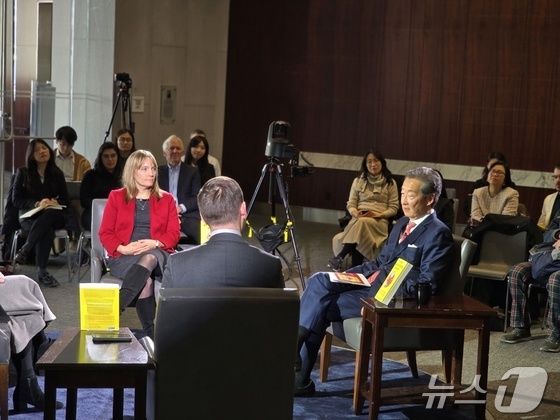
Victor Cha, Korea Chair at the Center for Strategic and International Studies (CSIS), who published China’s Weaponization of Trade: Resisting Through Collective Resilience, held a book launch event in Washington, D.C., on Wednesday 2026.01.21 / News1