

Samsung and LG have officially entered the race for dominance in automotive technology as the industry shifts towards autonomous driving and software-defined vehicles (SDVs). The competition between these tech giants is rapidly focusing on displays and infotainment systems, as the in-car experience—what passengers see and how they interact—becomes a crucial factor in vehicle competitiveness.
Samsung is leveraging its digital cockpit strategy, combining audio and display technologies, while LG is showcasing its AI-based cabin platform and cutting-edge display innovations. This rivalry is expanding beyond mere panel supply to encompass the entire automotive ecosystem.
Industry sources reported on Friday that Samsung is doubling down on its Digital Cockpit strategy, integrating automotive displays and audio through its subsidiary Harman and Samsung Display. Harman’s recent unveiling of Harman Ready StreamShare, an in-car audio and communication solution, underscores its vision to transform vehicles into intelligent media hubs. This innovative system allows passengers to connect personal devices for content enjoyment while maintaining seamless in-vehicle communication.
Samsung’s display technology advancements are equally ambitious. At CES 2024, Samsung Display showcased a groundbreaking 34-inch 6K ultra-wide OLED through Qualcomm Incorporated’s Snapdragon Cockpit demo kit. By harnessing OLED’s strengths—ultra-slim bezels and flexible curved designs—Samsung has integrated autonomous driving information, infotainment, and AI graphics onto a single expansive screen, setting new benchmarks for luxury vehicle interiors.
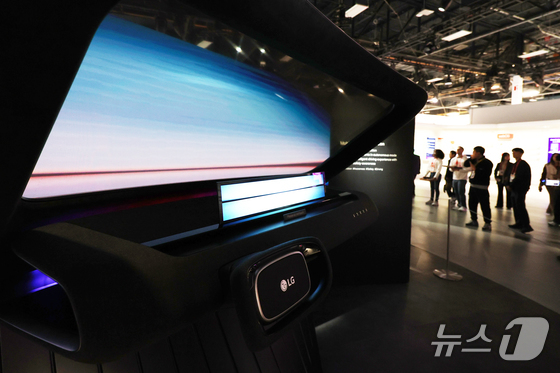
LG is positioning automotive displays as a cornerstone of AI-Defined Vehicles (AIDVs), pushing beyond the SDV concept. At CES 2024, LG unveiled transparent OLEDs, bendable moving displays, and its AI cabin platform, emphasizing displays as the central interface connecting vehicles and occupants.
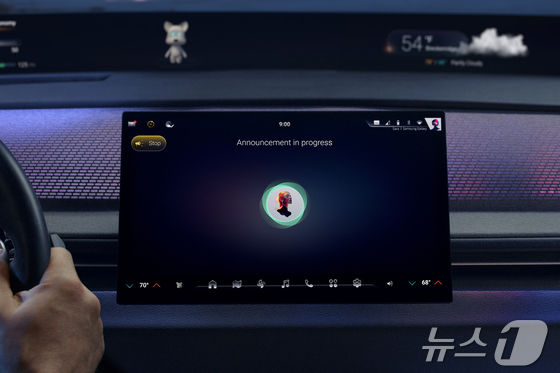
Lee Seok Hyun, President of LG Electronics’ VS Business Division, emphasized at CES that AI-powered displays, capable of real-time analysis of passenger states and environmental conditions, will revolutionize travel experiences. He stressed that displays are evolving into comprehensive AI hubs, integrating safety, convenience, and entertainment features beyond mere information presentation.
Recently, both companies have been expanding collaborations with customers, extending their influence across the automotive ecosystem.
Samsung Display is rapidly expanding its automotive OLED ecosystem by partnering with global car brands. OLED’s unique properties, enabling ultra-slim bezels and unconventional designs, are becoming key differentiators in high-end sports cars and premium electric vehicles. This ability to enhance design flexibility has captured significant attention from automakers.
LG Display is also strengthening its position in the automotive display market, leveraging dual-view OLED technology and its edge in security and authentication. The company has recently expanded its automotive display exhibitions and collaborations with global car manufacturers and electronics firms, solidifying its foothold in the automotive sector.
Industry analysts suggest that as vehicle interiors evolve into brand experience spaces, the display competition is shifting from component performance to a race for ecosystem dominance. The integration of audio, displays, software, and AI is becoming a key factor in determining vehicle value.
An industry insider noted that the automotive display competition has progressed beyond panel technology to a battle for ecosystem leadership. Both Samsung and LG are preparing for a long-term struggle, simultaneously expanding their technological capabilities and customer bases with a strategic, forward-looking approach.