

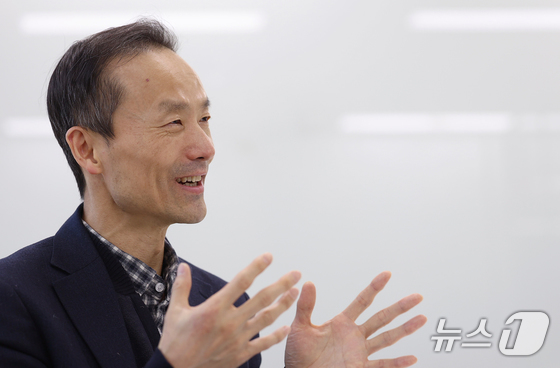
Still remember the feeling of that moment when the government announced the complete suspension of the Kaesong Industrial Complex and hurriedly prepared the evening news before heading home.
The Kaesong Industrial Complex, which demonstrated that cooperation and coexistence between North and South were possible even amid division, was fully suspended in February 2016, just 11 years after its launch. At that time, Ahn Jung-sik (55), a former SBS North Korea correspondent, was marking his 10th year covering the Ministry of Unification.
Fast forward to 2026, a decade later, he finds himself at a new starting line once again, now with over 30 years of journalistic experience. However, the landscape of inter-Korean relations appears largely unchanged. Nearly 38 years have passed since the July 7 Declaration opened the door to inter-Korean exchanges in 1988, yet the chilly relations between North and South seem to have reverted to square one.
In an interview with News1 on January 8, the former journalist revealed that he concluded his reporting career on December 31 of last year and recently became a distinguished professor in the Department of North Korean Studies at Dongguk University. He plans to simplify discussions on North Korean affairs and unification through his personal YouTube channel, “Ahn Jung-sik’s U(unification) Korea” alongside his university lectures.
Ahn began his career at SBS in 1995 and has reported on North Korean news since 2006. Despite his busy schedule, he pursued his studies, earning a master’s degree in political science from Seoul National University in 2002 and a doctorate from the Graduate School of North Korean Studies at Kyungnam University (now the University of North Korean Studies) in 2007. His publications include Is an Independent Policy Toward North Korea Possible? (2007) and Misplaced Expectations: Unprepared Unification (2020).
Does History Really Progress? … A New Perspective on Inter-Korean Relations
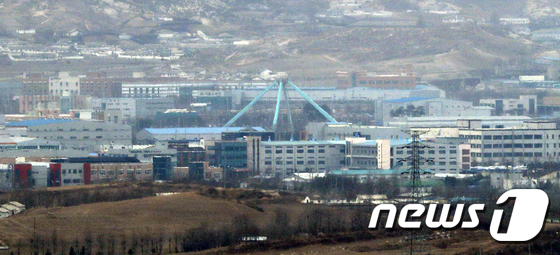
The complete suspension of the Kaesong Industrial Complex in February 2016 during the Park Geun-hye administration prompted Ahn to reevaluate inter-Korean relations. For him, the Kaesong Industrial Complex symbolized the last remnant of inter-Korean exchanges, a tower built with effort that had been established through numerous trials, making its closure particularly shocking.
Pondered for about three to four months, wondering, Why did it collapse? Until that point, he had intentionally overlooked the reasons why this carefully constructed project had to fall. It was a situation that shouldn’t have happened. It was devastating to see such an event unfold. However, only after it happened did he confront the causes on both sides. This became a turning point for him to approach the inter-Korean issue with a new paradigm.
Even before the closure of the Kaesong Industrial Complex, there were many precarious moments between North and South. For instance, in 2013, North Korea imposed a ban on access, temporarily halting operations for several months.
Ultimately, he believed it was a process moving in a constructive direction, and he held onto the hope that inter-Korean exchanges and cooperation would eventually lead to unification. However, with the closure of the Kaesong Industrial Complex, he began to seriously ponder whether history truly progresses or regresses, and whether inter-Korean relations can fundamentally improve.
His skepticism about covering inter-Korean relations led him to a more analytical examination of the causes. Ahn identified the rigidity of North Korea’s regime due to the Kim family’s hereditary rule and the changing North Korean policies with each new administration in South Korea as key reasons for the closure of the Kaesong Industrial Complex. The rigidity of the hereditary regime in North Korea, transitioning from Kim Il-sung to Kim Jong Il and then to Kim Jong Un, has avoided openness to an extreme degree. If residents encounter external information, the idolization of the Supreme Leader breaks down, making it difficult to maintain the regime. The only openness the regime can tolerate is a mosquito-net style openness, like that of the Kaesong Industrial Complex, meaning that any further external communication remains a constant challenge.
Ahn explained that if either the inconsistency of South Korea’s North Korea policy or the rigidity of the North Korean regime doesn’t change in the near future, achieving gradual unification through exchanges and cooperation will be difficult.
When it Comes to North Korea, Seeing the Accurate Facts is More Important Than Perspective
Nevertheless, Ahn continues to pursue unification. While it may be unrealistic to expect immediate progress towards unification, he believes thinking that the division is peaceful is an illusion.
Recent polls ask whether people prefer peaceful coexistence or unification. More often than not, responses favor peaceful coexistence. However, when asked separately about peaceful coexistence and unification, an implicit perception arises that unification is not peaceful, leading to a tendency for peaceful coexistence to become the model answer. We must recognize that stable peace cannot exist without unification.
Ahn believes this binary thinking trap also applies to research on North Korea. He firmly stated that he doesn’t enjoy being confined to the framework of liberal or conservative. Instead, he prioritizes finding the most accurate way to analyze issues.
When dealing with North Korean issues, he strives to approach it from the perspective of how can we accurately view North Korea? The question is, What are the accurate facts? Everything has both perspective and fact; when a perspective is strong, the likelihood of distorting facts increases, even leading to the exclusion of facts.
In this context, he expressed partial agreement with the recent government’s decision to classify the North Korean Workers’ Party’s official newspaper, Rodong Sinmun, as a general document rather than a special one. He believes that since access to Rodong Sinmun is not mandatory, the government’s position is justifiable in considering how much harmful influence it could have on the public.
However, he added that the core issue regarding the necessary opening of media between North and South on the path to unification is allowing North Korea to access South Korean media. He expressed concern that by prematurely using this card, it might limit future proposals for mutual media openness between North and South.
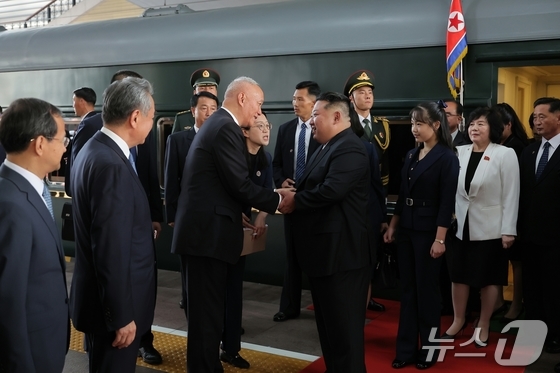
North Korea’s Leadership Succession is a Key Variable that Could Reshape the Korean Peninsula’s Landscape···We must seize the opportunity for unification.
Ahn explained that our focus on Kim Jong Un’s daughter, Ju-ae, aligns with this context. It’s not merely curiosity; rather, one of the most critical variables in the Korean Peninsula issue is whether a power vacuum in North Korea’s absolute authority could lead to sudden changes in the regime.
The likelihood of North Korea giving up its nuclear weapons is realistically low, making it challenging to find more advanced solutions to the nuclear issue at this stage. Thus, the only potential for change in North Korea lies in a fracture within the regime, but the structure makes it difficult for a coup to occur within the Party and military. Ahn believes that the fractures that may arise during the power succession process are the most realistic variables that could change the situation.
Whether Kim Jong Un can maintain the regime until his successor reaches adulthood and takes power, and whether Ju-ae can acquire the capabilities to manage the country when she becomes an adult, remain unverified. If power in North Korea fails to succeed properly amid these variables, the possibility of moving towards unification on the Korean Peninsula opens up. Therefore, he believes that the direction of North Korea’s next steps in power succession is more crucial than the nuclear issue.
Currently, North Korea’s regime appears very solid, but history shows that even the Joseon Dynasty faced instability during its succession for over 600 years. Experts generally agree that despite North Korea’s hereditary succession spanning four generations, the likelihood of it lasting for hundreds of years is low. At some point, there will be fractures and anomalies in North Korea’s highest power, and analyses suggest that the chance of a decisive change in the dynamics of the Korean Peninsula will realistically increase at that time.
Although he has stepped down from his role as a journalist, Ahn’s desire to continue discussing unification stems from the belief that we must not miss the optimal timing for changes in the Korean Peninsula dynamics.
Depending on our actions, it can either pursue the path to unification or miss that opportunity. Throughout history, the most crucial factor has always been whether the people have the will. When a decisive moment arrives, it must actively express our will that it is the same people, and therefore it must unify’ both domestically and internationally, and push forward with unification policies. Of course, even with such efforts, there’s no guarantee of unification; at that point, it must accept it as fate. However, if it shows no willingness to unify during a decisive moment, the opportunity for unification will not arise.
The recent government’s proposal for a peaceful two-state theory for North and South can be seen as a kind of desperate measure to draw North Korea to the negotiating table. However, Ahn expressed concern that this concept might inadvertently spread unification skepticism.
China has consistently emphasized the One China principle in the international community for decades, indicating its commitment to eventual unification. In contrast, if both North and South Korea propose a two-state theory, it could lead to skepticism about unification, suggesting that unification on the Korean Peninsula is a lost cause. Recently, the term peaceful two-state theory aimed at unification has been used, but Ahn stressed the need for a much more cautious approach when discussing the concept of two states.
A New Chapter Begins… The Discussions Surrounding North Korea and Unification Continue
Ahn served as a broadcast journalist for 30 years and 2 months. He attributes his ability to cover North Korea for 20 of those years to his lack of ambition for career advancement within the company. As he accumulated experience, he found himself seeking roles that allowed him to stay in the field longer, leading him naturally into this area of journalism.
In the late 1990s, when Ahn began his journalistic career, it was rare for journalists to pursue studies outside the field of media. While there were dozens of reporters, producers, and announcers attending graduate school at that time, most were pursuing degrees in journalism.
After joining in 1995, he began his master’s program in 1999, starting his graduate studies relatively early compared to his colleagues. He initially thought that his studies are over now that he has a job, but he realized he had little interest in promotions or career advancement, prompting him to pursue further education.
While contemplating what to study, he believed that as long as North Korea exists and news continues to be relevant, the North Korean issue would never fall off the news agenda, he stated, adding that his personal interest in inter-Korean issues also significantly influenced his decision.
Ahn’s daily life in this new chapter has not changed significantly. He still wakes up at 6:00 a.m. daily to read North Korean media and domestic news articles. However, his method of accessing media has changed. He checks North Korean state media like Rodong Sinmun and the Korean Central News Agency through overseas channels, but he now accesses domestic news articles via portal sites, as he no longer has access to the company system where all articles are compiled.
On January 5, he uploaded his first video analyzing the North Korean situation to his YouTube channel, taking his first step as a beginner YouTuber. He learned the video structure, editing, and uploading process by referring to educational videos available on YouTube. He filmed using two smartphones he already owned and added two tripods and one wired microphone, resulting in an initial investment of only about 180,000 KRW (about 125 USD). Although he has left the broadcasting station, he is ready to continue discussing North Korea and unification based on the extensive reporting experience and insights he has accumulated over the years.