

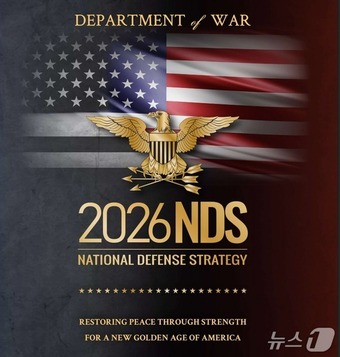
The Trump administration’s new National Defense Strategy (NDS) maintains the policy of providing a nuclear umbrella to counter North Korean threats. However, it clearly signals an intent to adjust the military posture in line with U.S. interests, suggesting an inevitable shift in the division of responsibilities between South Korea and the U.S.
Released on Friday, the NDS operationalizes the broader framework laid out in last year’s National Security Strategy (NSS) for the military domain. While the NSS sets the overarching diplomatic and security agenda, the NDS translates this into concrete military operations and force deployments. It serves as a blueprint for how the U.S.-South Korea alliance will function going forward, and is typically updated every 4 years.
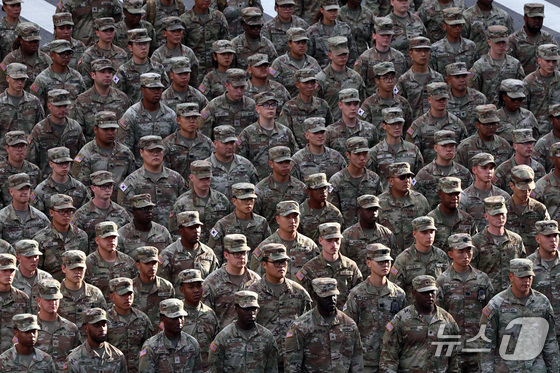
The NDS characterizes South Korea as possessing formidable military capabilities, supported by substantial defense spending, a robust defense industry, and conscription. This emphasis on South Korea’s self-defense capacity marks a shift from viewing it primarily as a protectorate.
Notably, the NDS states that South Korea has the capability to assume primary responsibility for deterring North Korea, with more limited support from the United States.
This reaffirms the stance outlined in the Joint Fact Sheet from last November’s U.S.-South Korea summit and last month’s Nuclear Consultative Group (NCG) joint statement, which emphasized South Korea’s lead role in conventional defense.
Shin Jong Woo, secretary-general of the Korea Defense Security Forum, said the situation was both a compliment and a challenge, adding that the high regard for South Korea’s conventional forces could pave the way for reducing U.S. ground troops or expanding their mission to counter China.
Consequently, adjustments to U.S. Forces Korea’s composition and functions are anticipated. However, with the current 28,500-troop level mandated by the National Defense Authorization Act (NDAA), immediate significant changes are unlikely.
Shin cautioned that the U.S. assessment had likely focused on equipment and technology while overlooking structural issues in the South Korean military, including the pace of troop reductions, declining recruitment rates, and command structures, emphasizing that effective conventional defense is not just about hardware.
The NDS prioritizes homeland defense, China deterrence, and Iran ahead of North Korea. Nevertheless, it maintains vigilance against North Korean nuclear and missile threats, describing them as a clear and present danger to the U.S. homeland.
Kim Jong, a professor at the University of North Korean Studies, observed that the United States now appeared to view North Korea’s nuclear program as something to be managed rather than eliminated, adding that the document clarified a division of labor in which the United States handles nuclear deterrence while South Korea takes charge of conventional deterrence.
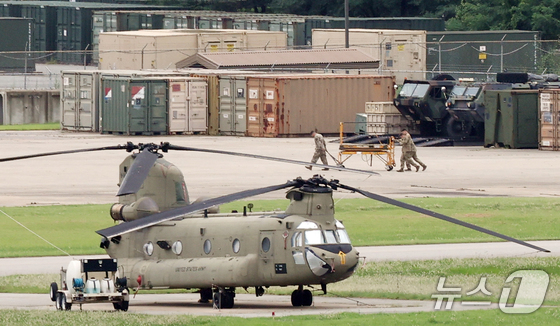
The NDS emphasizes allied contributions, a priority of the Trump administration, pledging to provide incentives for allies to step up and empower them to do so, while also stating that it would clearly and candidly express the need for allies to do their part.
This stance, coupled with South Korea’s increased responsibilities regarding North Korean threats, suggests the transfer of wartime operational control may gain momentum.
Lee Jae Myung, referencing the NDS announcement, tweeted that in today’s unstable global environment, self-reliant defense is fundamental, adding that robust self-defense capabilities and peace on the Korean Peninsula are crucial for sustained economic growth.
The transfer of wartime operational control involves a three-phase verification process to ensure the future combined command, led by South Korea, can conduct operations effectively. The U.S. and South Korea completed Initial Operational Capability (IOC) in 2019 and Full Operational Capability (FOC) evaluation in 2022.
Currently, they are finalizing FOC verification for the future combined command headquarters, with Full Mission Capability (FMC) verification still pending. FMC assessment relies heavily on qualitative factors, with political agreements between U.S. and South Korean leaders being key variables alongside military requirements.
Professor Kim said that the transfer of wartime operational control was not about waiting for perfect preparation but about making a decision, adding that the Trump administration might actually present a more realistic opportunity to push the process forward.
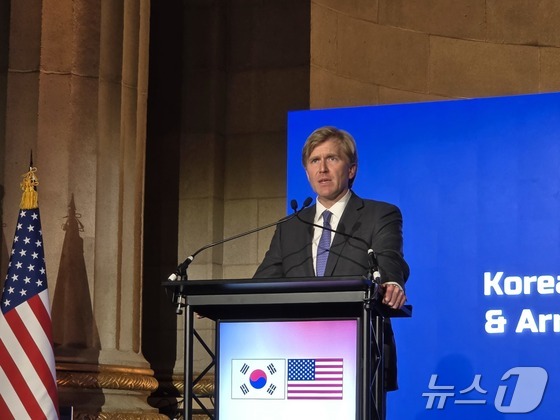
Elbridge Colby, dubbed “Trump’s security architect,” visited South Korea for a two-day trip starting on Sunday. Having played a key role in shaping the NDS, Colby has advocated for South Korea to take primary responsibility in countering North Korea and for U.S. Forces Korea to pivot toward countering China.
During his visit, Colby is expected to meet with senior South Korean diplomatic and security officials. Analysts anticipate he may provide more detailed explanations of the NDS and articulate specific expectations for the alliance.
Experts concur that while the NDS doesn’t signal a weakening of the U.S.-South Korea alliance, it clearly marks a shift from a protective, dependent relationship to one of shared costs and responsibilities. For South Korea, this means shouldering a greater conventional defense burden, necessitating military restructuring and increased financial and policy commitments.