

Last week, three major issues dominated the information technology (IT) industry: the controversy over discrimination against U.S. digital companies, the MapleStory: Idle RPG scandal, and the easing of preliminary feasibility studies for national research and development (R&D).
First, suspicions arose that the South Korean government’s alleged discrimination against U.S. digital firms may have contributed to President Donald Trump’s unexpected tariff hike announcement. While the Ministry of Science and Information and Communication Technology (ICT), which oversees digital regulations, denied any connection, they pledged to strengthen communication with the U.S. in light of the situation.
Nexon acknowledged and apologized for the probability error allegations in its popular idle mobile game, MapleStory: Idle RPG. The company took the unprecedented step of offering full refunds to users, but this decision is likely to negatively impact their financial performance, given the game’s status as a significant revenue source.
Additionally, after 18 years, the preliminary feasibility studies for national R&D projects have been partially relaxed. These studies, which typically took two years on average, had hindered research into cutting-edge strategic technologies and slowed South Korea’s ability to compete in the global technology race.
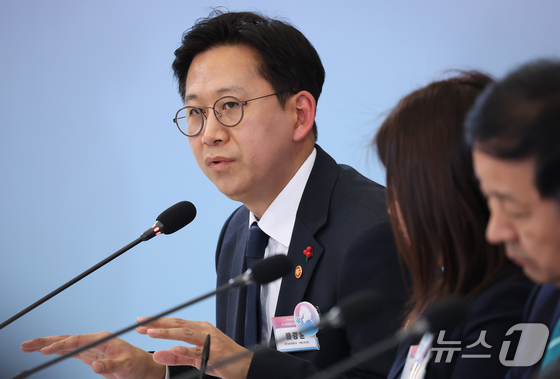
Science and ICT Minister Bae Kyung-hoon: It’ll Address U.S. Digital Regulation Concerns Directly
On February 1, industry sources reported that Trump had announced plans to raise tariffs on all reciprocal tariff items, including South Korean automobiles and pharmaceuticals, from 15% to 25%. Contributing factors cited included the multi-agency investigation into U.S.-based Coupang, as well as discussions about the online platform law and network usage fees. Deputy Prime Minister and Science and ICT Minister Bae Kyung-hoon maintained that digital regulations and tariff increases are unrelated, but expressed willingness to engage directly with U.S. officials.
The online platform law, designed to prevent monopolies by large tech companies, primarily involves designating dominant operators in advance. U.S. lawmakers have criticized this law for seemingly targeting American tech giants, potentially benefiting competitors like those from China.
Network usage fees refer to costs that global content providers (CPs) must pay domestic Internet service providers (ISPs) to handle traffic from data transmission within South Korea. Local telecom companies argue that global CPs like Google and Netflix, which generate substantial traffic, should share network investment costs. The U.S. views this law as a non-tariff barrier and has raised trade concerns.
On January 28, the Blue House stated that the impact of Trump’s tariffs was 100% due to delays in legislation related to the investment law. The Ministry of Science and ICT explained that issues concerning U.S. digital companies have been under ongoing discussion through trade channels, emphasizing that talks are progressing in a mutually beneficial direction.

Nexon CEOs Personally Apologize for MapleStory: Idle RPG Controversy; Paid Ability Option Allegations Confirmed
Recently, Nexon co-Chief Executive Officers (CEOs) Kang Dae-hyun and Kim Jung-wook issued a formal apology through the official MapleStory: Idle RPG community, expressing deep regret for disappointing users regarding the maximum values for in-game ability options.
The ability system allows players to reset character stats through paid options. Suspicions arose that for about a month after the game’s November launch, maximum stat values were not being applied as intended.
Nexon explained that the issue stemmed from setting the probability of maximum values in the ability calculation formula as less than rather than equal to or less than. The company admitted to inadequate communication, including implementing stealth patches without notice and providing misleading information.
As the President vowed to impose strict penalties for in-game probability manipulation, Nexon announced on January 29 that it would refund all user payments. However, with cumulative game revenue reaching approximately 210.3 billion KRW (about 144.1 million USD) by January, the financial impact is expected to be substantial.
R&D Preliminary Feasibility Studies Abolished After 18 Years; Projects Over 100 Billion KRW Still Require Pre-Screening
On January 29, amendments to the National Finance Act and the Basic Science and Technology Act passed in the National Assembly, abolishing the preliminary feasibility study for national R&D projects, which had been in place since 2008.
Previously, only projects under 50 billion KRW (about 34.6 million USD) were exempt from these studies. Now, the threshold has been raised to projects under 100 billion KRW (about 68.5 million USD). The Ministry of Science and ICT hopes this change will enable more timely strategic investments and help South Korea secure technological leadership.
To prevent poor execution of new projects, a pre-check system will still apply to R&D projects over 100 billion KRW (about 68.5 million USD). The new system will categorize projects based on their characteristics, distinguishing between infrastructure-focused R&D and other types of R&D initiatives.