

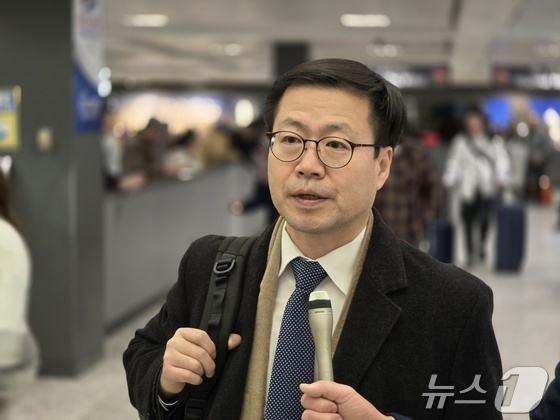
As President Donald Trump threatens to raise tariffs on South Korea to 25%, Yeo Han Ku, the chief trade negotiator at the Ministry of Trade, Industry, and Energy, stated on Friday that the U.S. ultimately desires to maintain trade relations with South Korea. He emphasized that South Korea would respond calmly, prioritizing national interests.
Upon arriving at Ronald Reagan Washington National Airport near Washington, D.C., Yeo told reporters that he needed to meet with various stakeholders, including government officials and members of Congress, to gauge the U.S. perspective. He added that, as evidenced by President Trump’s recent posts, the current focus appears to be on South Korea’s investments in the U.S. and legislative progress in the National Assembly.
Regarding U.S. Treasury Secretary Janet Yellen’s comment that there would be no trade agreement without ratification in the South Korean National Assembly, Yeo said the U.S. might not fully grasp South Korea’s domestic procedures, which is why it used the term “ratification,” and suggested that its actual intentions could differ from that statement.
Yeo emphasized that although multiple U.S. departments were involved in the negotiation strategy, including the Treasury, Commerce, and the USTR, South Korea would consistently present a unified position, adding that his side would do its utmost throughout the process.
In a message to the public, Yeo urged a calm response, noting that the current global trade environment was volatile and that many countries, not just South Korea, faced similar challenges. He added that, since the U.S. was also seeking negotiations with South Korea, the government would prioritize national interests in its approach.
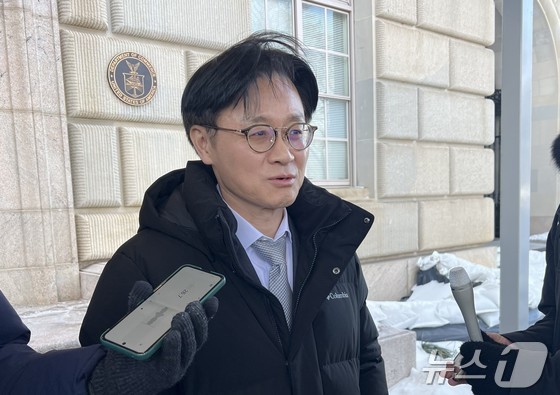
When questioned about the scale and timing of U.S. investments, Yeo avoided a direct answer, stating he would seek further information. Regarding the timing of the first investment, he remarked that it was too early to make predictions.
Commenting on the Trump administration’s specific tariff pressures on South Korea, Yeo noted that the EU and Canada have recently faced similar situations, describing the current global trade environment as rapidly changing. He added that South Korea had its own unique strengths and expressed confidence that, with a calm response, the country could successfully navigate the crisis.
Meanwhile, Minister of Trade, Industry, and Energy Kim Jung Hwan, who arrived in the U.S. on Wednesday, met with Secretary of Commerce Gina Raimondo for two consecutive days. However, they did not reach a conclusion on the proposed tariff increase that South Korea seeks. Minister Kim plans to continue discussions through video conferences.