

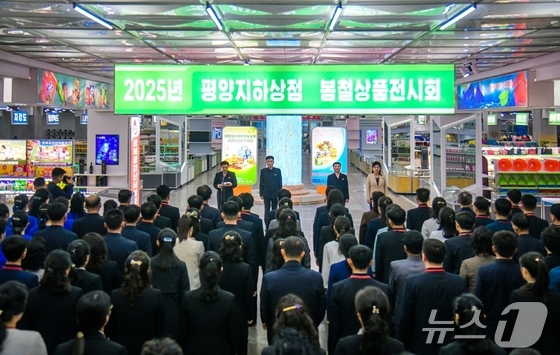
The Korea Composite Stock Price Index (KOSPI) index has surpassed 5,000, setting a new all-time high. Some optimistic analysts predict it could soon breach the 6,000 mark. But does North Korea share any interest in global stock markets?
North Korea has no stock or securities markets to speak of. Consequently, there’s no stock exchange either. This is because North Korean enterprises are fundamentally state-owned rather than public companies. While other formerly socialist nations like China, Russia, and Vietnam have gradually opened their markets and established stock exchanges since the 1980s, North Korea remains one of the few countries without a stock exchange.
North Korea’s view of capital securities, primarily stocks and bonds, is overwhelmingly negative. The regime sees securities as a capitalist tool for concentrating wealth, evolving alongside capitalism’s development. They argue that capital securities are instruments of exploitation, redistributing profits squeezed from industrial workers and enabling the powerful to dominate the weak.
Moreover, Pyongyang emphasizes that capital securities serve as vehicles for economic subjugation and neo-colonial plunder on a global scale, exploiting workers beyond national borders through capital exports. North Korea focuses more on the downsides of speculative use rather than the potential for value appreciation. Foreign investment is often viewed as a means of extracting resources before withdrawing funds. This perspective has remained largely unchanged even under Kim Jong Un’s (Kim) leadership.
However, North Korea hasn’t been entirely oblivious to foreign stock markets or securities investments. In the late 1980s, as reform swept through the socialist bloc, Kim Jong Il directed a thorough study of capitalism. He stressed that effective trade with capitalist or market-oriented economies would be impossible without understanding capitalist markets and the global economy.
In 1990, it emphasized the need to actively engage with international financial markets, expand credit operations, and respond dynamically to market fluctuations to earn more foreign currency. It’s known that during this period, North Korea conducted in-depth research on funding methods through foreign stock markets, indicating a growing interest in securities markets as a means of acquiring foreign currency.
A decade later, in 2001, Kim Jong Il visited Shanghai, China, where he showed significant interest in the stock market. He visited the stock exchange twice, inquiring about factors affecting stock price fluctuations.
This led to speculation that North Korea might be considering introducing the flower of capitalism – the stock market. Some even predicted that a North Korean securities market might soon emerge. These expectations proved premature. The opening of a stock market was not part of North Korea’s our-style socialism framework. While there was interest in learning capitalist economic practices and exploring stock markets, it was ultimately aimed at reinforcing their socialist economic model.
Have there been any changes since Kim took power in 2012? One notable development is the increase in securities-related papers published in North Korean economic journals. While still introductory, these articles cover a broader range of topics, including legal aspects of securities, forms of capital securities, investment risk analysis, and factors influencing securities investments. This suggests a growing interest in securities markets.
Of particular note is the 2014 book “Securities Investment and Analysis” (327 pages, authored by Jeon Gwang-nam, published by Hankook Technical Publishing). Recently obtained by the Peace Economic Research Institute, this comprehensive work illustrates North Korea’s view of capitalist stock markets and securities transactions under Kim’s regime. Importantly, it serves as a guide for North Korean financial professionals, covering securities basics, trading methods, pricing theory, risk assessment, and investment strategies. The book’s stated purpose in its preface is revealing:
This book aims to help financial sector workers deepen their understanding of securities markets in light of changing global conditions, to explore new markets, expand financial operations, and effectively utilize market opportunities for the benefit of the revolution.
The book presents securities markets as tools for capital procurement and investment in a global context. It emphasizes that in a world dominated by capitalist markets, one must understand and utilize securities markets to benefit from capitalism. The text argues that to profit from foreign securities investments, one must analyze and comprehend these markets.
For successful securities investment, the book stresses accurate selection of investment targets and timing through fundamental analysis, including company analysis, financial analysis, and risk-return calculations. However, the content remains quite basic. Articles in academic journals reflect a similar level of understanding. A 2020 paper in North Korea’s leading economic journal, Economic Research, merely states that to engage with international financial markets and expand credit operations, it’s crucial to accurately assess profit potential based on market fluctuations.
Nevertheless, the mere publication of a book on securities investment in North Korea is significant, suggesting a shift in perception. Of course, this primarily applies to those in the financial sector, while most North Koreans likely remain unaware of securities markets.
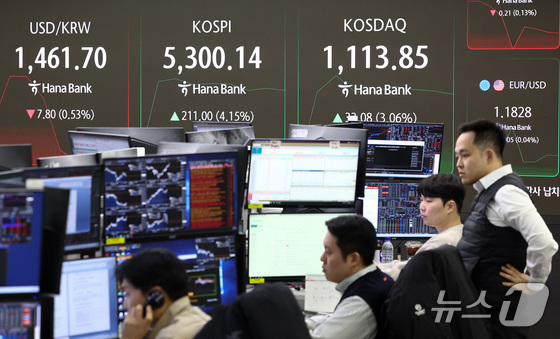
Recently, North Korea has been exploring ways to expand its presence in international financial markets using artificial intelligence (AI). Research in this area has intensified. A notable example is a study by Kim Il Sung University’s economics department, aiming to predict global gold prices using AI.
There’s also interest in automated financial manipulation systems – North Korea’s term for algorithmic trading. In 2023, Kim Il Sung University’s website noted the emergence of automated trading methods that operate without human intervention, stating that such systems in international markets allow for rapid, information technology (IT) driven trading to capitalize on fleeting investment opportunities and maximize profits.
These studies appear to be attempts to compensate for North Korea’s lack of experience and expertise in international finance by leveraging AI. However, conducting research on securities markets is vastly different from actually generating profits through investments. Moreover, international sanctions currently make it difficult for North Korea to officially engage in stock investments in global markets.
Although North Korea has shown interest in securities markets for over 40 years, the establishment of a stock exchange in Pyongyang remains a distant prospect. Operating an exchange would require privatizing state-owned enterprises and issuing stocks, fundamentally altering North Korea’s economic policies and management systems. As seen in China, Russia, and Vietnam, opening capital markets is intertwined with broader system reforms. Most analysts agree that comprehensive economic reform in North Korea must precede any stock exchange establishment. Currently, North Korea’s economy is considered too small to support a functional exchange.
However, there’s potential for stock company structures to emerge in joint ventures and partnerships aimed at attracting foreign investment. If sanctions are lifted, North Korea might consider creating stock companies with foreign firms and listing them on Chinese or Hong Kong exchanges.