

A former White House official cautioned that the U.S. House of Representatives’ investigation into Coupang could potentially escalate trade tensions between the U.S. and South Korea, possibly leading to tariff increases.
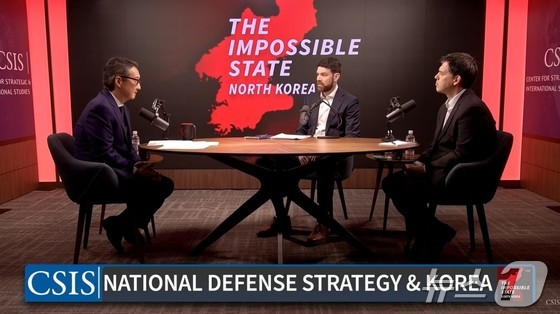
Adam Farrar, who previously served as senior director for Korea at the National Security Council (NSC), spoke on a Center for Strategic and International Studies (CSIS) podcast on Tuesday. He observed that the Coupang issue seems to have evolved into a geopolitical matter between the U.S. and South Korea.
Farrar emphasized that South Korea could face significant risks if the U.S. and the Donald Trump administration perceive unfair targeting of American companies. He added that this could result in actions that raise costs in trade or tariffs.
From 2019 to 2022, spanning Trump’s presidency and into the Biden administration, Farrar worked at the NSC, focusing on U.S. relations with South Korea and Mongolia, as well as addressing North Korean threats.
Farrar’s remarks came in response to a question from Victor Cha, the CSIS Korea Chair, about the implications for U.S.-South Korea relations following Coupang’s Chief Executive Officer (CEO) receiving a congressional subpoena regarding recent issues with the South Korean government.
While noting that the Coupang situation originated from a major data breach, Farrar highlighted the core issue: claims of South Korea unfairly targeting U.S. companies, coupled with perceptions of South Korea favoring domestic firms over American ones in the digital sphere in recent years.
He particularly stressed that if this issue intersects with ongoing digital policy disputes between the U.S. and South Korea—such as network usage fees, app market regulations, and data localization—the consequences could be far-reaching.
The congressional hearings could further escalate this issue, Farrar warned, potentially involving Congress and leading to presidential trade actions, which poses substantial risks for South Korea.
He continued that President Trump didn’t hesitate to threaten tariff hikes when he felt trade agreements weren’t being adequately enforced. Farrar pointed out that while not implemented, there was an unprecedented proposal to raise tariffs on South Korea by up to 25%, demonstrating Trump’s willingness to use such threats.
On February 5, the House Judiciary Committee issued a letter and subpoena to Harold Rogers, Coupang’s interim representative in South Korea, requesting records of communications with the South Korean government and testimony on alleged discriminatory treatment. Coupang’s U.S. headquarters pledged full cooperation, with Rogers expected to testify on the 23rd.
The podcast also discussed the United Nations (UN) Security Council’s recent decision to allow humanitarian aid exceptions under North Korean sanctions, interpreting it as an acknowledgment that the sanctions regime is already collapsing.
Igor Krestin, senior policy advisor at the George W. Bush Institute, explained that North Korean sanctions were originally designed to target the regime while protecting civilians. He viewed the humanitarian aid exceptions as consistent with this principle.
However, Krestin noted that with Russia and China’s non-cooperation, UN-level sanctions enforcement is essentially non-functional. He added that discussions on humanitarian aid inevitably intersect with the sanctions’ limitations.
Farrar agreed, stating that Russia and China’s passive stance on North Korean sanctions enforcement has effectively blocked UN-led efforts. He assessed that this has gradually eroded the sanctions’ effectiveness, making it easier for North Korea to acquire foreign currency and engage in international activities.
Currently, G7-aligned countries are trying to maintain sanctions, focusing on maritime enforcement, Farrar added, but with Russia actively supporting North Korea, it’s an uphill battle.
Krestin noted that Chinese and Russian financial institutions or companies assisting North Korea while engaging with the U.S. financial system are subject to current sanctions law. He emphasized that while sufficient information exists, the challenge lies in mustering the political will to enforce these sanctions, highlighting the need for secondary sanctions to reinvigorate North Korean sanctions’ effectiveness.