

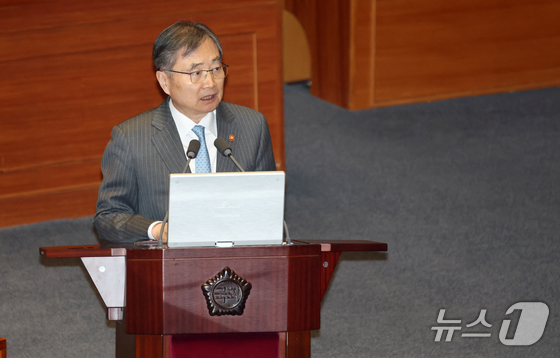
Foreign Minister Cho Hyun announced on the 9th that a U.S. negotiation team is scheduled to visit South Korea in February. Their mission: to discuss follow-up actions on agreements reached between the two nations’ leaders, including the introduction of nuclear-powered submarines and revisions to the U.S.-South Korea nuclear accord.
During a parliamentary Q&A session on political, diplomatic, and security affairs that afternoon, Minister Cho confirmed the visit. Responding to Democratic Party lawmaker Yoon Hoo-duk’s inquiry about a February visit by a U.S. security negotiation team, Cho stated that it’s correct. In Cho’s recent talks with the U.S. Secretary of State, he received confirmation that a comprehensive team representing various departments will be coming to South Korea in February.
Previously, on February 3, Minister Cho held talks with Secretary of State Antony Blinken in Washington, D.C. They discussed several cooperation issues, including the recent friction over mutual tariff increases between the two countries.
Minister Cho also met with U.S. Trade Representative Katherine Tai to outline South Korea’s domestic efforts regarding tariff agreements and investment compliance. However, no significant breakthroughs were achieved during these discussions.
As a result, diplomatic circles speculate that the ongoing challenges in U.S.-South Korea tariff negotiations are impacting discussions on nuclear submarines and nuclear cooperation. National Security Advisor Wi Sung-lac confirmed this, stating that the tariff issue is influencing follow-up talks on other agreed matters. He noted that the visit of the U.S. working-level negotiation team to discuss nuclear submarine acquisition has been delayed.
In preparation for these talks, the South Korean government has established two task forces: a U.S.-South Korea Nuclear Cooperation Interagency Task Force led by the Ministry of Foreign Affairs, and a Nuclear Submarine Interagency Task Force centered around the Ministry of National Defense. These groups aim to advance the security-related agreements outlined in the joint fact sheet from the leaders’ summit.
The U.S. negotiation team was initially slated to visit in January, but the trip was postponed due to disagreements over tariff issues.
Additionally, U.S. officials are expected to visit South Korea to discuss another area of cooperation: shipbuilding.
Minister Cho explained that the U.S. has agreed to expedite negotiations on the three key issues – nuclear submarines, the nuclear agreement, and shipbuilding cooperation – as promised.