

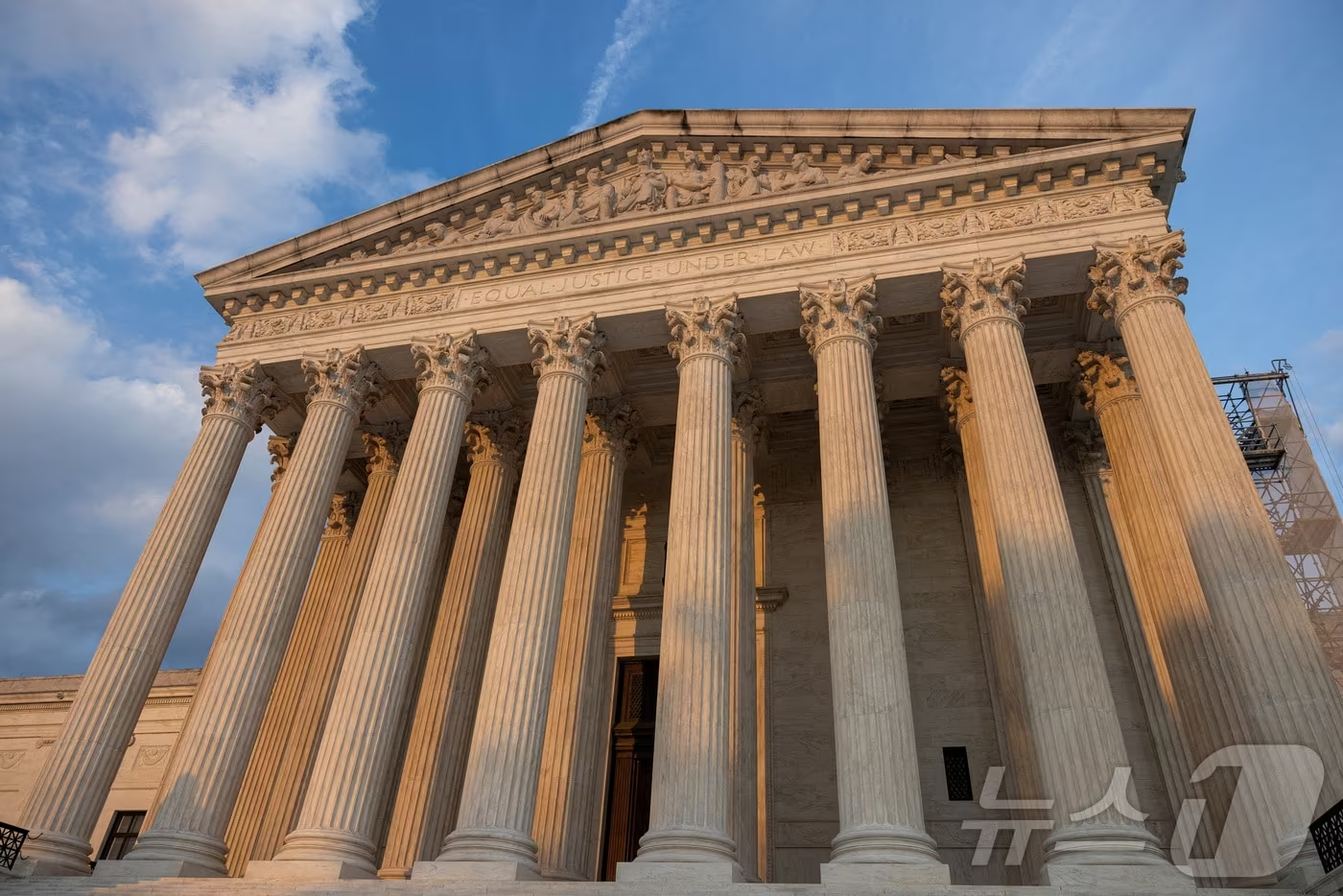
On February 20, the U.S. Supreme Court struck down President Donald Trump’s tariffs imposed under the International Emergency Economic Powers Act (IEEPA) as illegal. Trump swiftly countered with a Plan B, invoking a new trade law.
However, this alternative strategy faces time constraints and procedural hurdles, likely limiting its ability to achieve the broad and immediate impact of previous measures.
As a result, the potency of Trump’s tariff weapon, which he has wielded like a magic sword, is expected to diminish significantly.
Bloomberg News predicts that Trump’s Plan B will have a limited scope and slow implementation due to its procedural complexities.
Immediately after the Supreme Court ruling on February 20, Trump signed an executive order invoking Section 122 of the Trade Act to impose a 10% tariff on all global imports as a replacement for the existing tariffs. The next day, he announced plans to increase this to 15%.
Section 122 allows the president to act unilaterally during severe balance of payments deficits. However, it caps the tariff rate at 15% and limits the duration to 150 days.
Any extension requires congressional approval. With Republicans holding a slim majority in Congress and facing opposition from Democrats and some within their own party, passing such measures appears challenging.
Trump’s next move likely involves Section 301 of the Trade Act. This provision empowers the U.S. Trade Representative (USTR) to investigate unfair foreign trade practices and allows the president to impose retaliatory measures such as tariffs or import restrictions.
Sections 301-309, strengthened by the 1988 Omnibus Trade Act, are collectively known as Super 301 and have been a powerful tool in U.S. trade disputes.
Trump appears to be strategizing to first invoke Section 122 for the 15% global tariff, then activate Section 301 for long-term tariff imposition.
However, timing is a critical issue. Super 301 mandates consultations with affected countries, Federal Register notices, and public hearings. Procedural errors could lead to legal vulnerabilities.
Previous Super 301 investigations against China and the European Union (EU) took six months to over a year before actual tariffs were imposed.
This time, dealing with major global economies simultaneously poses a significant challenge. Given the USTR’s staffing constraints, completing substantial measures within 150 days seems practically impossible.
Other tools at Trump’s disposal include Section 232 of the Trade Expansion Act, Section 201 of the Trade Act, and Section 338 of the Tariff Act.
Section 232 involves Department of Commerce investigations into national security threats from specific imports, with a legal investigation period of up to 270 days, typically limited to specific commodities like steel or aluminum.
Section 201, a safeguard measure against import surges, requires rigorous investigations and public hearings by the International Trade Commission (ITC), making it difficult to invoke.
Section 338, a 1930s provision, allows up to 50% tariffs on countries discriminating against U.S. goods.
However, its rare use makes it practically obsolete, and invoking it could lead to legal challenges.
Democratic House members, wary of Trump potentially using Section 338, passed a resolution last March to repeal this provision.
Given these complexities, Plan B is unlikely to match the immediate and comprehensive impact of IEEPA-based measures, potentially blunting the effectiveness of Trump’s tariff strategy.