

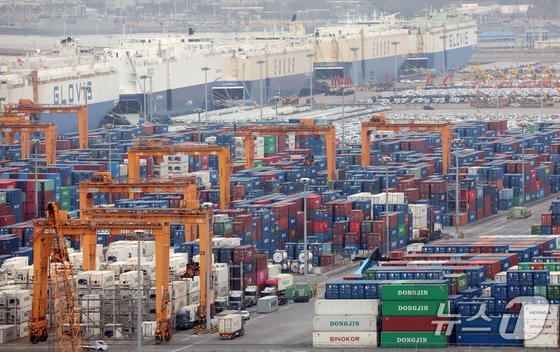
[Courtesy of News1] President Donald Trump’s new 10% global tariff went into effect at 12:01 AM Eastern Time on Tuesday. This move comes in response to the U.S. Supreme Court’s ruling that declared his reciprocal tariffs illegal.
On Friday, following the court’s decision that tariffs based on the International Emergency Economic Powers Act (IEEPA), including reciprocal tariffs and fentanyl tariffs, were illegal, Trump swiftly announced a 10% global tariff targeting all countries. This new tariff is based on Section 122 of the Trade Act of 1974.
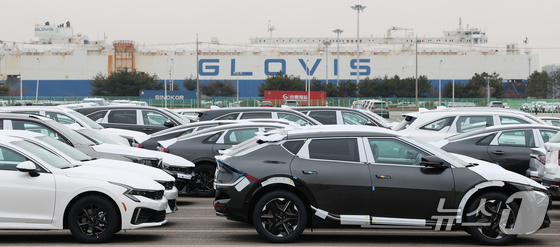
[Courtesy of News1] Subsequently, Trump signed a proclamation imposing these tariffs, effective at 12:01 AM Eastern Time on Tuesday. However, just a day later, he announced plans to increase the global tariff from 10% to 15%.
A U.S. Customs and Border Protection (CBP) official stated that while the global tariff will initially start at 10%, the administration is working on a separate order to raise it to 15%. This increase would require President Trump’s signature, though the exact timing has not yet been determined.
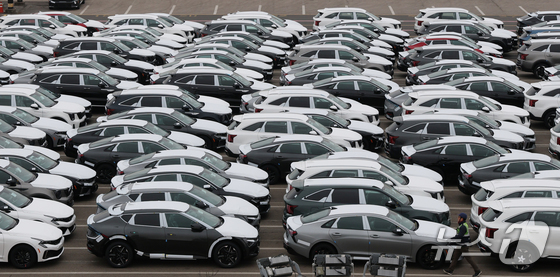
[Courtesy of News1] Section 122 of the Trade Act authorizes the President to impose tariffs of up to 15% in the event of a U.S. balance of payments crisis. Notably, this provision allows for quick implementation based solely on the President’s judgment, without requiring interagency consultations or separate investigations.
[Courtesy of News1]
[Courtesy of News1]
[Courtesy of News1]
[Courtesy of News1]
[Courtesy of News1]
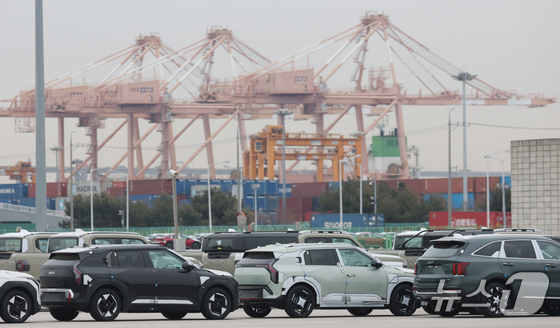
[Courtesy of News1]
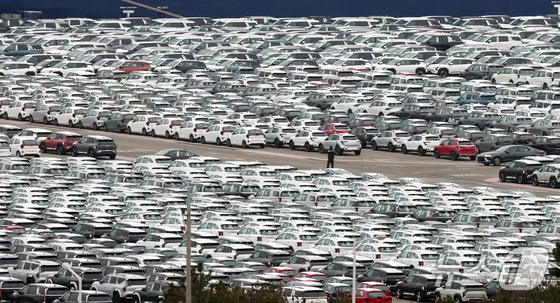
[Courtesy of News1]
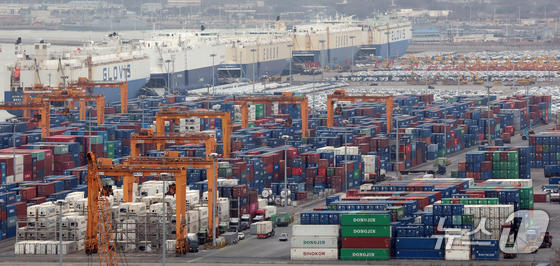
[Courtesy of News1]
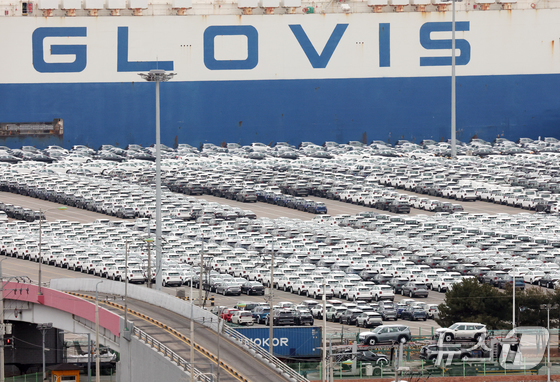
[Courtesy of News1]
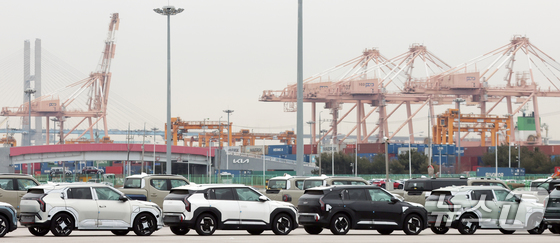
[Courtesy of News1]