

SETi, the U.S. subsidiary of Seoul Semiconductor, has emerged victorious in a patent infringement lawsuit against global optical specialist Laser Components in a federal court.
Seoul Semiconductor announced on Tuesday that the court recently ruled in favor of SETi, finding that Laser Components, a global firm with a century-long history, had infringed on SETi’s optical semiconductor patent technology. The court issued a permanent injunction against the manufacture and sale of related products.
This ruling has far-reaching implications, applying not only to products utilizing the infringing technology but also to the employees involved and any third parties who collaborated in the process.
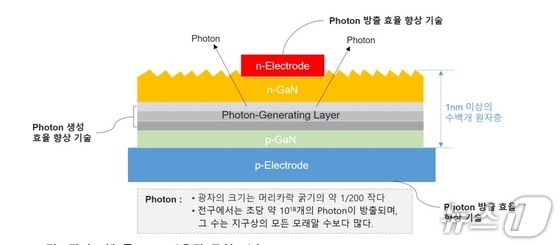
The patent at the center of the dispute involves a crucial technology that optimizes current and layer structure within optical semiconductors. This innovation maximizes photon generation while minimizing losses, significantly enhancing performance. Seoul Semiconductor highlighted the importance of this technology for the burgeoning optical semiconductor market, projected to reach 50 billion USD. The company noted its potential applications in reducing power consumption for AR glasses and next-generation high-bandwidth memory (HBM).
Bill Diamond, CEO of SETi, underscored the industry’s challenges. He pointed out that despite the significant national security implications of optical semiconductor technology, it remains inadequately protected. This has led to severe operational difficulties, with U.S. production facilities operating at less than 10% capacity. He called for heightened government attention to safeguard U.S. patents from exploitation by foreign entities.