

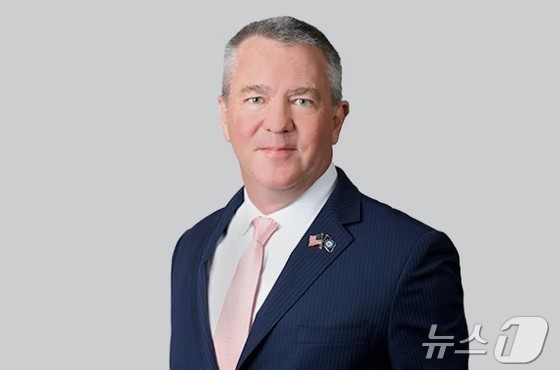
Michael DeSombre, the U.S. Deputy Assistant Secretary of State for East Asian and Pacific Affairs, is set to visit South Korea on Tuesday. He plans to stay until March 15 to discuss a wide range of issues concerning the U.S.-South Korea alliance.
According to the Ministry of Foreign Affairs, DeSombre will begin his official schedule in South Korea on Thursday. He is slated to meet with key officials, including Jeong Yeon-doo, South Korea’s chief nuclear negotiator and head of the Ministry’s Strategic Planning and Information Office, Deputy Foreign Minister Jeong Ui-hye, and Economic Diplomacy Coordinator Park Jong-han.
DeSombre, the top official responsible for shaping East Asia and Pacific strategies and foreign policy at the State Department, is visiting as part of a broader tour encompassing Japan, South Korea, and Mongolia from March 9 to 17.
During his meeting with Jeong, DeSombre is expected to exchange views on the current situation on the Korean Peninsula and explore strategies to bring North Korea back to the negotiating table.
Of particular interest is North Korea’s recent indication at the 9th Workers’ Party Congress of openness to conditional dialogue with the U.S., predicated on recognition as a nuclear power. With President Donald Trump’s upcoming visit to China in late March, speculation about potential U.S.-North Korea leadership contact or talks is growing. Consequently, the importance of U.S.-South Korea coordination in advance of any renewed dialogue is likely to be a key topic of discussion.

Moreover, following Kim Yo-jong’s criticism of the U.S.-South Korea joint exercise Freedom Shield (FS) on Tuesday and her hints at possible military provocations, the importance of maintaining a robust U.S.-South Korea combined defense posture is expected to be reaffirmed.
The ongoing situation in the Middle East is also likely to be addressed, with both sides expected to share assessments and exchange information. While the South Korean government has stated that the U.S. has not requested any military or non-military support regarding the Middle East crisis, some speculate that DeSombre might broach the subject during his visit.
Discussions are also anticipated to naturally cover the importance of swiftly implementing the joint fact sheet, which outlines agreements between U.S. and South Korean leaders. With the special law on U.S. investment expected to pass in the National Assembly on Thursday, there may be increased momentum for talks on implementing follow-up measures outlined in the fact sheet, such as the potential acquisition of nuclear-powered submarines.
The Ministry of Foreign Affairs is planning to send a delegation to the U.S. later this month to discuss revising or adjusting the U.S.-South Korea nuclear agreement, another key point from the joint fact sheet.
In related news, David Wilesle, the U.S. Deputy Assistant Secretary of State for East Asian and Pacific Affairs, visited South Korea on Monday. On Tuesday, he held a breakfast meeting with Deputy Minister Jeong Ui-hye, followed by working-level discussions with directors from the North American Affairs Bureau, the Office of Bilateral Economic Diplomacy, and the Korean Peninsula Policy Bureau.