

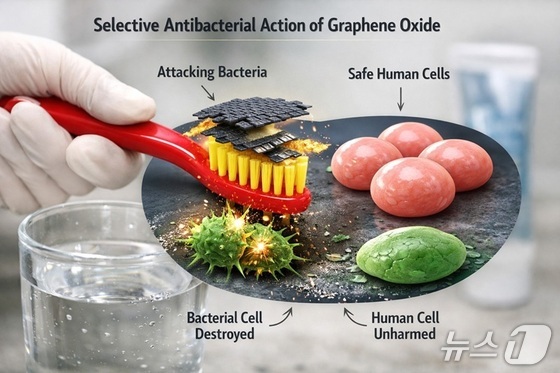
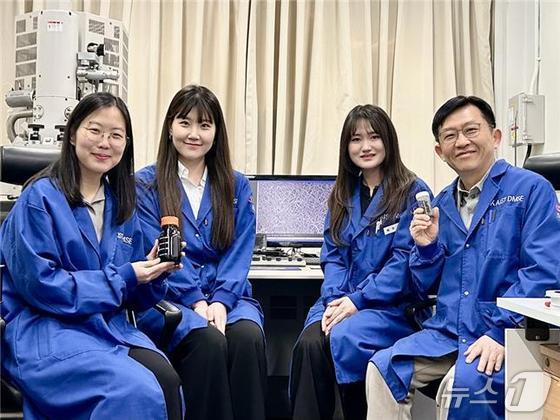
A research team from Korea Advanced Institute of Science & Technology (KAIST), led by Professor Kim Sang-wook from the Department of Materials Science and Engineering and Professor Jeong Hyun-jeong from the Department of Life Sciences, has unveiled groundbreaking findings on graphene oxide (GO). The team discovered that GO selectively targets and destroys bacteria while leaving human cells unharmed.
Graphene oxide, a carbon nanomaterial significantly thinner than a human hair, is known for its water solubility and versatile functionality. This study marks a significant milestone by providing the first molecular-level evidence of graphene’s selective antibacterial properties, a phenomenon previously unknown to scientists.
The researchers observed that graphene oxide adheres exclusively to bacterial cell membranes, much like a magnet attracted to specific metals. This selective binding occurs because the oxygen-containing functional groups on graphene oxide’s surface interact with POPG, a specific phospholipid found in bacterial membranes. This mechanism allows graphene oxide to target and eliminate bacteria selectively.
Graphene oxide nanofibers, developed based on this principle, have shown remarkable efficacy in inhibiting the growth of various pathogenic bacteria, including antibiotic-resistant superbugs. Animal trials demonstrated wound healing benefits without triggering inflammatory responses.
Notably, fabrics incorporating this material maintained their antibacterial properties even after multiple wash cycles, suggesting potential applications across various sectors, including the apparel and medical textile industries.
The practical applications of this technology are already evident. Material Creation Co. has successfully commercialized graphene antibacterial technology through their toothbrush line, which has sold over 10 million units. The innovation has also reached the sports world, with GrapheneTex material being used in the taekwondo demonstration uniforms for the upcoming 2024 Paris Olympics. This material is expected to be featured in high-performance sportswear at future international sporting events.
Professor Kim emphasized the technology’s potential, stating that this chemical-free approach to selectively eliminating bacteria opens up endless possibilities for applications in medical textiles, wearable devices, and beyond.
The research, co-authored by doctoral candidate Cha Su-jin and integrated master’s and doctoral student Jeong Joo-yeon, was published in the prestigious materials science journal Advanced Functional Materials on March 2. The global nanotechnology portal Nanowerk highlighted the study, titling their coverage, Graphene Oxide Destroys Bacteria While Being Harmless to Human Tissue.
This pioneering research, supported by the Ministry of Science and Information and Communications Technology’s (ICT)nanomaterials technology development, basic research for individuals, and mid-career researcher support programs, represents a significant leap forward in the development of next-generation antibacterial materials.