

A recent analysis from a national think tank suggests North Korea’s economic recovery has primarily focused on military demand, heavy industry, and construction sectors. The report indicates that limited resources are likely to continue flowing into the military sector.
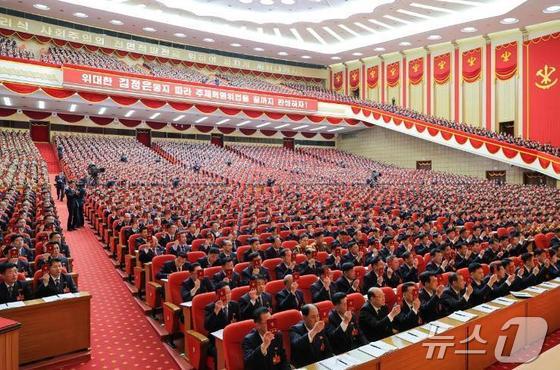
North Korean authorities refrained from announcing specific economic growth targets at the party congress. Instead, they presented abstract sectoral goals, reflecting a cautious approach in the face of domestic and international uncertainties.
The Korea Development Institute (KDI) published its North Korea Economic Review for Thursday. The report highlights that North Korea is grappling with skyrocketing market exchange rates and prices domestically, while facing significant external uncertainties due to the ongoing Russia-Ukraine conflict, potential post-war North Korea-Russia cooperation, and China’s adherence to international sanctions.
KDI analysts believe that North Korean leadership likely feels politically constrained from disclosing concrete economic strategy goals under these circumstances.
Consequently, the presentation of sectoral tasks remained vague, with qualitative enhancement of the production base identified as a key objective, reflecting these political and economic pressures.
Notably, North Korea’s recent economic recovery has been lopsided, favoring military demand, heavy industry, and construction. Despite a senior official’s claim that both economic and defense sectors could be pursued simultaneously, KDI assesses that given limited resources, actual allocations will likely prioritize the military sector.
KDI notes that while this approach may bolster military and heavy industry production in the short term, it could come at the expense of investments in civilian welfare and living standards.
The report views North Korea’s Local Development 20×10 policy as politically significant but economically flawed, lacking economies of scale and violating principles of labor division. In an increasingly market-oriented environment, efforts to strengthen state-owned local factories’ central production and distribution could undermine existing market efficiencies and exacerbate regional disparities.
While the emphasis on tourism signals a potential direction for North Korea’s economic management, the report criticizes large-scale investments made without proper demand assessment. It suggests that areas like Wonsan-Kalma may struggle to operate sustainably, even if Chinese tourist numbers recover, due to their disproportionate scale relative to domestic demand.
The analysis concludes that relying solely on Chinese and Russian visitors would limit the profitability of large-scale tourist sites, underscoring the need for South Korean tourist influx. Despite the formal characterization of inter-Korean relations as hostile, the report suggests that tourism could potentially serve as a pragmatic catalyst for limited cooperation between North and South Korea.