

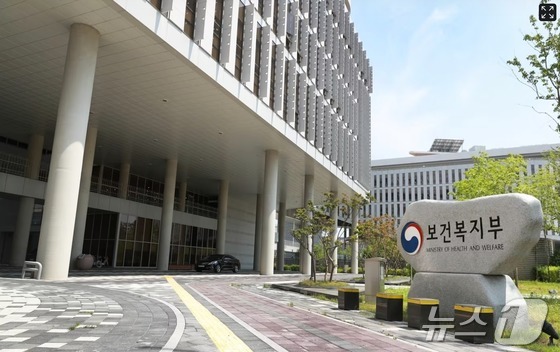
South Korea’s Ministry of Health and Welfare and the Korea Health and Medical Information Service announced on Monday that they will accept applications from consortia to participate in the “2026 Medical AI Testbed (Pilot Operation) Support Project” from March 31 to May 4.
The initiative, launching for the first time this year, is aimed at consortia comprising small and medium-sized enterprises, including startups in the medical AI sector, and so-called data-centric hospitals.
Since 2020, the ministry has designated 45 medical institutions and seven consortia as data-centric hospitals, supporting them in building data infrastructure, governance systems, and operational capabilities.
Selected consortia will receive comprehensive support to establish pilot environments to test AI-based products and services in real-world medical settings. This includes metric design, product and service integration, implementation, and results analysis.
The Ministry will cover the necessary costs for validation in accordance with the terms of the agreement.
The total funding pool is about $36 million. Of this, about $24 million is allocated for digital medical devices (Type 1) approved by the Ministry of Food and Drug Safety, while about $12 million is earmarked for non-medical AI products and services indirectly involved in patient care or hospital management (Type 2).
The funding covers 80% of project costs, with companies responsible for the remaining 20%. For Type 1, multi-institutional projects can receive up to $300,000 in support, while single-institution projects can receive up to $150,000. Type 2 projects are eligible for up to $120,000 in support.
The ministry emphasized the importance of validating medical AI technologies in real clinical environments, noting the potential impact on patient safety.
Preference will be given to medical institutions outside the Seoul metropolitan area. Detailed information on participation and application procedures is available on the health and medical data utilization portal.