


A study has found that setting lower target levels for low-density lipoprotein (LDL) cholesterol—often referred to as “bad cholesterol”—than current standards is effective in reducing the incidence of myocardial infarction and stroke.
A research team led by Professors Kim Byung-geuk, Lee Yong-jun and Lee Seung-jun at Severance Hospital said on the 30th that an intensive treatment strategy lowering LDL cholesterol to below 55 mg/dL in patients with atherosclerotic cardiovascular disease reduced major cardiovascular events by more than 30% compared with the conventional target of below 70 mg/dL.
Patients with atherosclerotic cardiovascular disease are considered a high-risk group for recurrent major cardiovascular events, such as heart attacks and strokes, and require lowering LDL cholesterol levels as part of dyslipidemia treatment.
While previous guidelines recommended lowering LDL cholesterol to 70 mg/dL, more recent dyslipidemia treatment guidelines have lowered the target for high-risk patients to below 55 mg/dL. However, evidence supporting the actual cardiovascular benefits of this lower target has been limited.
To address this, the research team conducted a comparative study involving 3,048 patients with atherosclerotic cardiovascular disease across 17 medical institutions in Asia, dividing them into an intensive-target group with LDL cholesterol below 55 mg/dL and a conventional-target group with levels below 70 mg/dL.
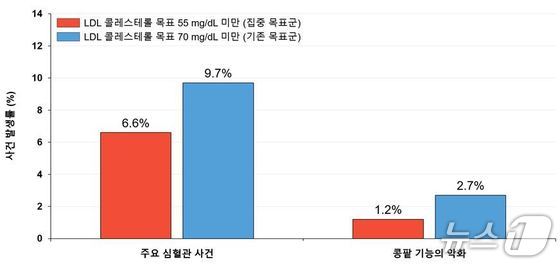
Over a three-year follow-up period, the incidence of major cardiovascular events—including cardiovascular death, myocardial infarction and stroke—was 6.6% in the intensive-target group (below 55 mg/dL), compared with 9.7% in the conventional-target group (below 70 mg/dL), representing a reduction of more than 30%.
In particular, rates of nonfatal myocardial infarction and revascularization procedures were significantly lower in the intensive-target group. There were no significant differences between the two groups in adverse events, including the onset of diabetes, worsening blood glucose control, muscle-related side effects or elevated liver enzymes.
“This is the first study to demonstrate that a more aggressive LDL cholesterol target strategy in patients with atherosclerotic cardiovascular disease can lead to an actual reduction in cardiovascular events,” Kim said. “It is expected to serve as important evidence supporting stricter LDL cholesterol targets.”
The findings were presented at this year’s American College of Cardiology (ACC) conference and published in the New England Journal of Medicine (NEJM).