Tuesday, May 19, 2026

How South Korea is Evacuating Citizens from the Middle East Amid Ongoing Crisis: Latest Updates

The Korean government is repatriating citizens from the Middle East amid crisis, with charter flights and resumed commercial services aiding returns.

South Korea Downplays Impact of U.S. Tech Restrictions: Here’s Why It Might Not Matter

South Korea views new US export controls on advanced tech as minimally impactful, with potential for future exceptions.

5 Key Insights from North Korea’s 9th Party Congress: Is Ju Ae the Next Leader?

North Korea's 9th Workers' Party Congress emphasized Kim's regime over succession plans, maintaining hostility toward the U.S. and South Korea.

POSTECH Develops Single-Device Transistor Capable of Performing Multiple Circuit Functions

TechPOSTECH Develops Single-Device Transistor Capable of Performing Multiple Circuit Functions
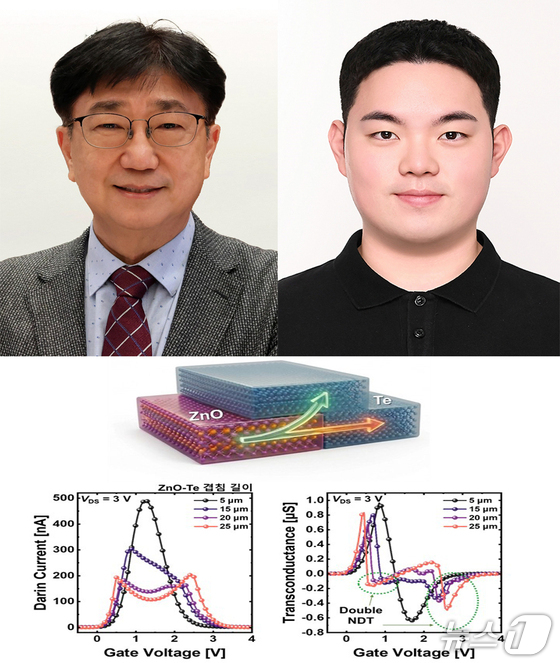
A research team led by Professor Lee Byung-hoon of the Department of Electrical Engineering and the Department of Semiconductor Engineering at POSTECH has developed a next-generation transistor technology capable of performing multiple circuit functions simultaneously using a single semiconductor device. From left are Professor Lee Byung-hoon and Dr. Jeon Jae-hyun. (Provided by POSTECH, redistribution and DB use prohibited) May 19, 2026 / Courtesy of News1

Researchers at POSTECH said on May 19 that a team led by Professor Lee Byung-hoon from the Department of Electrical Engineering and the Department of Semiconductor Engineering has developed a next-generation transistor technology capable of carrying out multiple circuit functions with a single semiconductor device.

The research team conducted the study to enable more functions to be implemented efficiently within limited chip space in the era of ultra-compact AI devices and highly integrated semiconductor systems.

The newly developed technology can perform frequency conversion functions that previously required multiple transistors using just a single device, significantly reducing circuit complexity while increasing data processing speeds by roughly four times.

The team created a heterojunction transistor with a new structure by combining zinc oxide (ZnO), which supports low-temperature processing, with tellurium (Te). The technology enabled complex semiconductor circuit functions to be implemented at the level of a single device.

Professor Lee said the technology is expected to improve both performance and power efficiency in ultra-compact AI electronics such as smartwatches and wearable devices, while also contributing to the development of next-generation 3D semiconductor integration technologies.

Check Out Our Content

Check Out Other Tags:

Most Popular Articles