


“You want me to turn off my smartphone? It’s not that simple. Kids today are tethered to the online world 24/7. They can’t even escape the pressure of relationships while lying in their own beds at home.”
Professor Kim Boong-nyeon, a child and adolescent psychiatrist at Seoul National University Hospital who has examined the minds of countless children over 30 years, is firm in his diagnosis. As one of the most sought-after experts among parents today, he doesn’t hide his concerns about the challenges facing today’s youth. He points out that the two-year period during which peer relationships were disrupted due to COVID-19 has completely shifted children’s focus to the online world.
In the past, even when friendships were tough, children could find respite and disconnect within the shelter of their homes. However, today’s children have no such escape. They’re forced to live in a state of anxiety and obsession, glued to their smartphones around the clock. Professor Kim believes that the rise in depression, anxiety, and self-harm among adolescents post-COVID is influenced by the shift to an online-centric environment and the impact of social media.
The problem is that very few parents fully grasp their children’s behaviors. Most attribute their children’s experiences of bullying and isolation to the stimulating digital environment or the child’s fragile personality. However, in his recently published book, The Friendships of Children, Professor Kim argues that the root causes of these conflicts should be sought in the development of the social brain centered in the frontal lobe. He asserts that the harmony between emotional empathy, which allows one to resonate with others’ feelings, and cognitive empathy, which enables one to objectively understand others’ perspectives, is the true essence of social skills that can protect children in times of crisis.
It explored the nature of the relational conflicts the children face and the roles parents should play, hearing Professor Kim’s clear insights.
Here’s a Q&A with Professor Kim.
-How have children changed after going through the COVID-19 pandemic?
▶For infants and toddlers, the reduced opportunities to meet peers and participate in play programs have led to developmental setbacks. Fortunately, children at this age show remarkable resilience. After returning to normalcy, thanks to parents actively engaging with them over the past two years, they have largely bounced back. If issues had persisted, it would have seen a surge in anxiety disorders or aggression stemming from decreased social skills, but that hasn’t been the case. Language and cognitive development were also negatively affected, but fortunately, follow-up observations indicate that children who received appropriate support have largely recovered.
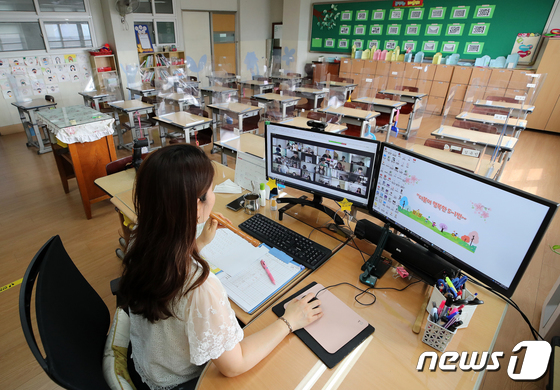
The real issue lies with adolescents. Adolescence is a critical period when the focus of interest and relationships shifts from family to peers, but COVID-19 completely blocked that pathway for two years. Ultimately, to fill this relational void, kids have become more engrossed in the online world, which has exacerbated the problem. The most significant difference in the social stress faced by today’s youth is the disappearance of ‘spaces for relaxation.’ In the past, even if friendships were challenging, entering the home as a shelter allowed them to disconnect from social fatigue. But now, that’s no longer the case.
Especially during adolescence, sensitivity to hierarchy and status within groups peaks. Teens become extremely sensitive to their roles within their groups and how much recognition they receive. They end up nurturing anxiety and obsession while being glued to their smartphones around the clock.
-Parents often say, “Turn off your smartphone, don’t look at it.”
▶The question is, will that really help? When anxiety sensitivity is heightened, kids check their devices more, and in trying to resolve issues, they encounter even more negative feedback, intensifying their obsession. When dealing with adolescent children, simply being a parent isn’t enough. From this point on, communication should come from the perspective of an experienced adult who loves the child deeply. That way, the parent-child relationship can become a new shelter that helps the child escape from their troubles. “Honey, your mom and dad have learned that relationships can be as fragile as glass. We shouldn’t be too obsessed. There will be many opportunities ahead. Let’s focus on the sports, art, or music you love.” Such perspective-shifting advice can only come from parents.
-It seems that such solutions are included in your new book.The book identifies the root causes of conflicts with friends as stemming from the development of the ‘social brain’ centered in the frontal lobe.
▶While we’re talking about friendships, it all starts with the formation of attachment relationships. The first prototype of interpersonal relationships is the parent-child bond, which is why the importance of the first three years (0-36 months) cannot be overstated. Of course, temperament plays a role, but how the attachment in the parent-child relationship is formed and how stable it is are even more critical.
The next phase is the development of self-regulation skills, such as impulse control and desire regulation, from ages three to six. During this time, as play with peers becomes more active, the ability to communicate with others and regulate oneself becomes the second key task, rather than just fulfilling one’s own desires.
The third phase is the development of empathy, which aligns with the functional development of the frontal lobe from the age of six. The ability to think from another’s perspective and accurately read their emotions is crucial for developing both emotional and cognitive empathy. Emotional empathy is the natural desire to help those who are vulnerable, while cognitive empathy involves understanding another’s position through context and process. Cognitive empathy begins to develop in late elementary school and truly blossoms during adolescence when individuals experience numerous books, artworks, and media and form deep friendships. Only two-thirds of the population fully develops cognitive empathy.
-How should we specifically intervene with adolescent children struggling with friendships or online stress?
▶Rushed comments about cognitive empathy or judging right and wrong can confuse kids or make them feel rejected. Thoroughly accepting emotions is the first principle of intervention.
Step one is to become a container for emotions. When a child shares their experiences from a group chat, instead of judging right or wrong, say, “That must have been really tough for you,” or “You must feel so unfairly treated,” to first accept their emotions. Even if you feel the urge to speak, you must hold back.
Step two is to distinguish between emotions and actions. Once emotions are accepted, the child can engage in rational dialogue. At this point, you can gently suggest, “I completely understand that you’re angry, but is it right to hit someone or act out?” to help them differentiate their actions.
For this dialogue to happen, the most crucial requirement is the parent’s emotional self-control. If parents express anger after telling the child to open up, it diminishes the child’s trust and creates fear of communication. When things get too heated for further discussion, it’s better to pause and take some time to cool off.
-What urgent measures need to be taken in our education and social environment for children?
▶We need to move beyond treating a few crisis students to a multi-layered approach involving schools, families, and the entire community. In particular, we must cultivate the ’emotion-based social skills’ that are currently lacking. This includes three core abilities.
The first is emotional recognition skills. Children must be able to articulate exactly what emotions like shame, exclusion, and loneliness mean to them. If they cannot do this, it can lead to aggression, self-harm, or excessive engagement with social media. The second is the ability to manage relational stress. We need to teach practical skills like how to recover after conflicts, withstand peer pressure, and maintain healthy relational boundaries. The final ability is knowing how to ask for help. For children who hide their pain for fear of being a burden or facing disadvantages in academics, we need to train them not to tough it out but to safely ask for help by expressing their struggles.
-Finally, what message would you like to convey to parents raising children?
▶The strongest protective factor that repeatedly emerges in research is the presence of at least one safe adult with whom children can share their struggles, even when they feel overwhelmed. If parents can fulfill that role, it can be more beneficial than meeting with many experts and can create new breakthroughs. Additionally, parents should trust that they know their child best. While educating yourself is important, never lose sight of the fact that the most reliable experts on your child are you, the parents.